

POP SONGS 1980s
EXTRACTS FULL VERSION HERE
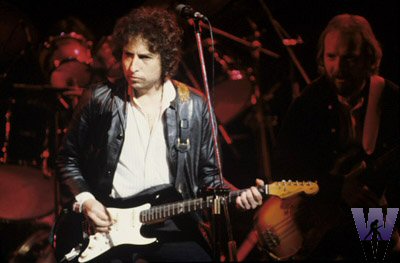
During the extensive studio sessions Dylan took part in for Empire Burlesque he also recorded several other ‘poppy’ compositions in different genres. The lyrics to these songs are fairly perfunctory, as Dylan plays around – sometimes uncertainly – with various musical forms. Although such material is decidedly lightweight, Dylan appears to be on surer ground than his relatively contrived attempts to be romantic or tragic in songs like Never Gonna Be the Same Again or Emotionally Yours. The cheerful and possibly unfinished Waiting to Get Beat is perhaps the nearest Dylan gets to an authentic reggae sound. He even tries somewhat unconvincingly to adopt a ‘Johnny Too Bad’ persona as he makes rather empty threats to his errant lover: …You’re playing around with daddy, baby/ When you should have quit/ Nobody messes up one of these boys/ And gets away with it….
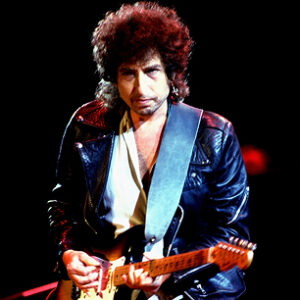
Straight A’s in Love, which is a kind of rewrite of the Johnny Cash song of the same name, is a tongue in cheek diatribe addressed to a girl whose academic achievements are minimal. There are some effective lyrical touches, as we hear that …In history, you don’t do too well/ You don’t know how to read/ You could confuse Geronimo/ With Johnny Appleseed… The song hits an appealing rockabilly groove, with some sprightly guitar work by Mike Campbell. Go ‘Way Little Boy, which was written for the LA Band Lone Justice, fronted by singer Maria McKee, is another light hearted effort, written from a female point of view. The narrator continually spurns her lover but we soon realise that she is really in love with him:…Go away little boy… she complains …You’re making me cry…

POP SONGS 80S
In contrast, Under Your Spell, the concluding track on 1986’s Knocked out Loaded, is a subtle and quite precisely written song which demonstrated that Dylan could produce pop-oriented material in a surer, more sophisticated manner. Here he shares the writing credits with Carole Bayer Sager, whose well known compositions include cleverly constructed and witty pop songs like A Groovy Kind of Love and It’s the Falling in Love. Perhaps the discipline of writing with such a distinguished figure had sharpened Dylan’s sensibilities somewhat as this is a fully realised composition with a haunting melody and lyrics which are carefully constructed to suggest a confused but forthright narrator who is expressing regret about his missed opportunities as a lover. Lines like … I’d like to help you but I’m in a bit of a jam/ I’ll call you tomorrow if there’s phones where I am… make the weakness of his protestations clear. He admits that she can ‘read him like a book’, while his excuse for mistreating her in the memorable phrase …I was knocked out and loaded in the naked night… seem to suggest that he was too stoned or drunk to cope with the situation, which is later confirmed when he tells her …I’ll see you later when I’m not so out of my head… Although he states that …You were too hot to handle, you were breaking every vow… his assertion that …I trusted you baby, you can trust me now… is hard to believe. The use of such unreliable narrators would be a common feature of Dylan’s ‘late period’ songs from 1997’s Time Out of Mind onwards.

POP SONGS 80s
CAROLE BAYER SAGER
The song has an unusual rhyming structure in that it mainly consists of three line verses, with the first two lines rhyming and the third lines rhyming with each other – so we get …under your spell…. What a story I could tell… and ….caught between heaven and hell… These ‘end rhymes’ provide a kind of commentary on the rest of the song. In the final verses the questions …Is there anything left to tell… and …Baby what more can I tell?… provide an effective lead up to the final verse, which takes us into more metaphorical territory: …The desert is hot, the mountain is cursed/ Pray that I don’t die of thirst/ Baby, two feet from the well…. The song then suddenly stops dead, leaving us to further question the authenticity of the narrator’s pronouncements.

The critical and commercial failures of much of Dylan’s 1980s music eventually led him towards a radical reconstruction of his methods of composition. Soon he was to develop new approaches to songwriting on the albums Oh Mercy (1989) and Under the Red Sky (1990). He would abandon the musical and sartorial trappings of his attempts to position himself as a mainstream pop-rock star and go ‘back to basics’ with the stripped-down rock bands of the early Never Ending Tour. In the 2000s, however, he would demonstrate his continuing fascination with the many forms of such music on his radio show Theme Time Radio Hour. Many features of his 1980s experiments with ‘pop’ styles would later feature on his post-1997 albums. But there is little doubt that many of his songs from this period represent the least authentic and committed, and perhaps most confused, phase of his career.
Leave a Reply