

MURDER MOST FOUL!
NOTE: If you are in the USA and want to buy the books you can get them from the website. Books will still be sent from the USA so postage will be reasonable! Chris
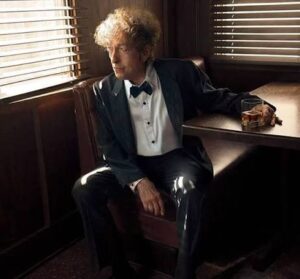
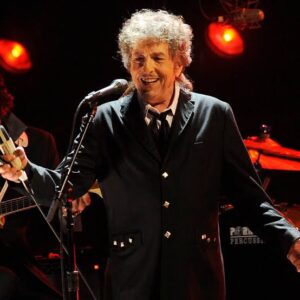
At midnight on 27th March 2020, just as the whole of the USA and Europe was going into lockdown due to the Covid 19 pandemic, a new Bob Dylan song – the first for eight years – suddenly appeared. In the midst of a very unfamiliar kind of chaos, the release, delivered for free on You Tube, took the world by surprise. Murder Most Foul clocked in at almost seventeen minutes, and a host of breathless commentators immediately declared it to be the longest track he had ever recorded. Within days, countless online pundits were delivering transcriptions of the lyrics, instant reviews and analyses – some of them thoughtful, some rather more dubious – of a song whose scope and breadth clearly proclaimed itself as a major new work. Despite the entire world being focused on the latest information about the virus, the release itself was suddenly big news. Many reviewers were quick to proclaim it as a timely response to the crisis, despite its apparently unrelated subject matter. The posting received several million hits within days.
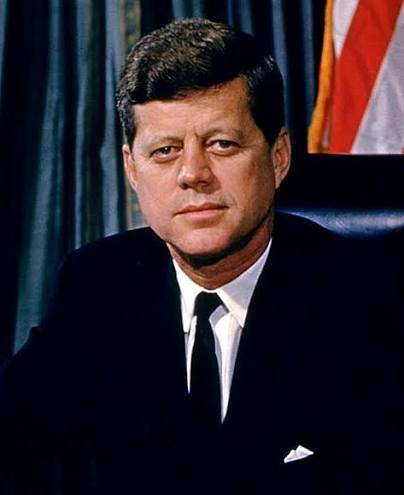
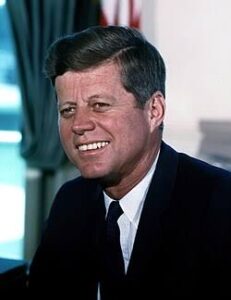
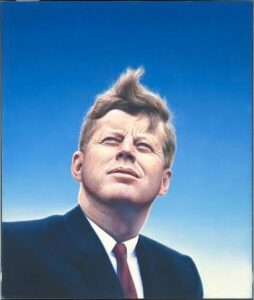
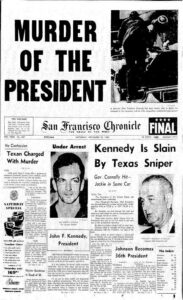
As we listened to the long, winding verses and stared at the iconic image of the eternally-young President on the screen, there was no doubt that the ‘murder’ referred to was that of John F. Kennedy – one of the most controversial events in twentieth century American history. With the descriptions of the assassination being interspersed with, and then overwhelmed by, references to nearly a hundred popular songs, films and books, it was clear that this was a major statement. The words ‘epic’ and ‘bardic’ were bandied about at will and many reviewers concluded that this mammoth evocation of the spirit of great American music was intended to soothe a traumatised nation. Here was Dylan, it seemed, playing the role of ‘poet laureate’ of America. Or, as Bruce Springsteen had once called him, ‘the father of the nation’… The posting was accompanied by a brief statement, which over the coming weeks would be analysed almost as much as the song itself
…Greetings to my fans and followers with gratitude for all your support and loyalty across the years. This is an unreleased song we recorded a while back that you might find interesting. Stay safe, stay observant and may God be with you…
Dylan’s ‘fans and followers’ around the world soon began ending all their emails with ‘stay observant’; which was certainly an appropriate motto for ‘the time of Coronavirus’ itself.
Murder Most Foul takes the key elements of Dylan’s late style: allusiveness, quotation, reference, fractured narratives and ambiguous narrators, classical structure and Shakespearean scope – not to mention his characteristic ‘obsessions’ with jazz, blues and sentimental songs, Biblical references, minstrelsy and the American Civil War – and cooks them up into a massive ‘gumbo’ which encourages his listeners to investigate the origins of virtually every word and phrase he uses. It invites us all to become ‘Dylanologists’. The song has a very loose and subdued musical arrangement based on piano, violin and drums, and is perhaps the closest Dylan has come to recording a jazz track. It is reminiscent of the work of the Beat poets, who would frequently recite their work to a jazz accompaniment. There are no choruses but four ‘sections’ or verses, each of which ends in the rhyme ‘murder most foul’. The first section consists of 22 lines, the second has 32, the third 38 and the fourth 72. As we listen we wait for the familiar phrase to be repeated, but on each occasion we have to wait longer.
MOST FOUL MURDER
Dylan’s vocals are surprisingly gentle – almost ‘soothing’ – which is in great contrast to the unstinting descriptions of violence that are recounted. The narrative stance shifts continually, sometimes from line to line. In some instances there appears to be an omniscient voice. At other times it appears that Kennedy himself is speaking from beyond the grave (like the ghost of Hamlet’s father, from whom the title phrase originates). On occasions the voice seems to be that of Dylan himself. The lyrics constantly flip like cinematic jump cuts between details of the Kennedy murder and its attendant conspiracy theories and the words and titles of songs and movies, in a kind of associative intertextual meta-narrative. The song begins in a basically descriptive mode, but the flood of allusions and references – a multiplicity of voices – gradually ‘overwhelms’ the narrative.
Murder Most Foul has, like other long Dylan songs, routinely been described as an ‘epic’. In this case the term is highly appropriate, as the song conforms to many of the conventions of the epic form as practiced by classical authors. As with the Odyssey and the Iliad it uses a ‘universal’ global-historical canvas and focuses on a tragic ‘hero’ who was thought to possess apparently ‘superhuman’ powers. It begins, like classical epics, ‘in medias res’ (‘in the middle of things’), taking us straight into the action and using flashbacks to illuminate the narrative.
WOLFMAN JACK
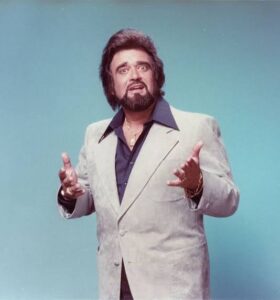
It is also structured as an invocation to a series of muses, at first merely referencing famous pieces of music and then positively demanding that they be played by the legendary D. J. Wolfman Jack. It then develops into an ‘enumerato’ – a long litany of references which place the finite action of the epic within a broader historical context, expanding from mentions of pop songs to allusions to a whole range of cultural artifacts. And it uses several ‘epithets’ – stock phrases which audiences will be familiar with. All of these poetic conventions can be said to be ‘musical’ – in the sense of a musical construction like a symphony or an extended piece of jazz – and although they may be subject to complex variations, they always return us to the original theme or a recognisable turn of phrase. This is because the epic form itself is the product of an oral culture, in which the works would be performed publicly with musical accompaniment (and dramatic vocalisation) rather than being merely read ‘on the page’. Dylan thus adopts the role of the ‘American Homer’, the ‘bardic’ figure who weaves his tale through the magic of sound poetry.
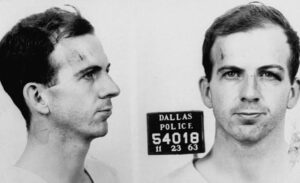
Murder Most Foul is a long rumination on a typical mythological scenario – that of the murdered king – around whom many tales have been woven, some true and some false. Over the last six decades the assassination has become a prime focus for conspiracy theorists who have strongly challenged the notion that Kennedy was killed by a crazed, communistic lone gunman. The consensus seems to be that his murder was a set up by the joint forces of the CIA and the Mafia, who wanted to remove him because they saw him as an obstacle to their continuing agenda of war, violence and exploitation within the expansion of ‘the American Empire’. Many books, movies and documentaries have taken up this theme; perhaps most famously Oliver Stone’s 1992 film JFK, which dramatises the efforts of public prosecutor Jim Garrison (portrayed by Kevin Costner as the kind of honest American hero previously personified by actors such as James Stewart in Mr. Smith Goes to Washington or Gregory Peck in To Kill a Mockingbird) to prove that the President was the victim of just such a conspiracy and that Lee Harvey Oswald was, as he famously declared after being arrested, just a ‘patsy’ (a convenient scapegoat) for darker forces.
LEE HARVEY OSWALD
The evidence to support such assertions has accumulated over the years and similar conspiracy theories have been applied to the subsequent murders of Malcolm X in 1965, Robert Kennedy and Martin Luther King in 1968 and even John Lennon in 1980 – all supposedly by ‘lone assassins’. The notion that Kennedy was a ‘peace loving hero’ who – in a counterfactual history – would have prevented the escalation of the Cold War and the terrible conflict in Vietnam is a dubious one. However, as in his earlier protest songs such as The Lonesome Death of Hattie Carroll and Hurricane, Dylan is less interested in the facts of the case than in the mythic qualities of the victims he is lionising. In Murder Most Foul, the assassination of Kennedy is used as a grand historical metaphor for the corruption not only of America but of modern political life in general. The song is full of specific historical and geographical detail and clearly asserts that Kennedy was the victim of a conspiracy, through which the corruption of the American state and security apparatus is made manifest.
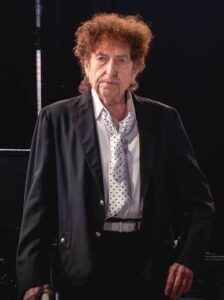
Much of the dramatic impact of the song is achieved by the subtle inflexions of the vocals being illuminated by the low key ‘background music’. Dylan appears to delight in engaging in a feast of wordplay, juxtaposing common phrases, clichés and song titles with the actual details of the crime in a way that acknowledges the mythical qualities of the story he is unfolding. He uses the repeated rhyming couplets to comment on the ‘myth of Kennedy’ in a multiplicity of ways, teasing the listener with apparent anger which often slides into sly humour. Rarely has he used the medium of rhyme so effectively and to such ironic effect. This is demonstrated in the opening lines …’Twas a dark day in Dallas – November ‘63/ The day that will live on in infamy… which, with its rather pointed alliteration and its deliberately archaic use of language, immediately gives us the impression that the narrator is going to be relating an old fashioned story. In fact the second line – which has an epigrammatic familiarity – is lifted straight from the words of another President, Franklin D. Roosevelt, in his speech following the attack on Pearl Harbor as he announced the US entry into World War Two. This immediately gives the narrative a broader historical context. The lines are delivered in a slightly arch, knowing way, inviting us to see the historic parallels.
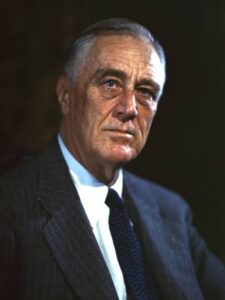
FRANKLIN D. ROOSEVELT
MOST FOUL…
A series of piled-up epigrams follows: …President Kennedy was a-ridin’ high/ A good day to be livin’ and a good day to die/ Being led to the slaughter like a sacrificial lamb… The tone is still that of a cosy narrator, despite the disturbing nature of the subject matter. But we then find ourselves ‘listening in’ to a weirdly melodramatic conversation between Kennedy and his assassins, as if they are characters in a Greek drama …Wait a minute boys, you know who I am!… the hero protests, addressing the killers almost affectionately. The first half of the line is a direct lift from Hurricane (1976), in which the ‘bent cop’, who is trying to find a corruptible witness in order to frame the boxer for murder, cries triumphantly: …Wait a minute boys, this one’s not dead!… The bad guys reply like comic-opera villains …Of course we do. We know who you are…. And later …We’re gonna kill you with hatred without any respect….
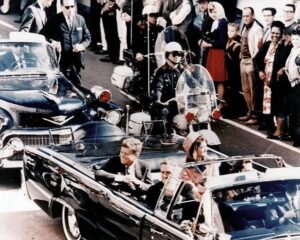
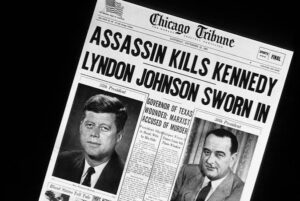
Despite this, the narrator maintains his cool …We’ll mock you and shock you, we’ll grin in your face… the bad guys cry. You can almost see them twirling their moustaches. But then comes the real ‘killer’ line: …We’ve already got someone to take your place…. the shocking implication being that Vice President Lyndon B. Johnson was a tool of these shadowy forces. Dylan delivers the lines of both parties in the same rather sad, philosophical way, reciting them slowly and deliberately as the mournful violin surges into prominence. We have already heard a dry account of how the killers …blew off his head… and that he was …shot down like a dog… Now we hear that …The day that they blew out the brains of the king/ Thousands were watching, no-one saw a thing… The narrator’s pace speeds up a little and the lines become more broken up and tense …It happened so quickly, so quick by surprise/ Right there in front of everyone’s eyes… We are left in no doubt that the killing was the result of a carefully co-ordinated conspiracy. It was the …Greatest magic trick ever under the sun/ Perfectly executed, skillfully done…
Now that the spirit of ‘magic’ has been invoked, we are then treated to our first ‘magical’ invocation: …Wolfman, O Wolfman, O Wolfman howl!… the narrator cries, ‘conjuring up’ the spirit of the famous disc jockey. The cry has a very special resonance, implying that ‘the Wolfman’ is an unearthly, mythical creature, who will ‘howl’ out the hidden truth on our behalf. There is an implied allusion to the great blues singer Howlin’ Wolf (from whom Wolfman Jack took his name) as well as a nod to Allen Ginsberg’s ‘epic’ poem Howl, one of the defining texts of the ‘Beat Generation’, and an extended cry of rage against the deadening conformity of 1950s America. The rhyming of this line with …Rub a dub dub – it’s a murder most foul… is the song’s first real masterstroke, lifting it out of mere melodrama. The half-comic, half-menacing use of ‘rub a dub dub’ (a reference to a well known card trick) is a ‘magical’ way of ‘calling up’ the ghostly character who will later become central to the song. From the second section onwards we may well imagine that it is he who is playing the records that the narrator refers to.
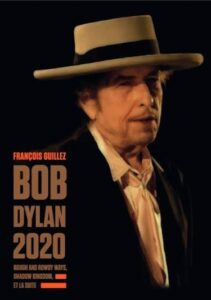
As we move into the second section, the narrative structure becomes more complex, as we begin to cut between recollections of the 1960s and the (often rather gruesome) details of the murder. The first line …Hush little children, you’ll understand… a quotation from a nursery rhyme recited over tinkling piano, perfectly echoes the lullaby-like nature of the music. Then, in a softly spoken leap forwards slightly in time, Dylan sings …The Beatles are coming, they’re gonna hold your hand… It has become something of a cliché to say that the Beatles’ arrival in America in early 1964, just weeks after the assassination, was a ‘therapeutic’ experience for a shell-shocked country. But the event was certainly one of the most startling turning points in post war American popular culture. In the US, which had invented rock’n’roll, the music itself had become rather passé, with the charts now dominated by bland ‘manufactured’ teenage crooners. But The Beatles achieved a phenomenal, unprecedented level of almost instant success. They completely transformed American rock music, as thousands of American artists scrambled to form the ‘beat groups’ that just three years later would become the leaders of the ‘psychedelic revolution’.
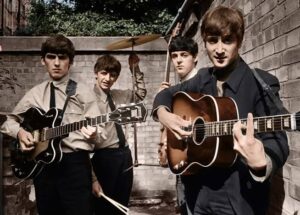
THE BEATLES (1963)
The breathlessly thrilling I Want to Hold Your Hand, a flamboyant paean to teenage sexual energy, was the record that broke them in the US. With a little ironic wit, Dylan compresses musical history into just a few words; but with the sly implication that the public were being shielded from the ugly truth of the political ‘coup’ that had just occurred by the media’s obsession with the ‘fab four’. Yet the line is not delivered with any trace of cynicism, but affectionately, as if the narrator is genuinely reaching out to sympathise with the way in which the group’s deeply humanistic songs provided succour to a grieving American public.
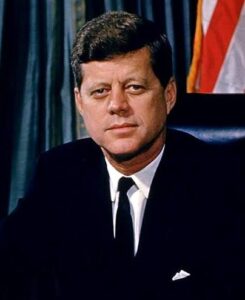
The rest of the first part of this section alternates between musical references and ‘cut up’ details of the murder, sometimes delivered in rather oddly coded forms. The couplet: …Slide down the banister, go get your coat/ Ferry ‘cross the Mersey and go for the throat… appears to be in part a reference to FBI agent Guy Bannister and anti-communist activist David Ferrie, both of whom were accused by Jim Garrison of involvement in the conspiracy to murder Kennedy. Ferry ‘Cross the Mersey was one of the best known songs by Gerry and the Pacemakers, one of the leading ‘Mersey Beat’ groups and contemporaries of The Beatles, although their success in America was limited. This is followed by a reference to the ‘three bums’ who were briefly arrested after the shooting and who conspiracy theorists also linked to the killing. It seems a little odd for Dylan to include such obviously coded references to specific conspirators, as if he is deliberately throwing a bone to the ‘Dylanologists’. But the effectiveness of these lines lies in the contrast between the reassuring warmth of Gerry Marsden’s tribute to the people of Liverpool and the brutally specific details of the murder – Kennedy was indeed shot in the throat.
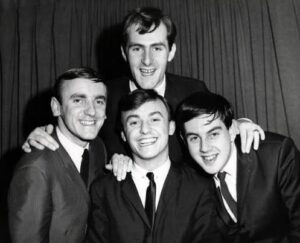
GERRTY AND THE PACEMAKERS
Several musical/cultural references follow, as we jump in time to the end of the ‘60s: …I’m going to Woodstock, it’s the Aquarian age/ Then I’ll go over to Altamont and sit near the stage… As Dylan delivers these lines he lowers his voice a little, so that there is a slight hint of parody. In Chronicles he had railed rather angrily against hippies invading his house, which was near the famous festival site in Woodstock, in August 1969. The contrast between the ‘three days of peace, love and music’ of Woodstock (as the hugely successful movie of the festival proclaimed it to be) with the disastrous Altamont Festival in California of a few months later has often been seen as being emblematic of the ‘end of the hippie dream’. At Altamont a murder occurred near the stage during the Rolling Stones’ performance of Sympathy for the Devil, which contains the highly ambiguous lines …I shouted out “Who killed the Kennedys?” when after all it was you and me… signalling that – even by 1969 – the murders had become huge cultural signifiers.
Dylan’s juxtaposition of key symbolic cultural and political moments of the 60s may thus be taken to suggest that the love generation’s faith in the essential goodness of humanity would inevitably be tragically exposed – thus linking the shootings at Altamont to those of the Kennedys. Dylan’s delivery is sadly suggestive here, but the song becomes increasingly ambiguous in terms not only of meaning but of narrative intent. We may ask exactly who the ‘I’ is in these lines. Is it a kind of disembodied ‘dream version’ of Dylan himself (who pointedly did not appear at Woodstock) or is the voice of the ghost of a mythologised ‘heroic’ Kennedy, a ghost which haunts American cultural and political history, hovering over these milestones of the counter culture?
LINKS…
STILL ON THE ROAD – ALL DYLAN’S GIGS
THE CAMBRIDGE BOB DYLAN SOCIETY
Leave a Reply