

BOB DYLAN: I SHALL BE RELEASED
January 20th 1986. The John F. Kennedy Center for the Performing Arts is the venue for an ‘All Star Celebration Honoring Martin Luther King Jr’. Among the speakers and performers are Charlton Heston, Harry Belafonte, Neil Diamond and Joan Baez. Leading the show is Stevie Wonder, whose introduction to another star performer begins …In the ‘50s and ‘60s, times were changing, and the man who through his music was on the cutting edge of those changes was our good friend, and hero, Mr. Bob Dylan… Backed by Stevie’s band Wonderlove and backing singers Madelyn Quebec, Peggi Blu and Queen Esther Marrow, Dylan launches into a lively gospel-flavoured version of I Shall Be Released, a song which he had already performed on several hundred occasions.
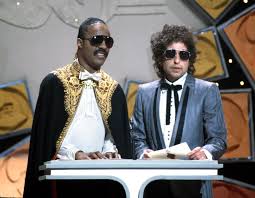
For some reason Dylan has rewritten the lyrics of the song. He adds the line …I don’t need no doctor or no priest… to the refrain. The second verse now runs …It don’t take much to be a criminal/ One wrong move and they’ll turn you into one/ At first decay is just subliminal/ To protect yourself and you’re forever on the run… while the third verse goes …He will find you where you’re stayin’/ Even in the arms of somebody else’s wife/ You’re laughing now, you should be prayin’/ To be in the midnight hour of your life… He will never again perform these lyrics, which do not seem to be related to Martin Luther King or the Civil Rights movement in any way.
BOB DYLAN: I SHALL BE RELEASED
Whether the final lines are a tribute to Wilson Pickett’s In the Midnight Hour and Stevie Wonder’s Sunshine of My Life is open to question. He then joins with Stevie, along with Peter, Paul and Mary. They gather round the microphone to perform a ragged version of Blowin’ in the Wind, again delivered with gospel stylings. If you close your eyes, you might just imagine that they are onstage at the Newport Folk Festival in 1964.
I Shall Be Released is one of the most covered works in Bob Dylan’s catalogue. Nina Simone, Joe Cocker, Joni Mitchell, Paul Weller, Neil Young, Tom Robinson, Rory Gallagher, Jeff Buckley, The Heptones, Chrissie Hynde, U2, Sting, Elvis Presley and Joan Baez are among those who have recorded it. Amid the craziness and chaos of The Basement Tapes, it is a passionately serious cry for help which presents us with one of Dylan’s most resonant original melodies and an eminently singable chorus.
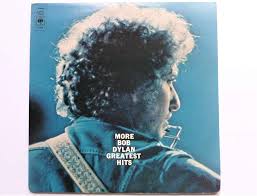
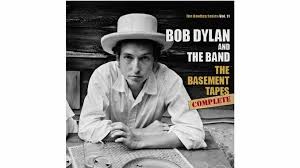
The song’s recording history is, however, strangely chequered. Its first appearance on an official Dylan album was on More Greatest Hits in 1971, in a low key and shortened version recorded with banjo player Happy Traum. The original recording did not appear on an official release until the first Bootleg Series came out in 1991. By then it had already become a Dylan standard. After 1975 it frequently featured in his set lists and was played around 500 times in the 1980s and on the Never Ending Tour. It is perhaps most associated with the recording by The Band on Music from Big Pink. Their arrangement is developed from the Basement Tapes version, but is tightened up considerably, featuring one of Richard Manuel’s most impassioned vocal performances, with winning harmonies from Levon Helm and Rick Danko on the choruses. The anguished lyrics are a perfect fit with Manuel’s moving ‘high lonesome’ vocal delivery.
BOB DYLAN: I SHALL BE RELEASED
I Shall Be Released is the first of what might be called Dylan’s ‘secular hymns’. It incorporates various elements that are prominent in the gospel music tradition, especially in its use of a plaintive chorus and of piano as the lead instrument. The song has a definite quality of spiritual yearning. It is interesting that, as the endless tapes of the Get Back sessions reveal, The Beatles played around with it at this time. This may have influenced Paul McCartney in the writing of his similarly gospel-tinged ballad Let it Be. Both songs have highly personal resonances, with McCartney recalling memories of his deceased mother and Dylan expressing his wish to be freed from the constraints of fame and the treadmill of endless shows and public appearances.
The song has only three short four-line verses, which use a basic ABCD rhyme scheme. The language is fairly plain and the imagery is highly generalised. The song is the cry of a prisoner who has been unjustly jailed and who desperately wants to be free. Yet despite the ringing declaration of the title line, the emotional core of the song is perhaps more despairing than hopeful. The contrast between these two elements is what makes it so moving. Every word is carefully chosen to increase this effect. As with the songs on John Wesley Harding, various archaic terms are cleverly utilised to give it a particularly timeless quality. The chorus: …I see my light come shining/ From the West out to the East/ Any day now, any day now/ I shall be released… is perfectly formed and highly suggestive. The choice of the pronoun ‘my’ rather than ‘the’ is especially important as it allows us to identify closely with the protagonist, so that each singer of the song can attach a personal meaning.
The lines move seamlessly from the present tense to the future. The phrase ‘from the West out to the East’ appears to encompass an entire day, as the narrator watches the sun rise, cross the sky and then set. We may imagine that the prisoner stares out of the bars of his cell every day as this pattern repeats itself, suggesting that he will have to exercise considerable patience before his release. The repetition of ‘any day now’ adds to the yearning quality of the refrain, as if the narrator cannot quite believe that one day he will leave the prison.
The song begins with a highly ambiguous statement: …They say everything can be replaced/ Yet every distance is not near… The first line appears to be a recognition of universal mutability, acknowledging the impermanence of thoughts, ideas and life itself. The second implies that many goals in life are almost out of reach. This is followed by the mournfully self reflective …So I remember every face/ Of every man who put me here… Again the repetition of ‘every’ is emphasised. These lines might, when read on the page, indicate that the protagonist may be out for revenge, but the sonorous melody gives the impression that he has had to practice stoical acceptance over what may well have been many years in incarceration.
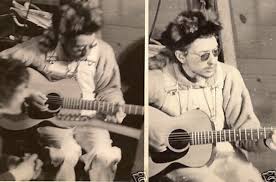
The second verse takes something of an unexpected turn as the prisoner now thinks beyond his own position to make some generalised observations: …They say every man needs protection/ They say every man must fall… lines which emphasise his vulnerability and which mix fear and trepidation with a kind of philosophical acceptance of his situation.
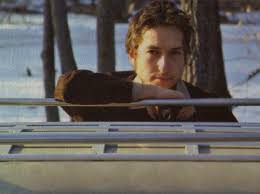
There is also a suggestion that he accepts his existence in a fallen world in which virtue and truth do not always prevail. This is contrasted starkly against the highly personal lines which follow, which are perhaps the most poignant in the song: …Yet I swear I see my reflection/ Somewhere so high above this wall… This suggests an image of the prisoner staring up into the sky, or perhaps the heavens, where he sees a reflection of himself. Perhaps this is wishful thinking but we get the sense that in the inner core of his being he is stating that he will always, in fact, be free.

The third verse begins with the song’s strangest couplet: …Yonder down here in this lonely crowd/ Is a man who swears he’s not to blame… The phrase ‘lonely crowd’ may be an oxymoron but it is also an evocative description of those who are imprisoned – they are surrounded by other prisoners but still inevitably experience great loneliness. One of the most unusual aspects of the lines in this verse is the way that Dylan switches perspective. We are not told whether the man is the narrator himself or one of his compatriots. The lines which follow are especially painful: …All day long I hear him shout so loud/ Crying out that he’s been framed… We can only speculate as to whether the narrator is sympathising with a friend or whether he is listening to his own inner cries.

Much of the song’s power lies in the details of the story that are omitted. The actual references to imprisonment are deliberately vague. ‘Down on Parchman Farm’ this is not. We may presume that ‘the man who put me here’ has framed him for a crime that he did not commit and that the wall in verse two is a high prison wall. It is also possible to theorise that the narrator is merely in a prison of his own mind. The philosophical diversions that open the first two verses strongly suggest that his situation is a metaphor for a kind of spiritual entrapment. He has apparently allowed various nameless persons, or perhaps inner thoughts, to imprison him.
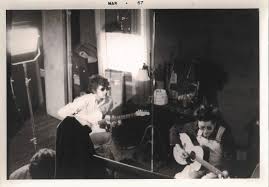
On another level the song conveys a wish to be released from the ‘slings and arrows’ of life itself and thus can be seen as portraying the narrator’s hope of salvation in the afterlife. Or it may be an expression of his strong desire to rise above the constraints that having to live and survive in the ‘real world’ places on us. It can be presented as a slow, mournful ballad – as in Joe Cocker’s masterful reading – or as a cheerful plea for freedom, as Chrissie Hynde treats it. Nina Simone’s gut-wrenching cover links the song to the ethos of black liberation. In the hands of Joan Baez it becomes an anthem for persecuted political prisoners. In the 1980s it was also adopted as an anthem for Amnesty International.
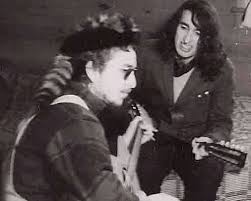
I Shall Be Released’’s greatness as a work of art is enhanced by the fact that it can be sung in so many different ways. Of all the Basement Tapes songs, it is the one with the most universal appeal. It has been utilised as an opportunity for a climactic sing-along in shows in which Dylan shares the stage with others on a number of occasions, such as the Last Waltz concert in 1978 and the Great Music Experience shows in Nara, Japan in 1994, when he was backed by an orchestra. The song is an exquisite and practically flawless example of the power of ‘song poetry’ to express a whole range of different emotions at the same time.
Leave a Reply