


LAY DOWN YOUR WEARY TUNE
EXTRACTS FULL TEXT HERE
Bob Dylan first wrote and recorded Lay Down Your Weary Tune in late 1963. The song was originally scheduled to appear on The Times They Are A-Changin’ album but was replaced by Restless Farewell. A live recording at Carnegie Hall was also intended for release on the aborted Bob Dylan in Concert album. It took until 1965, with the release of Biograph, for Dylan’s version to appear. Until then the best known recording had been by The Byrds on their album Turn, Turn, Turn (1966). In delivering the haunting and uplifting ‘sing along chorus’ the vocal trio of Roger McGuinn, David Crosby and Gene Clark do great justice to the song.
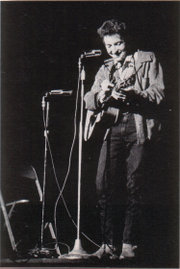
Lay Down Your Weary Tune….
It was also performed live by the early ‘folky’ incarnations of Jefferson Airplane and Fairport Convention. Other memorable, but rather harder edged readings exist by the Martin Carthy incarnation of Steeleye Span and Billy Bragg. But in Dylan’s solo acoustic renditions, sentiments and imagery which could come over as somewhat corny or maudlin are presented in stark contrast to his sonorous delivery. This gives the song a tone of ambiguity and a richness which the other artists cannot come close to.
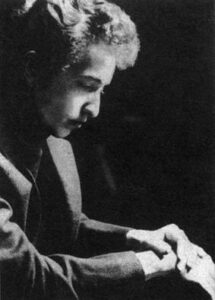
The song stands in great contrast to most of the material Dylan was writing at this point in his career. Neither a political diatribe like Masters of War nor a ‘song of parting’ like Don’t Think Twice, It’s All Right, it took him into new territory. Inspired by a number of Scottish nature ballads which Dylan has covered at various points in his career – such as Wild Mountain Thyme and (especially) The Water is Wide (whose melody it partly appropriates) – in many ways it also anticipates the nature mysticism of Mr. Tambourine Man (written a few months later). In both songs, the narrator appears to have been awake all night and is experiencing the beauties of a new dawn. Both have inevitably been linked to the transcendental revelations that are often associated with the psychedelic experience.

The chorus: …Lay down your weary tune/ Lay down the song you strum/ And rest yourself ‘neath the strength of strings/ No voice can hope to hum…, which unusually for Dylan appears at the beginning of the song, is also featured after each of the six verses. It is unusual for Dylan to place so much emphasis on a chorus, especially one which implores the listener to follow his lead. This indicates the song’s status as a ‘secular hymn’.
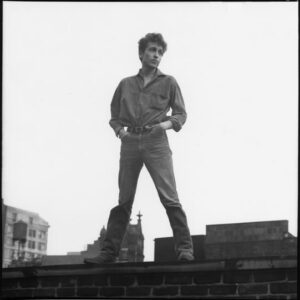
Lay Down Your Weary Tune….
The chorus may have been inspired by I Heard the Voice of Jesus, a nineteenth century ‘song of praise’, also of Scottish origin and written by Horatius Bonar, which includes the lyric … Lay down, thou weary one, lay down/ Thy head upon my breast… Dylan’s chorus uses the musical imagery on which the entirety of Lay Down is based, identifying music as a spiritually uplifting force. In terms of Dylan’s own development as an artist, the reference to ‘weariness’ in the refrain and the desire to ‘lay down’ suggests that the era of him writing explicitly political songs is now coming to a close. The implied imperative tone in the chorus, particularly the reference to…the song you strum… also suggests that Dylan may be singing to himself as much as to an imagined audience.
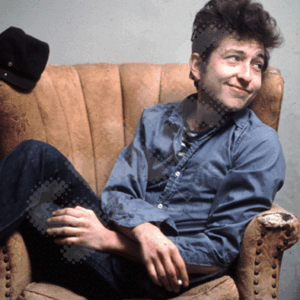
By this point in his career, Dylan was certainly ‘weary’ of being categorised as a political figurehead when his main inclination was towards being a poet and a musician. A number of his previous ‘songs of social consciousness’ like Blowin’ in the Wind, When the Ship Comes In and The Times They Are A-Changin’ had also demonstrated a certain hymnal quality but one might speculate that he may have been wary of ending the Times album on such an anthemic note. Restless Farewell , which arguably also attempts to draw a line under his career as a protest singer, is in contrast a far more personal ‘soul baring’ song which avoids giving any ‘instructions’ to the listener.

Despite such considerations, it is arguably a great pity that Dylan’s rendition of Lay Down did not see the light of day for so long, as it is one of the most fully realised of his early compositions and one in which his poetic inclinations and ambitions were so clearly displayed. The lyrics demonstrate the influence of Romantic nature poetry, particularly that of Wordsworth and Blake, as well as that of American nature poets such as Robert Frost and Emily Dickinson. Dylan also utilises some elements of the archaic diction which he would later revisit on albums such as John Wesley Harding. Each verse uses similes to compare various musical instruments to the beauties of and the spiritual nourishment that nature can, in the Romantic world view, provide. Thus it would not be inaccurate to describe Lay Down as a ‘religious’ song, although it is not tied to any specific creed.
Leave a Reply