

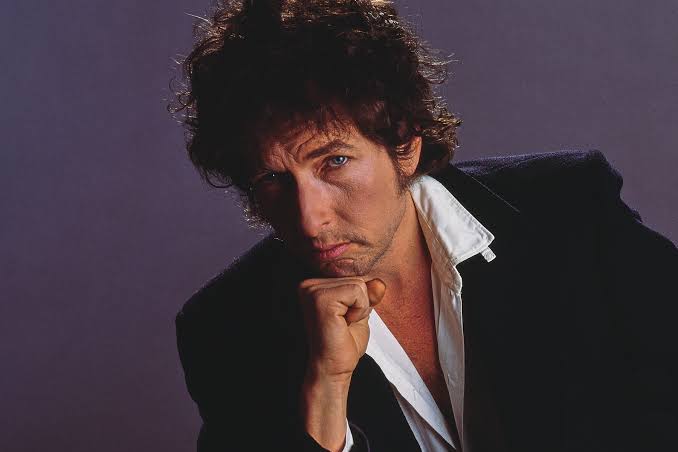
A version of this blog appears in the book MINSTREL BOY: THE METAMORPHOSES OF BOB DYLAN
BOB DYLAN’S POLITICAL AND POST-RELIGIOUS SONGS OF THE 1980S
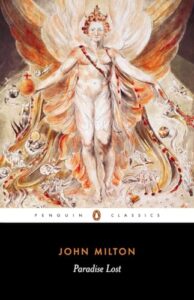
…Which way I fly is hell; myself am hell; And in the lowest deep a lower deep, Still threat’ning to devour me, opens wide, To which the hell I suffer seems a heaven...
John Milton, Paradise Lost (IV, 75–79) (1667)
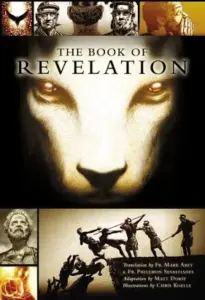
…..And sware by him that liveth for ever and ever, who created heaven, and the things that therein are, and the earth, and the things that therein are, and the sea, and the things which are therein, that there should be time no longer:…
Revelation 10:6
Between 1983 and 1988, Bob Dylan produced a number of songs that were full of Biblical allusions, and which revealed a fascination with the dark prophecies of the Book of Revelation, particular in its symbolic connection to the nuclear standoff of the Cold War. Some fans and commentators took the presence of these themes and concerns to indicate a continuation of the evangelical stance he had taken between 1979 and 1981. But these songs were much more complex and ambiguous than those from his ‘gospel years’. It seems that he had now become disillusioned with the form of ‘Born Again’ Christianity he had recently been proselytizing. Although theological concerns are still very much on his mind, in this group of songs, he now uses Biblical references not to preach to his audience but to throw a light on the hypocrisy and manipulation of institutionalised religion. As Dylan attempts to adjust his world view, however, he often sounds particularly pessimistic that anything is likely to change in such areas. Thus, this group of songs tends to present especially ‘dark’ viewpoints.
POLITICAL AND POST-RELIGIOUS SONGS
Death is Not the End (recorded at the Infidels sessions and eventually released on Down in the Groove in 1988) appears, at least on the surface, to be a statement of faith, although there is no mention of Jesus or his teachings. The person being addressed stands …at a crossroads they cannot comprehend…. Everything that they have ‘held sacred’ has been destroyed and all their dreams ‘have vanished’. ‘Storm clouds’ are gathering around them, while …heavy rains descend… The song confronts us with a terrifying image …The cities are on fire/ With the burning flesh of men… which appears to suggest that either nuclear war or the Day of Judgement is imminent. On his album Murder Ballads (1996) Nick Cave, a well known aficionado of the gothic, ends the album with a tongue in cheek version of the song, with guest vocals from P. J. Harvey, Shane MacGowan and Kylie Minogue.
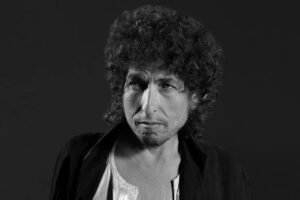
This highly melodramatic rendition suggests that the song can be seen as a satirical comment on how some Christians denigrate life, which to them may seem to be a mere ‘veil of tears’. Yet Dylan presents his version as a slow dirge which, despite its supposedly hopeful message, sounds like it would only be appropriate for a sombre funeral service. He cheers up a little in the bridge section, telling us that …The tree of life is growing/ Where the spirit never dies/ And the bright light of salvation shines/ In dark and empty skies… but this is merely a little ‘light relief’ in what may be his most thoroughly depressing song.
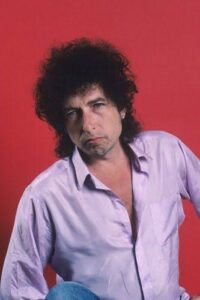
Lord, Protect My Child, another Infidels outtake which was eventually released in 1991 on the first Bootleg Series collection, is a simple but heartfelt appeal to ‘the Lord’ to keep a watchful eye on a new born child. Dylan shamelessly employs sentimental stock phrases such as …He’s got his mother’s eyes…., There’s gladness in his heart… and …Just to see him play makes me smile… As with Forever Young, which contains virtually identical subject matter, the song transmits genuine feelings of compassion and love. But the narrator also communicates a sense of emptiness and despair about the state of the world. His parental feelings are contrasted against statements such as …The whole world is asleep/ You can look at it and weep… and later …He’s young and on fire/ Full of hope and desire/ In a world that’s been raped and defiled… In the final verse the narrator imagines that in the future there may be a time …When all will be well/ When God and man will be reconciled… without appearing to hold out much hope that this will really be achieved in the child’s lifetime.

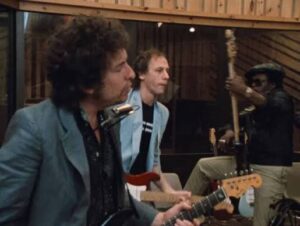
In the raucous Man of Peace, a clear attack on religious hypocrisy, Dylan is on more familiar territory. You can almost hear him licking his lips as he lays into one target after another. The insistent beat of the Dunbar-Shakespeare axis drives the infectious blues riffs forward and both Taylor and Knopfler contribute tasty guitar licks between the verses. The song begins as it means to continue, by pulling no punches: …Look out your window baby, there’s a scene you’d like to catch/ The band is playing ‘Dixie’, a man got his hand outstretched/ Could be the Fuhrer/ Could be the local priest/ You know sometimes Satan comes as a man of peace… The Devil is pictured ‘passing the hat’ for musicians who are playing the old Confederate anthem. We are reminded that he may even be disguised as an official of the church.
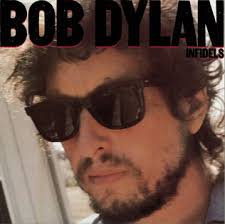
In the following five verses, each one of which ends with that same tag line, this alluring character is described in a variety of ways that emphasise his deviousness. We hear that …He got sweet gift of gab, he got a harmonious tongue/ He knows every song of love that’s ever been sung… that …Nobody can see through him/ Not even the Chief of Police… and that …He could be standing next to you/ The person that you notice least… There is even a dash of surrealism as Dylan intones …He can ride down Niagara Falls in the barrel of your skull… while the ‘Evil One’s seductive powers are described with a comical glee: …He knows just where to touch you, honey and how you like to be kissed/ He’ll put both his arms around you/ You can feel the tender touch of the beast!… In John Milton’s Paradise Lost Satan is a multi-faceted literary character, who can fascinate us far more than the ‘good guys’.
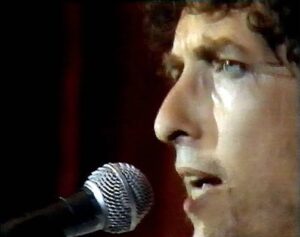
Dylan then taunts us, and quite possibly himself, with some enigmatic statements. Combining pure blues imagery with apocalyptic suggestions, he proclaims …Well, the howling wolf will howl tonight, the king snake will crawl/ Trees that have stood for thousands of years suddenly will fall… Howlin’ Wolf is of course the great blues singer, while Crawling King Snake is a powerfully suggestive blues standard first recorded in 1941 by Dylan’s early role model Big Joe Williams and later by John Lee Hooker and The Doors. The snake is also, of course, the cause of the Fall in Genesis – another manifestation of Satan. Dylan lets us digest all this portentous symbolism before he delivers a quick comic parody of those who claim that the ‘second coming’ is at hand: …Want to get married?… he asks us …Do it now!? Tomorrow all activity will cease!….
POLITICAL AND POST-RELIGIOUS SONGS
The song ends on a highly poignant note …Somewhere Mama’s weeping for her blue eyed boy… he tells us. A ‘blue eyed boy’ was the protagonist of A Hard Rain’s a-Gonna Fall – an obvious cipher for Dylan himself. We hear that …She’s holding them little white shoes and that little broken toy… The mother appears to be heartbroken, having lost her child to his determination to follow …a star/ The same one them three men followed from the East… This is an obvious reference to the Christmas story. We may sympathise with her distress, but it seems that her ‘blue eyed boy’ has chosen his own path. But then the final refrain …Sometimes Satan comes as a man of peace… comes in again, suggesting that, despite the fact that the boy is supposedly engaging with conventional Christianity, it is really the Devil himself, in his infinite capacity as a deceiver, who has led the boy astray. This implies that some of those who profess to be ‘real Christians’ are actually ‘agents of Satan’.
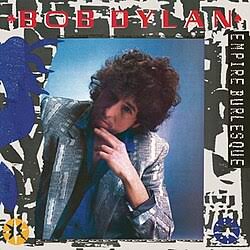
Trust Yourself, from 1985’s Empire Burlesque, is built around a hypnotically repetitive rhythm, with backing singers and synths later overdubbed. It appears to be a direct message to Dylan’s listeners that he is no longer tied to any religious group. But the admonitions to …do the things that you know best … , …do what’s right and not be second guessed… and to …find the path where there is no if and when… are somewhat prosaic and uninspired. The most convincing lines are those in which he denies being an oracle who listeners should follow: …Don’t trust me to show you beauty… he declaims …When beauty may only turn to rust… and …Don’t trust me to show you the truth/ When the truth may be only ashes in dust…
When he delivers the refrain …If you want somebody you can trust, trust yourself… at the end of each verse, he is warning us against turning him into some kind of oracle or prophet. He advises against being …disappointed when vain people let you down… and to avoid looking … for answers where no answers can be found… and states that …You’re on your own, you always were/ In a land of wolves and thieves/ Don’t put your trust in ungodly men/ Or be a slave to what somebody else believes… But the very fact that he appears to be ‘preaching’ to us about individual choice is something of a contradiction in itself, while the instruction not to avoid trusting ‘ungodly men’ appears to sit rather awkwardly with the overall message.

In the three concluding songs on the album, however, Dylan produces songs which display his full poetic and musical powers, and in which he attempts to define his new, more liberal, open and tolerant religious standpoint. When the Night Comes Falling from the Sky is a powerful rock number whose dynamics have been compared to Hendrix’s version of All Along the Watchtower. It builds in intensity throughout, with Dylan contributing a highly committed vocal. There has been much criticism of the way the song was produced for the album, with Dylan’s basic tracks being augmented by overdubs of synthesizers and additional percussion.
His vocals are partially submerged in what was (somewhat fancifully) labelled by some critics as a ‘disco mix’. For Empire Burlesque Dylan allowed hip hop producer Arthur Baker to complete the tracks, presumably in an attempt to sound ‘contemporary’. Unfortunately the use of these effects only diminishes the power of the song. An earlier take, recorded with guitarist Steve Van Zandt and pianist Roy Bittan, two prominent members of Bruce Springsteen’s E Street Band, was later released on the first Bootleg Series volume. At times this version sounds rather like one of Springsteen’s epics, especially with Bittan’s piano being featured so strongly. But a ‘straight rock’ treatment, which was replicated in live versions on the tours with Tom Petty and the Heartbreakers in 1986 and 87, does much more justice to the song.

ROY BITTAN
When the Night contains ten four line verses, arranged in groups of two. Each ‘second verse’ adds an additional line which repeats the title phrase. The ‘first’ verses use a basic ABAB rhyme scheme, which the following verses begin with a non rhyming line and then follow an ABBA pattern. This basic pattern is maintained throughout, allowing the song to rise to a series of increasingly dramatic climaxes. The lyrics are crammed with striking visual imagery. The narrative that unfolds has some resemblance to that of the ‘cubist’ songs from Blood on the Tracks, and to blues songs in the way that it moves from verse to verse impressionistically. It is, however, consistently addressed to one person, who we may presume is a lover – although this is, as is so often the case in Dylan’s songs, merely a narrative device.
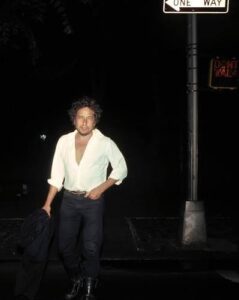
The song begins with the narrator approaching his lover from a great distance, having …walked two hundred miles… to meet her. He tells her to …look out across the fields, see me returning… But she is clearly already disillusioned with him, referring to …the fireplace where my letters to you are burning… This scenario, with the narrator having completed a difficult and presumably perilous journey to return to her, immediately positions him as a kind of mythic figure – as if he is Odysseus returning to Penelope in Homer’s Odyssey. He tries to persuade her to forget the misdemeanours he has committed in the past, by arguing that their time (and perhaps time for all of us) is short …It won’t matter who loves who/ You’ll love me or I’ll love you… he tells her …When the night comes falling from the sky… which appears to suggest that they might as well get together because ‘the end of the world is nigh’. He uses every device he can to try to win her over …I can see through your walls… he tells her, suggesting that he may have some kind of ‘supernatural’ powers …and I know you’re hurting/ Sorrow covers you up like a cape…
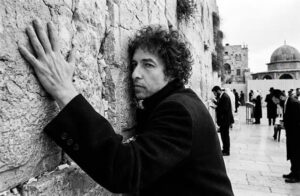
The narrator also pretends that he is being openly honest about his own failings: …I can’t provide for you no easy answers… he tells her …Who are you that I should have to lie?… while also defending himself: …I’ve never asked you for nothing you couldn’t deliver/ I’ve never asked you to set yourself up for a fall… He makes excuses on her behalf: …You must have been protecting someone last time I called… while portraying himself not just as a lover but as a kind of spiritual guide. He continues to throw apocalyptic images at her: …I saw thousands who could have overcome the darkness… he cries …For the luck of a lousy buck I’ve watched them die… presumably hoping that she will cling to him from fear of a similar fate.
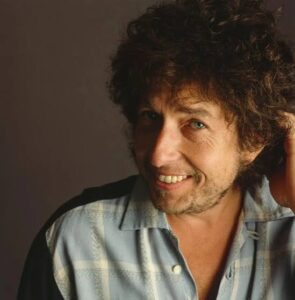
After this, the patronising tone is dropped – there are no more addresses to ‘baby’. This strongly suggests that the narrative focus has shifted to the lover’s perspective, especially as the tone is now of denial. She informs him that …In your teardrops, I can see my own reflection… before throwing in a specific memory from the past which we presume he will understand: …I was on the northern border of Texas when I crossed the line… Whether this ‘line’ is a state border or if she is referring to her decision to free herself from him is left for us to decide. She becomes increasingly strident, telling him that …I don’t want to be a fool starving for affection/ …I don’t want to drown in someone else’s wine… before revealing details of the moments in which she has glimpsed his true nature: …For all eternity I will remember/ The icy wind that’s howling in your eye… This is harrowing enough, but the lines that follow: …You will seek me and you will find me/ In the wasteland of your mind… make it clear that she has seen through his tricks. Her final riposte to him is defiant: …This time I’m asking you for freedom/ Freedom from a world which you deny… Now she assumes full control, telling him that …You’ll give it to me now/ I’ll take it anyhow/ When the night comes falling from the sky…
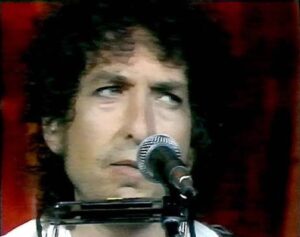
The song thus ends on a triumphant note. The second narrator refuses to be manipulated and finally breaks free of the man’s mental control. It may be, however, that the voices of both narrators represent a dialogue that occurs in ‘the wasteland’ of the narrator’s own mind. Thus the song is not, as some commentators have assumed, actually an apocalyptic prediction. But it shows how seductive the suggestion that ‘the world is coming to an end’ – whether it be through nuclear Armageddon or the Biblical apocalypse – can be, in that it can hook the ‘victim’ into a pattern of thought in which ordinary cares and values can be discarded. The male narrator may therefore by a cipher for religious fundamentalists, who attempt to terrify and ensnare potential recruits with apocalyptic threats of ‘hell fire’.
Something’s Burning Baby, which follows, is again presented as an address to a lover. Its calm tone and slower pacing, however, is very different to the melodrama of the previous song. It has a regular rhythm, taken at a stately pace, with rhyming couplets throughout its nine verses. Full of penetrating one liners and slyly subversive uses of religious imagery, it presents us with a series of enigmas. Much of the song comes over like a cross-examination, as if the narrator is assuming the role of a detective He bombards her with inquiries: …Is the love in your heart for me turning blind?… , Why is the light in your eyes nearly gone?… …What’s happening, baby, to make you act so strange?… …Why are your eyes staring off into the night?…, …What’s your position, baby, what’s going on?…, …Am I no longer a part of your plans or your dreams? …, …Where do you live, baby, and where is the light?… and finally …Answer me, baby, a casual look will do/ Just what in the world has come over you?…
None of these questions, however, will be answered. But some memorable lines provide a few clues: …I can feel it in the wind and it’s upside down… the narrator begins …I can feel it in the dust as I get off the bus on the outskirts of town… It is not specified, however, what it is that he can ‘feel’. But he is clearly searching for ways of expressing himself freely. The lines that follow:…I’ve had the Mexico City Blues since the last hairpin curve/ I don’t want to see you bleed, I know what you need, but it’s not what you deserve… are highly evocative. Mexico City Blues is a book of poetry comprising of one long poem by Jack Kerouac, in which the renowned ‘beat’ writer confronts his own recent writer’s block. This suggests that the narrator, who may or may not embody the character of the singer, is experiencing a similar problem. The highly cryptic …I know what you need, but it’s not what you deserve… echoes a line from 1966’s Stuck Inside of Mobile, which posits a similar conundrum: …Your debutante knows what you need, but I know what you want…
Thus the narrator is ‘stuck inside of Mexico City’, a location that now seems to symbolise being caught up in a kind of metaphysical tangle. He is searching for new inspiration which he may not ‘deserve’ to find, but he is not about to give up the search. The Biblical allusions he throws in are presented not as affirmations of faith but rather as negative indications of a lack of understanding within the ‘relationship’ he is addressing. In each case, however, they do not appear to solve his dilemmas. He complains that …We’ve reached the edge of the road, baby, where the pasture begins/ Where charity is supposed to cover up a multitude of sins… This refers to I: Peter: …And above all things have fervent charity among yourselves: for charity shall cover the multitude of sins…. But there is no indication that the lovers are dispensing such ‘charity’ to each other. Several other lines also refer to Jesus’ teachings …You can’t live by bread alone… the narrator tells her… you won’t be satisfied/ You can’t roll away the stone/ If your hands are tied… Dylan seems to be suggesting that ‘bread alone’ – which he twists around here to symbolise the limited uses of religious dogma – can never satisfy his inner creative yearnings. If he does not vary his ‘diet’, his ‘hands will be tied’ by the rules he has been following and he will never be able to ‘roll away the stone’ to liberate his imagination.
The rather irregular and somewhat random use of the title phrase also hints at religious significance. The opening …Something is burning, baby, are you aware?/ Something is the matter baby, there’s smoke in your hair… is rather alarming, although it soon becomes obvious that the ‘smoke’ is metaphorical. It is as if the narrator can smell the fires of hell burning. In the final verse we hear that …Something is burning, baby, something’s in flames/ There’s a man going round calling names… The narrator is, it seems, desperate to avoid being dragged down into the ‘hell’ of being trapped in a void in which there is no inspiration. However, he ends the song on a more positive note by declaring that he will find a way of avoiding such a fate:… I believe in the impossible, you know that I do… As with When the Night Comes Falling, a supposed address to a lover creates a framework which Dylan uses to find ways out of the ‘inspirational prison’ he feels he has locked himself into by subscribing to religious dogma. But now he feels able to use Biblical references in whatever way he likes. Only by going through such a process of self examination can he ‘roll away the stone’ to free himself.
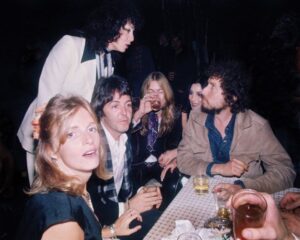
On Empire Burlesque’s concluding track, Dark Eyes, Dylan demonstrates that he is now fully able to address spiritual matters without the constraints of religious dogma, in a song which takes us on a journey into a metaphysical space. In contrast to the rest of the album’s flashy production, it has a purely acoustic setting. Although it only consists of four short verses it expresses extremely powerful sentiments in a series of compressed but unforgettable images. The lines are not always connected in a rational sense but by a kind of mystical free association. But the poetry here is so memorable that each line could virtually stand alone. Yet Dylan presents the song in an extremely ‘modest’ way, delivering the lines without emotional elaboration, over a beautiful but very understated melody. At times he appears to be ‘speaking in tongues’, albeit in a decidedly quiet way, allowing us the time and space needed to digest a visionary song whose symbolism recalls the most arcane work of Rimbaud or Baudelaire.
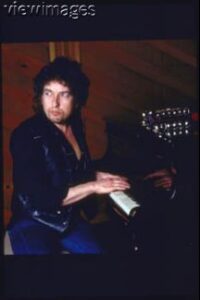
In Dark Eyes Dylan ‘takes us on a trip’ into the kind of symbolic universe he had previously explored in songs like Lay Down Your Weary Tune or Mr. Tambourine Man. But whereas those songs introduce us to exotic, ecstatic experiences, here we are taken on a much darker journey. We begin with an image which might have come straight out of a post impressionist painting by Matisse or Cezanne: …The gentlemen are talking and the midnight moon is on the riverside… We can imagine this scene being depicted in rich colours, with bold brush strokes. The canvas then ‘comes alive’, as we are told that: …They’re drinking up and walking… The narrator then ‘steps out of the picture’, telling us that …and it is time for me to slide… and that …I live in another world, where life and death are memorized… announcing that this place where he ‘lives’ is a location beyond normal comprehension, ‘another world’ in which any object, thought or emotion can be brought to life or transformed through the imagination and in which symbols become reality. Deep in meditation in this mystical place, he transmits a beautiful image to us:…The earth is strung with lovers’ pearls… as if the whole planet is decorated with glistening drops of semen – the seeds of life itself. But he is struggling to appreciate this transcendent vision …All I see… he keeps repeating …is dark eyes…
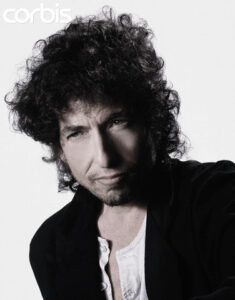
These ‘dark eyes’ are surely the narrator’s own. He is staring into the mirror of his soul. He hears a series of portentous sounds: … A cock is crowing far away and another soldier’s deep in prayer/ Some mother’s child has gone astray but she can’t find him anywhere… These images bring to mind various associations. In the New Testament Jesus tells Peter that before a cock crows three times he will deny him. The soldier is presumably praying before a battle. A child is lost. But far worse is to come. The narrator now experiences a terrifying vision: …I can hear another drum beating for the dead that rise/ Whom nature’s beast fears as they come and all I see are dark eyes… The Day of Judgement has come. The dead rise out of their graves as a drum beats ominously. These dark and disturbing visions are presented in stark contrast to the transcendent beauty he eulogises in the previous verse.

The narrator then expresses his anger at the way his imaginative perception of such beauty – the central focus of poets in the romantic tradition – has been ‘crowded out’ by these terrifying Biblical portents. He addresses those who wish to kill the true poetic spirit with venom so strong that it recalls the bitterness of Like a Rolling Stone or Positively Fourth Street: …They tell me to be discreet for all intended purposes/ They tell me revenge is sweet and from where they stand, I’m sure it is… He casts his withering scorn on those who privilege religious dogma over the spirit of the imagination: …I feel nothing for their game… he sneers …where beauty goes unrecognized… In particular, he identifies the Biblical doctrine of Armageddon, wherein the world will be consumed in flames and the vast majority of souls will be condemned to eternal torture and damnation, as the epitome of this ‘game’: …All I feel is heat and flame… he tells us… and all I see are dark eyes…
Dylan has demonstrated a fascination for the idea of Armageddon throughout his career. In A Hard Rain’s a-Gonna Fall and With God on Our Side he links the terrifying prospect of nuclear Armageddon to such religious beliefs. In the 1980s, with the Soviet Union fighting another ‘proxy war’ in Afghanistan and both sides in the Cold War building up their nuclear stockpiles, the fear of such an extinction event was at its highest since the Cuban Missile Crisis of 1962. The US President, former Hollywood star Ronald Reagan, was a devout believer in Christian prophecies. Having milked his Hollywood credentials by announcing a deeply flawed nuclear missile defence system that became popularly known as Star Wars, in October 1983 he was quoted by the Jerusalem post as saying that …I turn back to your ancient prophets in the Old Testament and the signs foretelling Armageddon, and I find myself wondering if, if we’re the generation that’s going to see that come about… making the potential link between nuclear war and Armageddon quite explicit. It seemed that some Christian fundamentalists (perhaps even including the President) would actually welcome nuclear war, seeing it as the fulfillment of Biblical prophecy. With some of the pronouncements he had spewed out on stage during his ‘evangelical’ period, Dylan almost seemed to be giving credence to such prophecies. Now, however, having freed himself from such dogma, he delivers a warning, to his audience and to himself, of where such beliefs could lead.
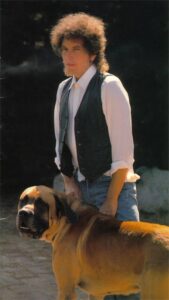
In the final verse Dylan presents four apparently unconnected statements. First he tells us that …the French girl, she’s in paradise and a drunken man is at the wheel… It seems that he is referring to Joan of Arc – the ‘French girl’ who led her troops against the English, who subsequently captured her burnt her alive as a witch. The Catholic church later canonised her as a martyr who was assured a place of honour in heaven. But as Dylan’s dry and measured delivery emphasises, the fetishism of such martyrdom is a feature of religious dogma which prioritises the ‘glory of death’ over life itself. Meanwhile, in his vision he sees ‘a drunken man’ – a figure who is clearly out of control and who subscribes to such an ideology – ‘driving’ the world towards oblivion. In the monumental line that follows …Hunger pays a heavy price to the falling gods of speed and steel… he glimpses a vision of a post-apocalyptic world destroyed by the ‘gods’ of technology who have one become, like Satan, ‘fallen angels’. He then delivers a dire warning infused with hope: …Oh, time is short and the days are sweet and passion rules the arrow that flies… The human race, it seems, may be on the brink of oblivion. Perhaps we just need to enjoy the ‘sweetness’ of these final days. But it is still possible that human passions and the power of our imagination can still save us from such a terrible fate.

In the compressed brilliance of the final line: …A million faces at my feet but all I see are dark eyes… Dylan again ‘stands on the ocean until he starts sinking’, staring down at the many millions who will may have their lives curtailed as a result of all this madness. At the same time the line brings us back to the awareness that Dylan himself has the status of a mass entertainer, who has – through live performance, recordings and broadcasts – has ‘a million faces at his feet’. But such success, he warns, will be no consolation if the prophecies come true. Finally the visions dissolve and he stares back into his own eyes, seeing only darkness. In this devastating finale, he admits that all his fame and influence will be meaningless if the world surrenders to such religious fanaticism.
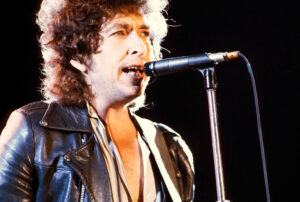
Ring Them Bells, from 1989’s Oh Mercy, is another song in which Dylan confronts prophecies of the ‘end of the world’. The fact that the song is crammed with religious imagery again led some listeners to believe that it was conveying a conventional Christian message. This impression was encouraged by the fact that the piano-led ballad has a strong hymn-like quality. But in fact, as with Dark Eyes, the song indicates the way in which Dylan’s theological stance has shifted from fundamentalism to a distinctly Blakean vision, in which conventional religious institutions are seen as instruments of evil and social oppression, blinding people to the power of true spiritual revelation. In Chimes of Freedom he had presented a semi-hallucinogenic vision of church bells ‘tolling’ for …every hung up person in the whole wide universe… Now he implores various symbolic figures to ‘ring them bells’ in order to shock the world into an awareness that a cataclysm may be at hand. There is much repetition of the title phrase, as if its narrator is continually attempting to ‘wake up’ his listeners. Daniel Lanois’ use of muted echo helps to give the song an ethereal atmosphere, while Malcolm Burn’s washes of organ in the background increase the song’s ‘churchy’ feel. In contrast to the rather muted delivery of Dark Eyes, Dylan’s vocals here are full throated and passionate, although they are – like the song itself – laced with both compassion and dread.
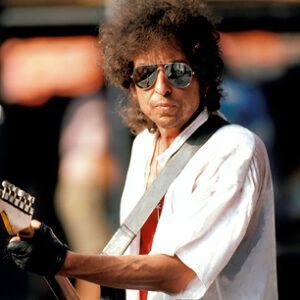
The song begins with a deliberate use of archaic language: …Ring them bells, ye heathen from the city that dreams… giving the song the linguistic flavour of the King James Bible. However, the narrator implores not Christians but ‘heathens’ (who emanate from ‘the city that dreams’ – a place where the imagination can roam free) to sound the alarm. He continues: …Ring them bells from the sanctuaries/ ’Cross the valleys and streams/ For they’re deep and they’re wide… The ‘sanctuaries’ here appear to be places in which free thought prospers and from which the narrator is encouraging the ‘heathens’ to broadcast their warning across the world. This is necessary because …the world’s on its side/ And time is running backwards/ And so is the bride… These are specific allusions to the Book of Revelation, in which, following the apocalypse, linear time ceases. The figure of ‘bride’ in Revelation is generally considered to represent the church. Dylan, however, twists the references around, picturing the fundamentalists in the church as encouraging a retreat into a medieval mentality while they fully embrace the coming destruction.
The narrator then calls upon those who follow mainstream Christianity, personified by Jesus’ lieutenant St. Peter (supposedly the first pope) to denounce this poisonous mentality: …Ring them bells St. Peter/ Where the four winds blow/ Ring them bells with an iron hand/ So the people will know… The narrator decries how the compassionate teachings of mainstream Christianity have been corrupted by the fundamentalist ‘death cult’: ….Oh it’s rush hour now… Dylan cries in anguish …On the wheel and the plow/ And the sun is going down/ Upon the sacred cow… The wheel is a traditional Christian symbol of God’s omnipotence and the ‘keeping your hand on the plow’ symbolises following Jesus’ teachings (as in the traditional spiritual Gospel Plow, which Dylan sang on his first album). But the song implies that the fundamentalists have made these symbols meaningless, creating a kind of ‘religious gridlock’. The light of ‘true religion’ has been dimmed and the beliefs of fundamentalists are likened to the ‘sacred cow’ or ‘golden calf’ of Exodus, which the Israelites turn to worshipping when their faith in God is diminished.
The narrator continues to call on symbolic Christian figures to combat the scourge of ‘false religion’: …Ring them bells, sweet Martha for the poor man’s son… he sings …Ring them bells so the world will know that God is one… ‘Martha’ was a friend and helper of Jesus in the New Testament. The narrator warns that …the shepherd is asleep/ Where the willows weep/ And the mountains are filled with lost sheep… referring to the Biblical designation of Jesus as a spiritual ‘shepherd’ who safeguards his believers as his ‘flock’ and to the parable of the lost sheep, in which a shepherd with a hundred sheep insists on searching high and low for one lost animal. This story symbolises Christian charity, following the idea that even one ‘lost soul’ is worth saving. But here the numbers of the ’lost sheep’ have multiplied, as their shepherd has fallen asleep, implying that true Christian values have been lost or submerged by those who privilege the idea of ‘holy Armageddon’ over any message of kindness or true ‘godliness’.
The bridge section contains what are perhaps the song’s most ambiguous and moving lines. The narrator begins by listing some of those who are suffering in the world, in a similar way to those he mentions in Chimes of Freedom: …Ring them bells for the blind and the deaf… The instruction that follows focuses on the idea of the ’elect’, a select group who will be chosen to survive after armageddon, whom Calvinists believed were a pre-destined group. Here the narrator expresses compassion for them: … Ring them bells for all of us who are left/ Ring them bells for the chosen few/ Who will judge the many/ When the game is through… By positioning the ‘elect’ not as individuals to be venerated but to be pitied, the narrator seems to be attacking this inhuman doctrine. The heartbreaking: …Ring them bells, for the time that flies/ For the child that cries/ When innocence dies… which follows, demonstrates that the narrator’s deepest sympathies are with the innocent potential victims, rather than with the self-appointed ‘spiritual elite’.
Finally the narrator calls upon St. Catherine, a Christian martyr who was horribly tortured for her faith, to …Ring them bells… from the top of the room/ Ring them from the fortress/ For the lilies that bloom… Matthew 6:28-29 has Jesus teaching that …Consider the lilies of the field, how they grow; they toil not, neither do they spin/ And yet I say unto you, that even Solomon in all his glory was not arrayed like one of these… Here the martyred saint is called upon to venerate the essence of beauty, as expressed in God’s creation. But she is also positioned as being trapped in a ‘fortress’ in the midst of a war. Then we are told that …the fighting is strong/ And they’re breaking down the distance/ Between right and wrong… at which point the song concludes with an unceremonious jolt. The last two lines sum up the message of the whole song. The ‘villains’ of the song are the fundamentalists and Calvinists who deny the humanism of Jesus’ teachings and long for the Day of Judgement, in which they will be able to demonstrate their spiritual superiority over the ‘less worthy’. The expression of intense regret and pity here seems to be a clarion call for the messages in the scriptures to be interpreted in a more compassionate way. But the abrupt ending seems to suggest that the damage has already been done and that Christian morality has been twisted out of shape to become the very opposite of what it is supposed to be.
Bob Dylan’s ‘post religious’ songs thus combine his pre-conversion poetic sensibilities with some harsh criticisms of the ‘cult like’ nature of much of modern Christianity, with its fetishising of the idea that we live in the ‘end times’, and that we are approaching the harsh judgement of a cruel and jealous deity who will destroy all of those who refuse to pay homage to him. Having been initially ‘blinded’ by his original ‘encounter with Jesus’ and having been drawn into a particular fundamentalist cult, he has now realised that his conversion experience had led him on a path towards a deeply dogmatic and ‘anti-human’ version of religion. There is little doubt that, although he no longer seeks to preach in his songs, he has retained his basic faith. But the form of Christianity he now follows is very much along the lines of that espoused by one of his great heroes and poetic forebears, William Blake – a transcendental, multi dimensional and deeply spiritual form of belief which foregrounds compassion to other human beings above cruel and judgemental rhetoric. In the process of writing these cathartic songs, he has now declared his refusal to follow the dictats of any particular form of institutionalised religion and has reclaimed his poetic soul.
A HEADFUL OF IDEAS’ is ranked in the top 20Bob Dylan podcasts at:
https://www.millionpodcasts.com/bob-dylan-podcasts/
LINKS
STILL ON THE ROAD – ALL DYLAN’S GIGS
THE CAMBRIDGE BOB DYLAN SOCIETY
Leave a Reply