


RESTLESS FAREWELL: IT’S CLOSING TIME…
…Juliet: Good night, good night! Parting is such sweet sorrow,
That I shall say good night till it be morrow…
William Shakespeare, Romeo and Juliet, Act 2, Scene 2
Restless Farewell, which was originally released as the closing track on 1964’s The Times They Are a-Changin’ (1964), is a slow, reflective and elegiac ballad. After venting his spleen against racists, war mongers and the injustices of American capitalism in the rest of the album by means of raw and sarcastic protest songs, Dylan now sounds decidedly exhausted – as if he now knows that he has said all he needs to say about such topics. The song has often been seen as an indication of a shift in both his writing and how he would present himself to the public in future. Above all, it declares his outright refusal to be pigeonholed. It is a declaration of independence and a highly moving avowal of personal integrity – a sad ‘farewell’ to one mode of singing, playing and song writing and a profound expression of aesthetic ‘restlessness’.

The song itself was born out of some bitter experience. In November 1963 an article was published in Newsweek ‘exposing’ the tales Dylan had (perhaps rather foolishly) been spinning of a youth spent touring the country in carnivals and meeting with famous blues legends. It also lent publicity to the outrageous rumours that he had not written Blowin’ in the Wind but had bought it from a high school student in New Jersey. Dylan is said to have composed Restless Farewell as a riposte to this article and to have swiftly recorded it. But this is not any kind of ‘autobiographical’ song. It reveals no details of the composer’s life story and makes no mention of the offending ‘exposé’ or of the identity of any of his ‘accusers’. Some commentators have labelled it a ‘confessional’ song. But rather than its narrator admitting any mistakes or ‘sins’, it is actually constructed as an outright denial of personal accusations, as if its creator is ‘clearing the way’ for a different kind of self mythologisation.
RESTLESS FAREWELL:
As has been widely recognised, Restless Farewell is based on The Parting Glass, an ancient Scottish ballad which later became popular in Ireland. This was a song which had gone through considerable lyrical adaptations over the years. At some point in the nineteenth century it began to be performed against the stirring and evocative melody which, along with some of the song’s sentiments, Dylan uses here. This ballad was introduced to American ears by The Clancy Brothers, who were performing in Greenwich Village around the same time as the young Dylan, and spent a number of late nights carousing with him. It has since become a standard in the repertoire of many Irish and American folk performers. Some of the outstanding renditions include those of Sinead O’Connor, Shane MacGowan with The Pogues and Liam Clancy himself. The songs are so closely related that Restless Farewell might even be seen as another version of a song which itself had metamorphosed over its long history.
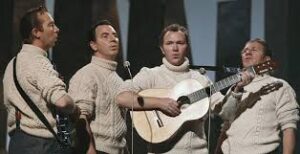
THE CLANCY BROTHERS
The Parting Glass is, however, more of a true ‘confessional’ than Restless Farewell. Its narrator is – rather like the protagonists of many blues and country songs – a ‘restless’ traveller, who is looking back over his life in a tone that is partly regretful. It has a slightly tragic, nostalgic tone which eloquently sums up the (presumably aged) traveller’s regrets about an adventurous life which has not brought him great happiness or contentment. A ‘parting glass’ was a measure of spirits often given to such ‘Irish rovers’ to fortify them for their lonesome journeys. The song’s narrator begins by admitting that he has made many mistakes in life, but that …all the harm I ever have done/ Alas, it was to none but me… He calls upon his drinking companions to toast …Good night and joy to you all… before embarking on his next journey, asking them to …drink a health to whate’er befalls…. The symbol of the ‘parting glass’ may well imply that his days on earth are now likely to be limited. But he takes refuge not in any religious belief but in his memories of the companionship of his ‘drinking buddies’ which has provided him with solace throughout his life. In some ways it has a kinship to Auld Lang Syne, now traditionally sung to welcome in the New Year, which also refers to ‘drinking a cup’ to remember ‘auld acquaintances’ .
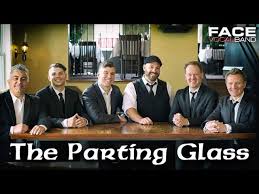
While The Parting Glass begins with the lines …Of all the money that e’er I had/ I have spent it in good company… Dylan’s song commences with an apparently similar sentiment: …Oh, all the money that in my whole life I did spend/ Be it mine right or wrongfully… but from here on he begins to construct a rather different message. Unlike the narrators of so many ‘drinking songs’ he admits no fault, seeking to exonerate himself from accusations.
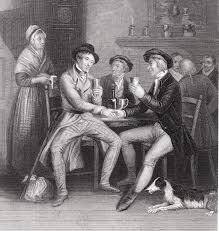
What is particularly striking about Dylan’s lyrics here are the way he constructs some beautiful and resonant poetry which is never self indulgent or over reliant on confusing imagery. He makes a series of highly coherent statements in a kind of ‘plain speak’, allowing the inherent symbolism to emerge naturally. In the first four verses, rather than admitting any faults, he defends himself against all accusations. Each verse follows a similar rhythmic pattern, beginning with a fairly simple ABAB rhyme scheme. Then the pace slows down as he delivers a more reflective CCDEED pattern, as if he is in fact becoming slightly maudlin under the effects of drink. In a song which supposedly composed in great haste, Dylan’s use of language here is extraordinarily precise.
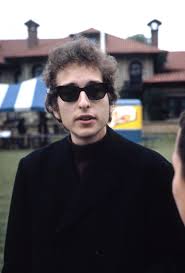
The narrator begins by stating that he has always been a generous soul, allowing any money he had to …slip gladly to my friends… mirroring the sentiments of the earlier song.
But then he interjects with the more ambiguous …To tie up the time most forcefully… Despite the denial of wrong doing, there seems to be a note of regret here. The notion of ‘tying up the time’ is an intriguing one. It seems to refer to a way of accepting that the past has gone and that it is time to move on. The second part of the verse is highly evocative: …But the bottles are done/ We’ve killed each one/ And the table’s full and overflowed…. again suggesting a life of companionship which is now in the past – the ‘overflowing table’ representing past memories. The emotions being expressed here are reminiscent of the nostalgic glow, mingled with regret, of Bob Dylan’s Dream. The fact that this ‘dream is over’ is signalled by: …And the corner sign/ Says it’s closing time/ So I’ll bid farewell and be down the road… As with the protagonist of The Parting Glass, Dylan’s narrator must move on. But he is engaging not in literal travel. He is ‘moving on’ to the next phase of his artistic and spiritual development.
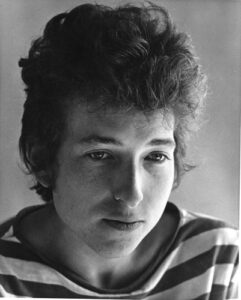
RESTLESS FAREWELL:
In the following verses, the narrator exonerates himself from causing hurt to …every girl that ever I’ve touched… and …every foe that ever I’ve faced… He expresses regret at not sticking around long enough to become friends with his ex-girlfriends and – in a clear nod to his ‘protest songs’ – states that …Every cause that ever I’ve fought/ I fought it full without regret or shame… Employing a little blues imagery, he tells us that as …my feet are now fast/ And point away from the past/ I’ll bid farewell and be down the line … The closing lines of the third verse include some memorable use of alliteration: …But the dark does die/ And the curtain is drawn and somebody’s eyes must meet the dawn… The ‘night of carousing is over’ and he now needs to depart before the coming of a new dawn tempts him to stay. Tearing yourself away from old patterns and habits is a difficult process, which is why the song often sounds so mournful, but he is determined to do it.
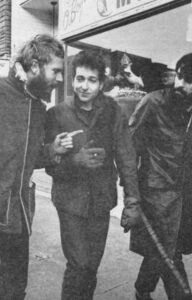
In the closing verses, the song becomes ever more personal as the narrator describes how and why he will be ‘moving on’. The remarkable metaphorical construction of …Every thought that’s strung a knot in my mind/ I might go insane if it couldn’t be strung… conveys his restless need to move on in graphic terms. The song is becoming more and more of a personal manifesto as he recounts his whole artistic raison d’etre: …It’s not to stand naked under unknowing eyes/ It’s for myself and my friends that my stories are sung… In other words, he does not want to be someone whose personal life is drooled over by the media for the salacious entertainment of those who do not understand what he is trying to do. He wants to be a creative artist, not a celebrity. He complains again about the obnoxious ‘price of fame’: portraying it as …the dirt of gossip… and decrying the …dust of rumors... which threatens his artistry. And then, in one of his most poignant metaphorical constructions, he signals his absolute determination to go his own way: …If the arrow is straight, and the point is slick, it can pierce through dust no matter how thick…. Not only is this a potent metaphor but also the sheer sound of the rhymes ‘slick’ ad ‘thick’ powerfully convey this resolve to our senses as well as our minds.
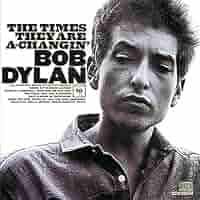
After this, the defiant final lines …So I’ll make my stand/ And remain as I am/And bid farewell and not give a damn… which paraphrase Rhett Butler’s famous last words to Scarlett O’Hara in Gone With the Wind, rephrase that brilliantly ‘cutting’ metaphor in even clearer terms. From here onwards, Dylan will truly ‘not give a damn’. He will follow his artistic muse wherever she leads him, whether it be towards writing surrealist verse, ‘going electric’, retreating into nonsense rhymes, exposing the darkest depths of his fears or finding religion. Despite the sadness and nostalgic reflections of the song, it is thus a glorious cry of liberation. It is perhaps ironic that Dylan uses a classic folk song as the basis for freeing himself from the constraints of being labelled a ‘folk singer’. It must also make one pause for breath to realise that he was only twenty two years old when he composed a song which appears to contain the wisdom of the ages.
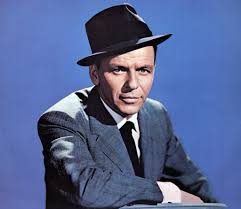
FRANK SINATRA
Mysteriously, there are only a handful of live performances of Restless Farewell, even in the early years. Perhaps the song was just too personal for him or brought back too many memories for him of living a life before worldwide fame made him have to have to guard his privacy so closely. But in 1995, when asked to sing at a tribute concert to Frank Sinatra for his 80th birthday, he performed (at Sinatra’s personal request) an astonishingly reinvented version of the song which still stands as one of his most memorable and heartfelt performances. Dylan sings in a near-whisper, without any of his usual arch mannerisms, in what is truly an expression of love for the life and work of one of the century’s greatest vocal artists. Unlike the original, he sounds not tired and weary but strong and proud, using the song to celebrate the often controversial vicissitudes of a figure who had, like him, spent nearly all his adult life under the public gaze yet who was determined to continue to develop his art to a great age. It is quite astonishing how much this song now sounds as if it might have been written as a tribute to the great crooner himself who, on the way, had surely have ‘killed’ more than a few bottles himself.
‘A HEADFUL OF IDEAS’ is ranked in the top 20Bob Dylan podcasts at:
https://www.millionpodcasts.com/bob-dylan-podcasts/
LINKS
STILL ON THE ROAD – ALL DYLAN’S GIGS
THE CAMBRIDGE BOB DYLAN SOCIETY
Leave a Reply