

THIS WHEEL’S ON FIRE: BEST NOTIFY MY NEXT OF KIN…
a version of this blog forms part of ‘Minstrel Boy: The Metamorphoses of Bob Dylan’
…You do me wrong to take me out o’ th’ grave. Thou art a soul in bliss, but I am bound/ Upon a wheel of fire, that mine own tears/ Do scald like molten lead…
William Shakespeare King Lear 4:7
…Long ago, if my memory serves me, my life was a banquet where everyone’s heart was generous, and where all wines flowed…
Arthur Rimbaud A Season in Hell transl. Wallace Fowlie
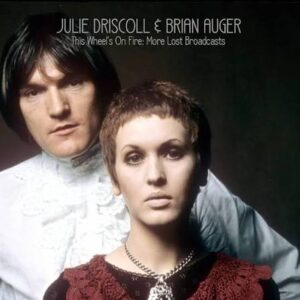
In many ways, Wheel’s on Fire (one of the most celebrated and covered songs from The Basement Tapes) is a weirdly skewed summary of the cultural dynamic of the year of its composition. 1967 (when the Tapes were recorded) was arguably the most momentous year in rock music history, in which many elements of the counter culture – and especially those related to the LSD experience – became prominent. It is perhaps ironic, given Dylan’s policy of complete detachment from the ethos of the ‘summer of love’, that the hit version by Julie Driscoll and Brian Auger and the Trinity (released in 1968), with its early use of mellotron and phased vocals, has come to be regarded as a psychedelic classic.
In the original recording, which was not released until 1975, co-writer Rick Danko’s bass is predominant as the song builds up in a slow and decidedly ominous way. Dylan’s vocals are passionate and committed.

RICK DANKO OF THE BAND
The song boasts a rousing chorus, in stark contrast to the brooding tone and enigmatic lyrics of the verses, which can be seen as darkly suggestive – not of a future hippie idyll but of an oncoming cataclysm – while the verses are delivered through the mouth of a narrator who appears to be outlining the details of some convoluted and difficult relationship. The way these two elements are mingled creates the considerable dramatic tension that makes the song so memorable. Depending on the singer and the arrangement, it can convey either the joyous celebration or apocalyptic doom of a year in which transcendent and revolutionary notions of hedonism and ‘spiritual renewal’ were constantly being juxtaposed against the continuing backdrop of Cold War animosities and the threat of nuclear annihilation.

THIS WHEEL’S ON FIRE
The song has been subjected to a number of different treatments. The first release on The Band’s Music From Big Pink (1968), featuring Danko on vocals, was presented in their characteristically clipped and restrained country-funk style with a number of distinctive ‘special effects’ from keyboardist Garth Hudson.
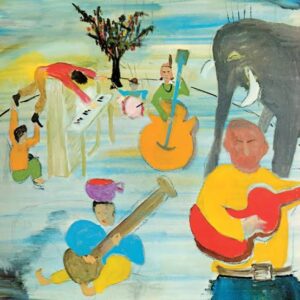
MUSIC FROM BIG PINK COVER
(painting by BOB DYLAN)
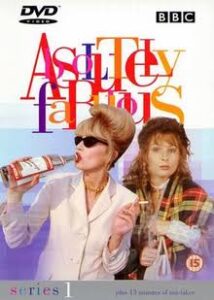
Another powerful 1968 version by The Byrds was delivered in a country-rock vein. Their versions can be seen as key staging posts in the movement away from psychedelia and towards a new concept of American ‘roots music’. Yet the song’s association with 1960s excess was re-emphasised by it being brought back into prominence as the theme tune (sung by Driscoll with Adrian Edmonson) for the highly successful 1990s TV comedy series Absolutely Fabulous, which centred around two characters who were throwbacks to the hippie era. The song can thus be treated as either a celebration of a lifestyle of hedonistic excess or a portentous warning of its potential consequences.
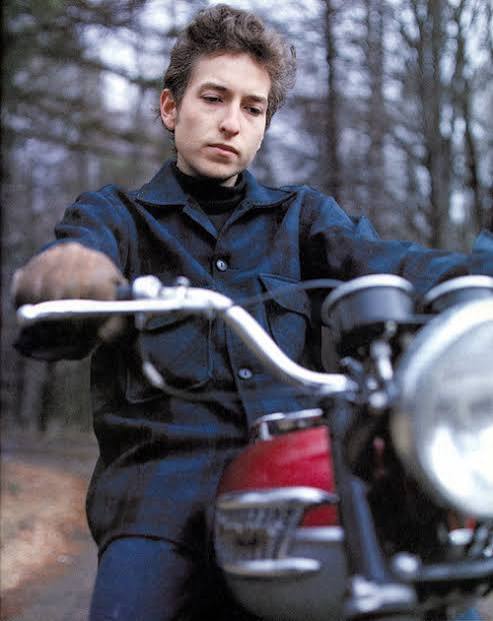
Given the history and origin of The Basement Tapes, it is natural to connect the resonant imagery that Dylan concocts here with his fabled motorcycle crash in 1966, which led to his retreat from public view and ultimately to the experimental musical journey of which the song was to be a key part. The crash itself remains shrouded in mystery, as there is no record of Dylan being admitted to hospital at the time. Many have seen it more as symbolic excuse to retreat from the mainstream than a genuinely life threatening incident. The chorus: …This wheel’s on fire/ It’s rolling down the road/ Just notify my next of kin/ This wheel shall explode…

appears to be a warning, in ‘real time’, of such an imminent disaster. The crash, it seems, is yet to happen. But the instruction to …notify my next of kin…. and the ‘explosion’ that follows makes it seem inevitable. Depending on the musical arrangement, the prediction of the imminent explosion can sound slightly matter-of-fact (as in The Band’s version), dynamic and positive (as in The Byrds’ version, which even ends in an explosion) or dreamy and sensual (in Driscoll’s reading).
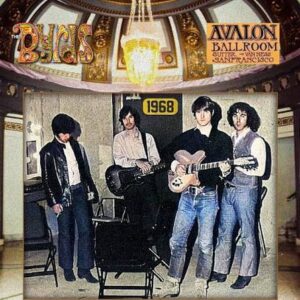
THE BYRDS (1968)
In Dylan’s original version, the pronouncement sounds more and more mysterious as the song progresses. There may well be an allusion in the chorus to King Lear, who finds himself ‘on a wheel of fire’ – a representation of a destiny he cannot escape from. The chorus thus presents a narrator who is being swept towards an inevitable, unstoppable cataclysm. He appears to have no control over the vehicle. This may be seen as a representation of the dangers of the all-consuming ‘rock and roll lifestyle’ that Dylan was pursuing before his accident. By implication, the song is also a warning to the wider counter culture that the ‘wheels may soon come off’ their dreams of a utopian future. At the same time, it suggests that the narrator’s patience is almost exhausted and that, as in Visions of Johanna, it is his ‘conscience’ that is about to ‘explode’.
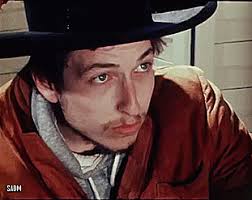
THIS WHEEL’S ON FIRE
The song consists of three eight line verses with a repeated ABCB rhyme scheme, punctuated by the choruses. The language is precise and highly resonant. The theme of memory is very prominent. Dylan uses a device which appears in none of his other songs, beginning and ending each verse with the phrase …If your memory serves you well… The penultimate line of each verse is a variation on …But you know that we shall meet again… This, along with the chorus, provides another ‘hook’ for the listener. The repetition of the phrase reinforces the importance of remembering, but also emphasises the fragility of memory itself. The action of the song takes place in a mysterious landscape. The narrator addresses a single figure throughout. But we are given no indication as to whether the addressee is a man or a woman, a lover, a friend, an enemy or even another aspect of the narrator’s personality. The song begins with the narrator suggesting that he and the addressee had an arrangement to meet up again. It seems, however, that he or she has not shown up. …I’m going to unpack all my things… the narrator tells us …and sit before it gets too late…
The following lines …No man alive will come to you/ With another tale to tell… uses what is normally an exclamatory phrase of shock ‘man alive!’ in a strikingly unusual way. The narrator appears to be implying that only he is capable of ‘telling the story’ that is required here. And again he suggests that their future meeting is inevitable: …but you know that we shall meet again/ If you memory serves you well… This may or may not be a rhetorical qualification. But it does imply that their eventual ‘joining together’ cannot be avoided. This adds to the sense of ‘destiny’ that the song conveys. Even though it is narrated as if the coming crash is in the future, there is also a nagging sense that the cataclysm has actually already happened.

The imagery in the second verse has often been associated with heroin or amphetamine use. The narrator declares that …I was goin’ to confiscate your lace/ And wrap it up in a sailor’s knot/ And hide it in your case… These lines may have a perfectly innocent meaning, as if he is playing some kind of practical joke. Some commentators have, however, interpreted these lines as meaning that he intends to ‘confiscate’ the addressee’s drug paraphernalia and stash it away – ‘lace’ referring to the means by which addicts tie a string or bootlace around their arm to cut off the blood flow to the injection site. A ‘sailor’s knot’ consists of two intertwined pieces of string or rope. It is often used as a symbol of friendship and love, with reference to the strong bonds sailors often form on long voyages. But this is followed by the more uncertain …If I knew for sure that it was yours/ But it was oh so hard to tell… as if the narrator is not entirely convinced that the addressee is a ‘user’. Perhaps, however, he is actually addressing himself; appealing to his own conscience.
The final verse resolves none of the song’s mysteries but merely deepens them. The repetition of …If your memory serves you well… becomes almost a threat here, as if the narrator is sarcastically reminding the addressee of unfinished business. He reminds them that ….You’ll remember that you’re the one/ That called on me to call on them to get you your favors done… What these ‘favours’ are will never be revealed. Then we hear that …And after every plan had failed and there was nothing more to tell/ You knew that we would meet again/ If your memory serves you well… Thus, the enigma remains intact. Perhaps the ‘wheel of fire’ is the doomed relationship itself. Or, if this is an inner dialogue, the narrator is recounting his own failure to deal with his problems. In the end, these problems cannot be resolved.

BOB IN WOODSTOCK WITH HIS KIDS
The wheels have come off the narrator’s life and the coming explosion cannot be prevented. It seems that the addressee’s memory may in fact not serve them well at all. Perhaps it is death that awaits the narrator and his much vaulted reunion can only occur in the afterlife. Or perhaps he is desperately trying to create a new life for himself as his old existence explodes. Much of the power of the song lies in the fact that it never reveals its secrets, leaving us to construct a number of possible scenarios. This kind of knowing ambiguity will be a model for many more songs to follow.
LINKS
STILL ON THE ROAD – ALL DYLAN’S GIGS
THE CAMBRIDGE BOB DYLAN SOCIETY
Leave a Reply