

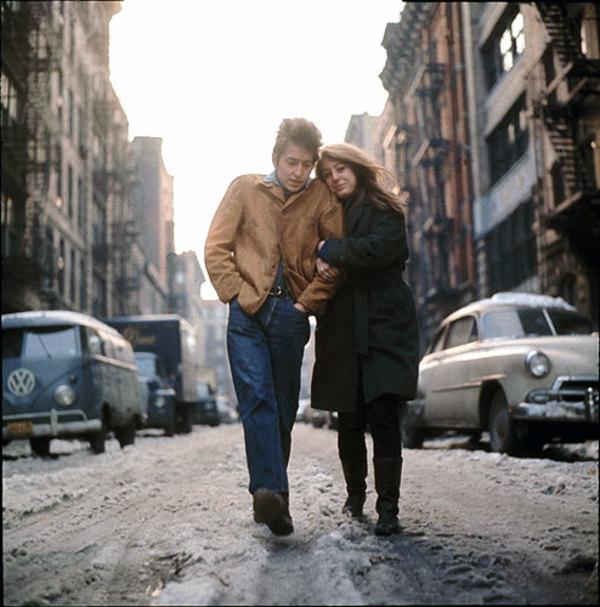
GIRL FROM THE NORTH COUNTRY/ BOOTS OF SPANISH LEATHER: SHE WAS ONCE A TRUE LOVE OF MINE
A version of this appears in Chris Gregory’s forthcoming DIG YOURSELF: THE RISE OF BOB DYLAN 1961-66, the third part of the PICASSO OF SONG trilogy

GIRL FROM THE NORTH COUNTRY AND BOOTS OF SPANISH LEATHER
Disseminated in her Hair –
Since she and I had met and played
Decade had gathered to Decade –
But Time had added not obtained
Impregnable the Rose
For summer too indelible
Too obdurate for Snows
Emily Dickinson, A little Snow Was Here and There from Snow Poems (1890)

EMILY DICKINSON
…Everybody’s going out and having fun
I’m just a fool for staying home and having none
I can’t get over how she set me free
Oh lonesome me…
Don Gibson, Oh Lonesome Me (1957)
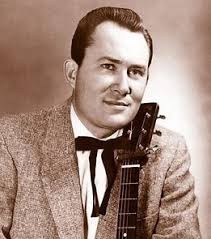
DON GIBSON
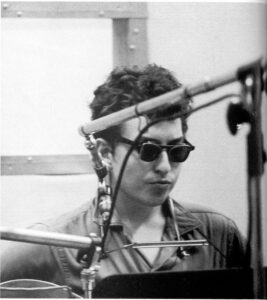
In December 1962 Bob Dylan embarked on his first trip to England, having been signed up to play a small role as a folk singer in a BBC TV drama called Madhouse on Castle Street (sadly now lost). Although he had the ill luck to arrive during the worst winter in living memory, his spell in the UK was extremely productive.
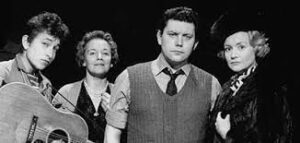
THE CAST OF ‘MADHOUSE ON CASTLE STREET’
He played sets in several London folk clubs
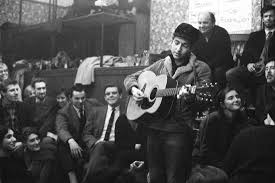
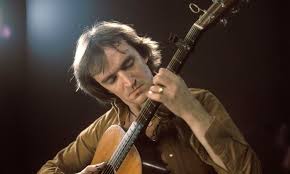
and made the acquaintance of a number of young folk singers – notably Martin Carthy, one of the leading lights of the British folk revival. Carthy had the distinction of getting a mention on Nat Hentoff’s sleeve notes for Dylan’s breakthrough album Freewheelin’ , two years before the release of his own first album. He is credited there as teaching Dylan the melody of the traditional song Lord Franklin, on which Dylan based Bob Dylan’s Dream.
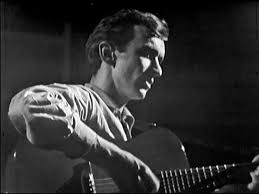
MARTIN CARTHY
Carthy devoted his entire career to traditional folk music. As with Dylan, his unique style of singing was far from mainstream notions of ‘good taste’. Like Dylan, he placed great emphasis on ‘acting out’ the lyrics of the songs he sings, often using quite jarring vocal expression to alert his audience to the stories in the songs. He also freely adapted many folk songs, composing or borrowing new melodies (as many existed only in manuscript form); very much as singers like Dave Van Ronk and Jack Elliott were doing with American material. His immersion in – and dedication to – British traditional music parallels Dylan’s grounding in American folk forms.
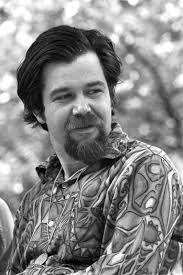
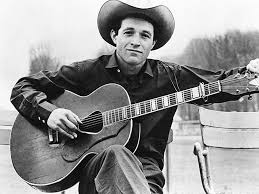
DAVE VAN RONK JACK ELLIOTT
Dylan had already shown some interest in such music by this point in his career, having performed songs such as Long Time a-Growing, House Carpenter and The Cuckoo is a Pretty Bird. But his exposure to such material had generally come about through listening to American versions of these songs. Getting hold of recordings of the ‘originals’ in the USA was not easy at that time. He had, however, been highly impressed by the Scottish singer Jean Redpath and the Irish trio The Clancy Brothers, who could be heard performing in the Greenwich Village clubs in the early 1960s. Much of American folk music has deep roots in British traditions. So the journey to England, and the encounter with singers like Carthy and Bob Davenport, can be said to have taken Dylan ‘back to the source’. Dylan was fascinated by the often brutal realism of much of this material, as well as the ‘weirdness’ of songs like Nottamun Town, which he had heard Redpath perform and which he adapted into Masters of War.
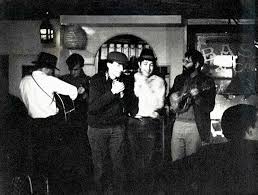
The meeting with Carthy was thus revelatory for Dylan. One of the songs he was particularly fascinated by was Scarborough Fair, a ballad which was derived from other songs (such as The Elfin Knight) which had existed in various different forms for several hundred years. Carthy adapted his version of the song by slimming down the number of verses and produced an arrangement which has become the standard one for folk singers to use ever since. After Dylan learned the tune, he adapted it as the basis for two songs, Girl from the North Country and Boots of Spanish Leather. Two years later, Carthy also taught the song to Paul Simon, who merged it with elements of his own anti-war composition The Side of a Hill to produce the beguiling Scarborough Fair/Canticle; arguably the song in which his highly successful vocal partnership with Art Garfunkel achieved its most complex and original expression.
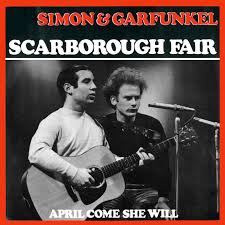
Dylan’s fascination with Scarborough Fair chimes with his perception of many such old ballads as being uncanny or creepy and full of dark underlying themes. This was certainly true of the rather surreal Nottamun Town and, perhaps to a lesser extent, of Scarborough Fair – which consists of a conversation between a young man and an unnamed friend, who may be either male or female, regarding his ex-lover, who we may assume is still in love with him. Or at least that is what the narrator assumes – perhaps he is merely arrogant or dismissive. Each verse repeats the second line …Parsley, sage, rosemary and thyme… and rhymes it with …for once she was a true love of mine…in the first and final verse and …And then she’ll be a true love of mine… in the four other verses.

The song begins with what seems to be a declaration of love, but in these ‘middle verses’ the narrator instructs his friend to set her a series of impossible tasks – firstly to make him a shirt without any …seam or needlework… then to find him ..an acre of land/ Between the salt water and the sea strand… She is told to plough this ‘impossible field’ with a ‘lamb’s horn’ (which of course lambs do not have), to sow the entire field with ‘one peppercorn’, to …reap it with a sickle of leather… and …thrash it with a bunch of leather… to win his love. Of course, the girl will not be able to complete any of these absurd tasks. If the song were not so poetic and fanciful it might be said that, despite the beauty of the melody, these pronouncements are somewhat cynical – a roundabout way of telling her that she will never be his ‘true love’ again. Or perhaps the song is a satire on the traditions of courtly love, in which ‘gentil knights’ were expected to fulfil a series of extremely arduous tasks to win the heart of (an often married) young lady.
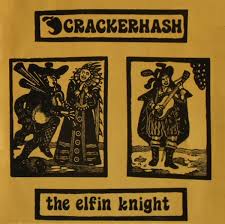
Scarborough Fair is certainly a ‘weird’ reversal of the way conventional love songs are constructed, which may be part of the reason why Dylan was so attracted to it. But in fact, in the two Dylan songs whose melodies were based on it, he adapts its structure, tone and tune to deliver lovelorn odes to apparently unreachable women. It may be that, in trying to write passionate love songs and avoid a conventionally sentimental approach, Dylan had to immerse himself in a song which was actually doing quite the opposite, albeit in a very mysterious way. In fact the melodies of both Girl from the North Country and Boots of Spanish Leather are nothing like as close to the original as the use of Lord Franklin in Bob Dylan’s Dream. Both songs are deep expressions of love, but their origins in this strange ballad gives them an unsentimental and self-reflective quality which conventional love songs generally lack.
MARTIN CARTHY
Like Scarborough Fair, Girl from the North Country repeats the first and final verses, which consist of …If you’re travelin’ in the north country fair / Where the winds hit heavy on the borderline/ Remember me to one who lives there/ She was once a true love of mine… This almost replicates the Scarborough Fair verse, but makes some very important substitutions. ‘Scarborough Fair’ is replaced by ‘the North Country fair’, with Dylan changing ‘fair’ from a noun to an adjective. This is a song consisting of apparently simple images and statements, yet it generates an ineffable air of mystery. Dylan had surely learned from his immersion in the blues that many of the most effective songs are deceptively ‘simple’; giving the listener a few details and leaving them to fill in the rest.
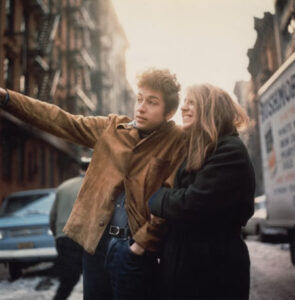
In his adaptations of traditional folk songs, Dylan (whether consciously or unconsciously) often applies this principle. What distinguishes both of these songs is how carefully each line is constructed and each word is chosen. The pastoral imagery in Girl from the North Country is especially effective because it is clearly understandable and ‘simple’, allowing the listener to project their own real life experiences onto the lyrics. And given that this is a song about a past (and very youthful) romance it plugs into experiences that very many listeners will have experienced in a similar way.

The line which replaces ‘Parsley, sage’ et al. is a master stroke. Dylan sings …When the wind hits heavy on the borderline… The use of the phrase ‘hits heavy’ sounds like it comes from modern ‘jive talk’. It could easily appear in a blues song. As well as being nicely alliterative, it simultaneously describes the harsh weather of ‘the North Country’ and suggests that the narrator is carrying a ‘heavy burden’. Nature in this song seems to be very much alive and natural forces appear to have an agency of their own. Dylan performs another linguistic trick by telling us that the …snowflakes storm… thus changing ‘storm’ from a noun to an active verb, as if the snow itself has made a decision …When the rivers freeze and summer ends… is concise and clear and is followed by lines that truly reveal the narrator’s feelings …Please see that she’s wearing a coat so warm/ To keep her from the howlin’ winds… He clearly realises that what we may assume was his first experience of romantic love is now firmly in the past but he wants his friend to know that he still cares about her. We may imagine that the ‘friend’ is actually her current lover, although this is never made explicit.

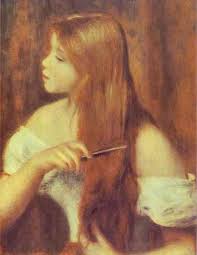
The song is so moving because of the narrator’s apparent reticence and modesty. The fact that he communicates through a third person adds to the sense of unreachable distance that it conveys. Perhaps the most evocative lines come in the middle verse, where he instructs his friend to …Please see for me that her hair hangs long/ It rolls and flows all down her breast/ Please see for me that her hair hangs long/ That’s the way I remember her best… One of the cleverest touches here is the fact that he refers to her ‘breast’, rather than ‘breasts’. This makes him sound especially respectful towards the girl. The description of her hair as it ‘rolls and flows’ suggests that, like the earlier ‘heavy winds’, it is somehow ‘alive’. The use of the present tense almost gives us the impression that he is staring at this beautiful girl right now. No indication is given anywhere in the song of how long ago he fell in love with her. But, as the ‘North Country’ represents memory and the past in the song, we now must surely have a sneaking suspicion that she will no longer look like she used to. For all we know, the narrator may even be an old man now and thus the ‘girl’ may be an old lady. The final line may be seen as rather selfish or controlling, as if the narrator is calling on his friend to ‘reconstruct’ the way the girl looks, but the hopelessness implicit in the tone of the line suggests that he does not really expect his friend to follow his instructions. Perhaps, in fact, he or she is just an ‘imaginary friend’.

In the penultimate verse the narrator descends into extreme self doubt. …I’m wonderin’… he sings …if she remembers me at all… He sounds so desperate to reconstruct this ideal image of beauty that he confesses that …many times I’ve often prayed… which is followed by the stunning dualism of …In the darkness of my night/ In the brightness of my day… Again, the words are very carefully chosen. ‘Darkness’ is normally contrasted with ‘light’ rather than ‘brightness’. Because of this unusual word choice there is a hint that he only really becomes drawn into this nostalgic reverie when he is in a particularly reflective state. The final emotions conveyed are thus of sadness rather than tragedy and the singer’s tone actually implies that, once he has expressed these feelings, he will be able to move on. The song thus fuses regret and melancholy with a recognition of the inevitability of change which, despite his nostalgic longings, the narrator ultimately accepts.
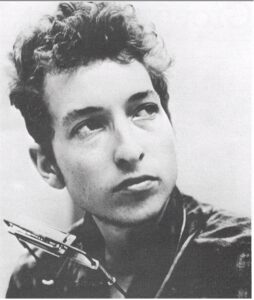
Girl of the North Country is one of Dylan’s best known songs. It has been a feature of his stage shows throughout his career and has been subjected to many different arrangements, without ever losing its subtle power. It was the first song Dylan ever re-recorded, in the radically rearranged duet with Johnny Cash on Nashville Skyline. In the late 2010s Dylan even used what sounds like an old Civil War melody as backing. The song also supplied the name of the first stage musical of Dylan songs, which ran successfully for several years. The construction of the song is so flawless that it is actually quite difficult to produce a bad version and it is one of Dylan’s most covered tunes. Among the most notable covers are those by Joan Baez, Leon Russell with Joe Cocker, Robert Plant, Sting, Neil Young, Rod Stewart and Stephen Stills.
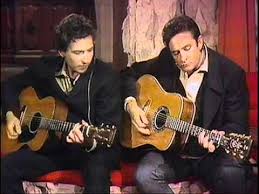
The song has naturally been seen as autobiographical, as Dylan is indeed a native of the cold ‘North Country’ in Minnesota. Various theories have been put forward by biographers and fans as to the identity of ‘the girl’. But Dylan is actually very deliberately unspecific about time and place here. There are many cold ‘north countries’ in the world. Girl from the North Country is in many ways an ode to love itself, comparable to some of Shakespeare’s sonnets and Emily Dickenson’s equally minimal series of ‘snow poems’ in the way it reflects of the inevitability that, in time, all love will fade, no matter how hard we may try to reconstruct it. What is perhaps most astonishing is the fact that he composed a piece so full of timeless wisdom when he was a mere twenty one years old.
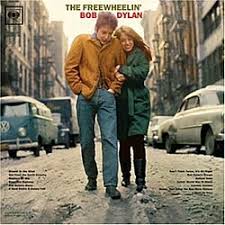
Although Boots of Spanish Leather is further away from its origins in Scarborough Fair in terms of melody, it uses the strange conceit displayed in the old ballad of a two way conversation which is in reality one person talking to himself. The song, which appears on Dylan’s third album The Times They Are a-Changin’, is however much more genuinely lovelorn than Girl from the North Country. The narrator is dealing with a current relationship, or possibly one in the process of ending. Rather than indulging in a nostalgic reverie, he is desperately distraught that his love seems to have left him. Yet the tone of the song, with its use of slightly archaic ‘courtly’ language, and its mellifluous melody, creates a certain distance for the listener so that, like Girl, it stands as a ‘beautiful’ rather than a tragic piece. It is another consummate piece of song writing which has attracted many cover versions and has also been a staple of many Dylan live shows.

The song has nine verses, all delivered in a simple ABCB rhyme scheme. The first six verses alternate between the voices of the woman and the man, who appear to be having a conversation. In the first part of the song Dylan uses a number of half rhymes, such as …ownin’/ ocean… (which is reversed two verses later) ….askin/ passin’… and even …golden/ Barcelona… which communicates a delicate sense of uncertainty and hesitancy. This is contrasted with the very definite and final sounding rhyme of …weather/leather… at the end. In the first verse the woman delivers the shocking news that …I’m sailin’ away my own true love/ I’m sailin’ away in the mornin’… Throughout the song, we are invited to ‘read through’ the protestations of the lovers. Immediately it may strike us that if he really is her ‘true love’, why has she so suddenly and unexpectedly deserted him? She then asks, in a tone that suggests that she might be just going off for a short holiday …Is there something I can send you from across the sea/ From the place that I’ll be landing?… But already the rhythm of the words and music suggests the motion of the sea – as if she has already ‘sailed away’…
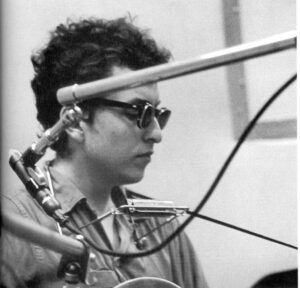
The narrator’s reaction is extreme, to say the least, betraying booth his initial shock and his deep love for her …No, there’s nothin’ you can send me, my own true love/ There’s nothin’ I’m wishin’ to be ownin’… This is clearly a deep romantic love which values emotions over material possessions. Yet there is an implied sense of irony in what he says next. …Just carry yourself back to me unspoiled/ From across that lonesome ocean… The use of ‘lonesome’ is perhaps odd here. The word ‘lonesome’ is commonly used in country songs of lost love, especially those of Hank Williams. It is really he, not the ocean, who will have this feeling. Already he is, it seems, attempting to ‘own’ her journey. The even stranger use of the somewhat archaic ‘unspoiled’ suggests that in fact he is extremely possessive over her. Perhaps he is expressing his fear that she may find another lover in this foreign land or that she will somehow – without his guidance – become corrupted. He certainly seems upset that she is acting independently of him.
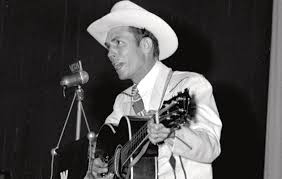
HANK WILLIAMS
As the song progresses, the distance between the lovers gradually grows. The ‘my true love’ addresses are now dropped. She continues to attempt to keep the conversation on a casual level: …Oh, I just thought you might want something fine/ Made of silver or of golden/ Even from the mountains of Madrid/ Or the coast of Barcelona… The use of the semi-archaic ‘golden’ is again rather odd, and the way she barely half-rhymes it with ‘Barcelona’ already suggests a slight tone of insincerity. She now reveals that the country she is going to is Spain, with all its romantic associations. The narrator is clearly upset and irritated by how casually she appears to be treating all of this. He now reiterates his previous response by virtually reciting romantic poetry to her. The use of visual images here is extremely striking, especially as it is the only time in the song that such a consciously ‘poetic’ device is used: …Oh, if I had the stars from the darkest night… he tells her …And the diamonds from the deepest ocean/ I’d forsake them all for your sweet kiss/ For that’s all I’m wishin’ to be ownin’…
The reference to ‘stars’ is relatively conventional. However, the extraordinarily visual image that follows – the most strikingly emotional and memorable line in the song – is perhaps the line that stands out the most. Of course, diamonds are not generally found at the bottom of oceans. By using this phrase, the narrator, in attempting to express his love for her, seems to be suggesting to us that his overpowering love for her is one which is so pure and radiant that it can only be expressed metaphorically. It is as if he sees her as a diamond – a perfect, shining object to be admired for its great beauty. But diamonds are of course reflective and the use of the image suggests that by staring at this ‘diamond’ he sees mainly a reflection of himself. Perhaps, in fact, he is – like so many young lovers who think they have found ‘the one’ at a very early age – merely ‘in love with love’ rather than really taking into consideration the wants and needs of his love object. He certainly seems to be extremely possessive, and soon we may begin to sympathise with the girl, who may need to escape from him to ‘discover herself’.
In the third part of the conversation, the reality of the situation begins to hit home. She continues to ask him if she can send him a present, but now her tone, though still sympathetic and loving, is slightly condescending; hoping that the proposed gift is something …to remember me by/ to make your time more easy passin;’… The use of ‘remember’ here is rather ominous, especially as she has just admitted that …I might be gone a long time… His extremely emotional (and self centred) reaction is highly affecting for the listener, but comes over as decidedly immature: …Oh, how can, how can, you ask me again/ It would only bring me sorrow/ The same thing I want from you today/ I would want from you tomorrow… This is the end of the conversation. There is nothing more to say. She clearly is not going to change her mind.
We then hear give us the voice of the narrator in solitude. He tells us …I got a letter on a lonesome day/ It was from her ship a-sailin’… Again the word ‘lonesome’ is used metaphorically, although we know that it is the narrator who is really ‘lonesome’. By now we may be questioning the authenticity of the previously reported conversation. Has he really, at a time well before emails, received a letter from a ship on the ocean? Or is he merely imagining this, as he may have imagined the whole conversation? The message she sends is somewhat vague, but the use of definite internal rhymes tends to suggest that she is not intending to return any time soon: …I don’t know when I’ll be coming back again/ It depends on how I’m a feelin’…The narrator then ‘replies’ to her, but it must be obvious by now that this ‘conversation’ – like the one in Scarborough Fair – is really happening in his own mind. He tells her …I’m sure your heart is not with me/ But with the country to where you’re goin’… We do not hear any response from her, because of course she cannot hear his thoughts. By now he is clearly panicking, and turning her departure inwards in his own mind as he now tries to play the part of the conventional ‘courtly lover’; whose love is somehow ‘ennobled’ because it causes him so much suffering.

In the final verse, he carries on this imaginary conversation; using the slightly archaic expression …take heed… as if indeed the song is set at some point in the distant past (which, for all we know, it might be). His message to her expresses his longing quite beautifully, in the manner of an old folk song: …Take heed, take heed, of the western wind/ Take heed of the stormy weather… as if indeed she is in an old fashioned sailing ship which might be at the mercy of the elements. Then, perhaps fearing that he might really lose her, he reverses his previous declarations in a dramatic denouement: …And yes, there is something you can send back to me/ Spanish boots of Spanish leather… finally unleashing the title phrase; giving the impression that he is now so disconsolate that he is indeed desperate to possess something to ‘remember her by’.
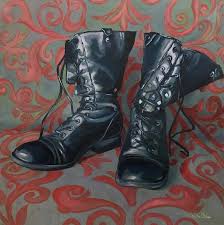
Thus, if only in his own mind, he dismantles his romantic persona. In many ways we may sympathise with the girl, who may well be leaving because of his possessiveness, despite her obvious affection for him. Yet the song does not clearly state that the relationship is over. Perhaps she will return to him when he has ‘given her enough space’.

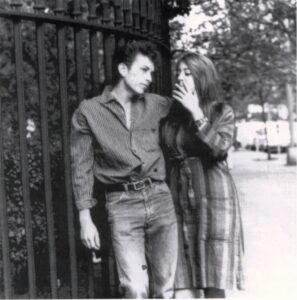
The song dramatise with great effectiveness is the overwhelming power of the emotions of love on the mind of young lovers, who may well fail to understand the nature of their feelings for another person. Dylan biographers and commentators have often associated the song with the departure of his girl friend Suzie Rotolo to Italy, for an indefinite period, to study art. This event clearly did influence the young Dylan (and inspired a number of his other early songs) and in Boots of Spanish Leather he may well be giving vent to his own very genuine feelings of despair. Yet as a poetic songwriter he has the skill to detach himself from these feelings and to present them in a way that is never purely ‘one sided’.
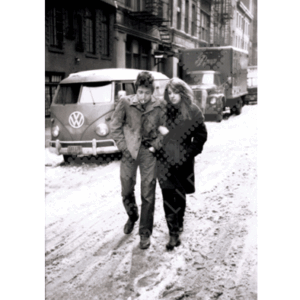
Much of Bob Dylan’s early reputation rested on the sensational impact of his dramatic ‘protest songs’. But Girl from the North Country and Boots of Spanish Leather demonstrate that he was also capable of rendering the emotions of love (itself, of course, always the main subject of popular songs) with great subtlety and even handedness. In both cases, we may identify with the narrators’ feelings of lost love. Drawing particularly on the emotional realism of country music, he avoids the sentimentality of many popular songs by creating works that can be seen as small dramas in which his narrators are characters he has created which may or may not be identifiable with ‘Bob Dylan’ himself. What both songs express with great articulacy are the mixed emotions involved in dealing with lost love. In both cases the protagonists are portrayed as entirely fallible human beings. These songs are thus in themselves public statements about the nature of romantic song itself. They demand that at we take one step back and analyse the nature of our own emotions in a way that is clear sighted and psychologically authentic, but which cannot fail to touch our hearts.
A HEADFUL OF IDEAS’ is ranked in the top 20Bob Dylan podcasts at:
https://www.millionpodcasts.com/bob-dylan-podcasts/
LINKS
STILL ON THE ROAD – ALL DYLAN’S GIGS
THE CAMBRIDGE BOB DYLAN SOCIETY
Leave a Reply