

MY BACK PAGES: YOUNGER THAN THAT NOW…
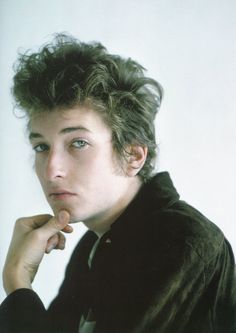
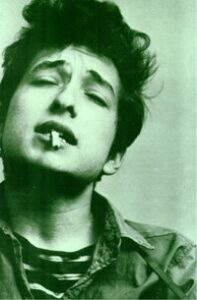
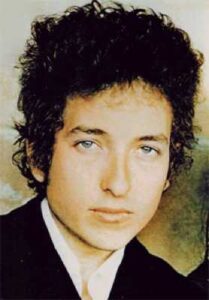
From his initial appearances in public view in 1962, Bob Dylan appeared to be a figure who was deeply rooted in the past. His most profound early influences, from Woody Guthrie to Robert Johnson were, by the early ‘60s, already historical figures. Very little of his material was contemporary; most of it consisting of blues songs from the 1920s, 30s or 40s or of folk songs with much earlier origins. He was – as the cover of his first album demonstrated – a ‘baby faced’ youth who appeared to be considerably younger than his twenty years. Yet he had adopted a gravelly vocal style that often resembled that of aged blues men. The album even gave prominence to several songs like Fixin’ to Die, In My Time of Dying and See That My Grave is Kept Clean that focused on the subject of death. Even when he demonstrated his incredible blossoming as a song writer on the Freewheelin’ album, his songs rested on the foundations of the melodies of old ballads. Folk veterans like Pete Seeger quickly acclaimed him as the newest voice in a tradition that stretched back into an indistinct and sometimes idealised past. This connection to ‘ancient voices’ was viewed by followers of the folk scene as a mark of credibility, in direct opposition to the inane commercialised mainstream pop was then dominating the charts..
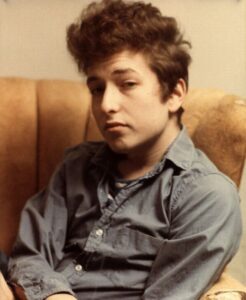
By late 1964, however, a fundamental and very rapid change in the direction of American popular music had occurred. The overwhelming success of The Beatles after their arrival in the USA earlier in the year had demonstrated that rock and roll, which had already been pigeonholed as a passing late 1950s fad, was in fact alive and well. Along with the dynamic soul sounds which had been emanating from the Tamla Motown base of Detroit (and which had themselves been highly influential on The Beatles’ sound), the music of ‘the mop tops’ was proudly and defiantly an expression of the energy and emotional power of youth. While many of his fellow folkies dismissed the Liverpool group as a commercial teenage gimmick, by the time he recorded Another Side (the last acoustic album of his early phase) Dylan had already sensed that their music represented the future. He was ready to break away from the restraints of the folk movement, with its heavy emphasis on ‘old music’ and to embrace a new sound that combined poetic lyrics with many of the qualities of powerful pop oriented rock and roll epitomised in Beatles songs like A Hard Day’s Night, Can’t Buy Me Love or I Want to Hold Your Hand.
By late 1964 Dylan, who had only just turned 23 when he recorded Another Side, was ready to embark on a stylistic transformation which none of his peers in the folk movement had even contemplated. While the Times They Are a-Changin’ album, released earlier in the year, had been dominated by songs of political and social protest, the new album was a clear step in a different direction. Songs like I Don’t Believe You and Spanish Harlem Incident, which celebrated sexual gratification in a light hearted way reminiscent of Chuck Berry, had many of the qualities of the most energetic and ‘youthful’ rock and roll. The album was bookended by All I Really Want to Do and It Ain’t Me, Babe; two songs which appeared to be coded messages to his audience – one comical and the other soberly cynical – indicating that he was tiring of the role of political commentator and ‘voice of his generation’. On the extraordinary My Back Pages Dylan appears to be issuing a scathing dismissal of this role, which is summed up in the song’s highly striking and extremely memorable refrain …Ah, but I was so much older then/ I’m younger than that now…
MY BACK PAGES: I WAS SO MUCH OLDER THEN…
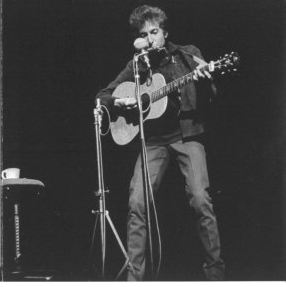
On the surface this apparently paradoxical declaration, which has some resemblance to a Zen koan or riddle, may appear to make little sense. But Dylan’s dramatic declaration of independence in the refrain was a way of announcing that he was determined not to be hidebound by the rules and conventions of the folk ethos. In embracing the vigour of his own youthfulness, he was already risking the ire of many of his politically committed followers, who saw him as a leading voice in the struggle for civil rights and in opposing American militarism in the era of the Cold War. But, as the songs on Another Side revealed, Dylan was in no mood for compromise. He was determined to follow his own wayward muse, rather than be used as a political tool by those in ‘the movement’. Already he was shifting away from conveying ideological ‘truths’ in his songs towards inner reflection, symbolist poetry and surreal humour. In the resonant refrain of My Back Pages he signals that he is determined to explore the aesthetic pathways that are now opening up in front of him.
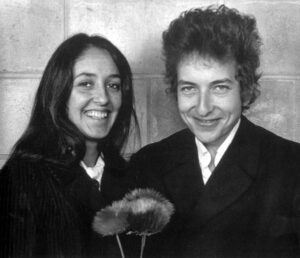
The Another Side album presents a particularly uncompromising challenge to listeners. Recorded in one long single session, during which Dylan is said to have consumed copious amounts of red wine, his vocals are particularly harsh and bitter. This is especially true on My Back Pages. The song, however, has a very strong melody, which is brought out dramatically in the version by The Byrds on their 1967 album Younger Than Yesterday (a title which alluded to the song’s refrain). Although some commentators have argued that the starting point for the song may have been the well known folk ballad Young and Daily Growing, by this stage in his career Dylan was moving away from basing all his songs on traditional melodies. The Byrds cut down the number of verses from six to three and added a guitar solo. Roger McGuinn’s plaintive vocal illuminates what is often seen as the definitive version of the song. On the 1978 world tour Dylan often opened the shows with an instrumental rendition.
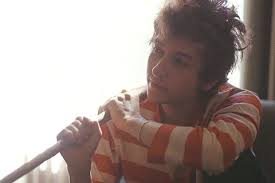
The Byrds’ version, released in the transformational year of psychedelia, emphasised and celebrated the idea of a ‘youth revolution’ – not a political movement in the conventional sense but a social and personal rearrangement of attitudes within which previous notions of the nature of the ageing process would be swept away. It was as if the counter cultural heroes of the decade were using the immense energy of youth to provide a foundation for a future in which they would not merely follow the conservatism and conformity of their parents’ generation but would keep that energetic flame burning throughout their lives. This was demonstrated most eloquently by the fact that six decades later some of the survivors of this tumultuous era – such as Paul McCartney, The Rolling Stones, The Who, Neil Young and Dylan himself – were still performing with considerably ‘youthful’ energy in their late 70s or early 80s; all of them, amazingly, ‘so much younger now’.
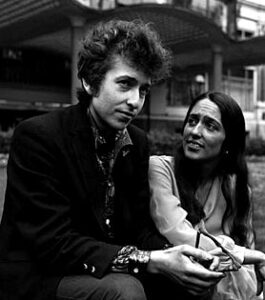
Despite the highly affecting melody and refrain which made it so popular, My Back Pages is, however, a rather ‘difficult’ song in which Dylan often struggles to demonstrate that he now has a grasp of the techniques of poetic metaphor that he so much admired in the works of the Romantics, Shakespeare and the French symbolists. While earlier songs, such as A Hard Rain’s a-Gonna Fall or The Lonesome Death of Hattie Carroll, had relied on the presentation of striking images within a strong storytelling format, he now moves towards using abstract and symbolic imagery to create multi-layered narratives. He had already composed the transcendent Lay Down Your Weary Tune and Mr. Tambourine Man (neither of which appeared on Another Side), both of which were triumphant examples of this new approach. But on My Back Pages he rarely achieves the consistency of imagery that had illuminated those works. This may be because the song has some inbuilt contradictions. Although it implicitly criticises the didactic approach of some of his older ‘finger pointing’ ballads, it is actually equally didactic. It is, in fact, a kind of ‘protest against protest’.
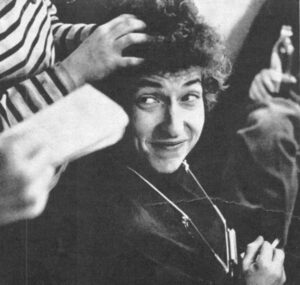
This problem is demonstrated in the opening lines …Crimson flames tied through my ears/ Rollin’ high and mighty traps… presents a powerful and arresting image, depicting a young man who is ‘enflamed’ by specific passions, be they political or romantic. When Dylan attempts to extend this metaphor, with the somewhat awkward … Pounced with fire on flaming roads using ideas as my maps… he certainly conveys the idea that in the past he had been in thrall to abstract ideologies. But the phrase ‘pounced with fire’ (which The Byrds, having perhaps misheard the original, present as…countless fire…) fails to extend the ‘burning’ metaphor in a satisfying way. When he switches to …”We’ll meet on edges, soon,” said I, proud ’neath heated brow… we get the impression that Dylan is describing his younger self as being ‘hot headed’ and his enthusiasms as perhaps ‘overheated’. So far, the song’s message is clear, even if the imagery sometimes fails to gel together.
MY BACK PAGES: I WAS SO MUCH OLDER THEN…
The second verse mixes some powerful self examination with some rather uncomfortable phraseology. The opening couplet …Half-wracked prejudice leaped forth/ “Rip down all hate,” I screamed… is a withering piece of self deprecation. Although the second line represents an effective presentation of youthful naivety, the attempt at personification of ‘prejudice’ is somewhat clumsy. The ‘younger/older’ narrator has believed the …lies that life is black and white… but the assertion that these lies …Spoke through my skull… is a little contrived. The imagery becomes increasingly disparate. We hear that he once dreamed of …romantic facts of musketeers… (which The Byrds ‘mishear’ as ‘romantic flights’) that are said to be …foundationed deep somehow…
In the next verse the references to…girls faces… forming …the forward path/ From phony jealousy… sound rather blatantly forced in their use of alliteration. The lines …to memorising politics of ancient history… with their rather snide characterisation of folk songs as being past their sell by date are more evocative, but the following tongue twisting …Flung down by corpse evangelists/ Unthought of, though, somehow… bitter and biting though it may be, is very unconvincing. Presumably the ‘evangelists’ are those folk purists who would soon be plaguing him by barracking him at his live shows. But what is very unclear here is the identity of whoever is ‘unthinking’ them.
It is perhaps not surprising that these verses were omitted from The Byrds’ version and in some of Dylan’s live performances (which did not commence until 1988). Arguably the song works better without them, especially as the remaining verses are rather more focused. It seems that Dylan is characterising himself when he pictures …A self-ordained professor’s tongue/ Too serious to fool/ Spouted out that liberty/ Is just equality in school… which displays a particularly Dylanesque contempt for academia as he outlines this absurd pronouncement. One may imagine, however, that Dylan may also be characterising himself as the ‘self-ordained professor’. In stating that …”Equality,” I spoke the word/ As if a wedding vow… he appears to be openly confessing that, in composing his protest songs, he had fallen for a simplistic view of social and political morality.
The penultimate verse certainly pulls no punches as it begins strongly with a military metaphor: …In a soldier’s stance, I aimed my hand/ At the mongrel dogs who teach… and some profound self reflection: …Fearing not that I’d become my enemy/ In the instant that I preach… But the attempt at the ‘maritime’ metaphor which follows: …My pathway led by confusion boats/ Mutiny from stern to bow… is very unwieldy, especially in the inelegant phrase ‘confusion boats’. The level of self criticism Dylan appears to be delivering here is also rather exaggerated. Although he seems to be rejecting his supposedly one dimensional ‘finger pointing’ songs, it is certainly hard to argue that the person who wrote With God on Our Side and Masters of War was ‘confused’. Some of the lines in the final verse may be more profitably read as a statement about the ‘confusion’ that this particular song conveys. The opening …My guard stood hard when abstract threats/ Too noble to neglect/ Deceived me into thinking/ I had something to protect… effectively conveys the idea that the grandiose pronouncements on the fate of the world which feature in a number of his best known early songs are in fact the products of his own insecurity rather than real social and political concerns. Finally, he switches to simple irony to deliver a concise summary of the entire song: …Good and bad, I defined these terms/ Quite clear, no doubt, somehow/ But I was so much older then/ I’m younger than that now…

My Back Pages is a highly uncompromising piece of self examination. It dramatises Dylan’s attempt to switch into a new mode of poetic consciousness through metaphorical language. Despite the unforgettable refrain and the attractive melody, his experiments in this medium are only sporadically successful on this occasion. The song can perhaps be most profitably experienced as a kind of journey through poetic space in which the protagonist appears at first to be battered around by many ‘abstract threats’ but eventually lands on solid ground. Dylan’s main purpose here is to state that he has moved beyond conventional dualistic morality. The notion of him becoming ‘younger’ is clearly a logical contradiction. But the rich, allusive and highly metaphorical songs he will write over the next few years, which present shifting realities and much unresolved morality, will be crammed full of such linguistic paradoxes. My Back Pages is thus a dramatic representation of the artist wrestling with his muse. Despite its flaws, it remains a key transitional song in Dylan’s evolution.
Leave a Reply