

Please click ‘ Watch on You Tube’ Like and Subscribe….
EXTRACTS…… FULL TEXT HERE
BOB DYLAN – I AND I
In the 1970s, Jamaica, an island of only two million mostly poor people, was the epicentre of a musical revolution which had a vast effect on the music and culture of the world. In the studios and streets of the capital, Kingston, in which there were almost no conventional music venues, a revolutionary approach to the use of rhythm was pioneered by producers and DJs such as Lee ‘Scratch’ Perry, King Tubby, Joe Gibbs and Coxsone Dodd. The music was popularised by the brilliant poet-songwriter Bob Marley. Like most of the reggae stars of the time, Marley (who died tragically early at the age of only 36 in 1981) was a Rastafarian. He was dedicated to spreading the concepts and beliefs of this religion, which was deeply rooted in the Bible, but which transformed traditional Judeo-Christian perspectives into weapons of resistance against racism and the legacy of colonialism.
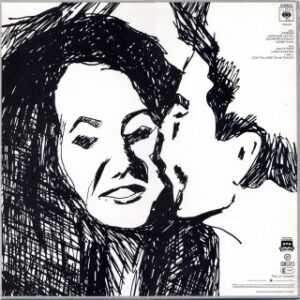
There is little doubt that Bob Dylan, like many other rock musicians, was influenced by reggae. The way he integrated three black female backing singers on the tours of 1978, 1979, 1980, 1981 (and later in 1986 and 1987) into his band was similar to the way Marley and his singers the I-Threes developed a dynamic call-and-response form of vocal presentation. The 1978 version of Don’t Think Twice, It’s All Right which appears on the Live at the Budokan album, the jokey Biblical allegory Man Gave Names to All the Animals from 1979’s Slow Train Coming and Watered Down Love from 1981’s Shot of Love, however, are typical examples of ‘white reggae’, which unfortunately often comes over as a ‘watered down’ version of the original.
I AND I
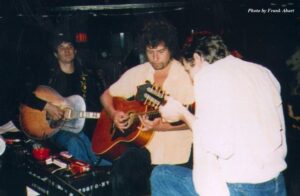
Paul Simon had pointed the way with much greater success as early as 1972 by recording the highly moving Mother and Child Reunion with Jamaican musicians in Kingston itself. For the Infidels album in 1983 Dylan employed the powerhouse Jamaican rhythm section of bassist Robbie Shakespeare and drummer Sly Dunbar, who had provided the backing for countless singers in Jamaican studios. But although Infidels clearly displays such influences, it is not a reggae album. In fact its sound is dominated by the highly melodic guitar work of producer Mark Knopfler, leader of the ‘laid back’ blues based Dire Straits. But on I and I Dylan makes a definite attempt to engage with Jamaican music and Rastafarian beliefs.
Rastafarians do not have a formal religious structure. Once, when asked if he attended church, Marley is supposed to have replied …I am a church… This open-ended attitude to spirituality seems to chime with Dylan’s post-conversion approach to his writing.
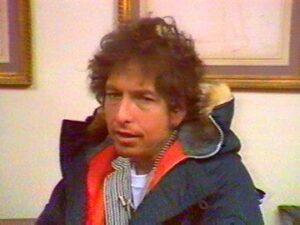
I and I
On I and I Dylan incorporates the title phrase into his own eclectic philosophy. Rastafarians use the expression to refer to oneself and God – who are identified as one and the same. Dylan adopts the phrase but modulates it in a number of ways. Despite the presence of Sly and Robbie, he does not really attempt to play authentic reggae here, although the rhythm section does provide a sinuous backing track, augmented by Knopfler’s fluid guitar lines and Alan Clark on keyboards, and a few rather limited echoey dub effects are added.
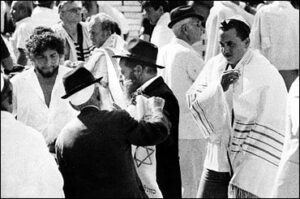
In fact the take of the song on Infidels is quite restrained, especially in comparison to the full-on rock versions that he played in concert on around two hundred occasions between 1984 and 1999. The song has five verses and five identical choruses. It does not diverge from a rigid ABAB rhyme scheme and the lyrics were never altered in live performance. It uses a conventional twelve bar blues structure, although the rather languid tempo steps up considerably on the choruses.
LINKS
STILL ON THE ROAD – ALL DYLAN’S GIGS
THE CAMBRIDGE BOB DYLAN SOCIETY
Leave a Reply