


TWO HAPPY/SAD SONGS FROM ‘BLOOD ON THE TRACKS’: YOU’RE GONNA MAKE ME LONESOME WHEN YOU GO AND BUCKETS OF RAIN
…A child said “What is the grass?” fetching it to me with full hands;
How could I answer the child? I do not know what it is any more than he.
I guess it must be the flag of my disposition, out of hopeful green stuff woven…
Walt Whitman, Song of Myself (1891)
…All the monkeys aren’t in the zoo
Every day you meet quite a few
So you see it’s all up to you
You can be better than you are
You could be swingin’ on a star…
Johnny Burke and Jimmy Van Heusen, Swingin’ on a Star (1944)
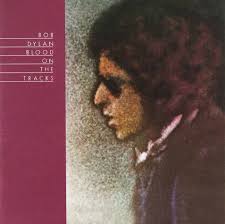
The 1970s were a decade in which many of the youthful rebels of the 1960s attempted to negotiate ways in which their radical beliefs about sexual relations could be accommodated to the realities of growing a little older and making compromises. Dylan once stated that Blood on the Tracks was in part a response to Joni Mitchell’s seminal album Blue, in which she interrogated her own motivations and feelings about relationships. But while Mitchell bravely presents her own failings and insecurities in her songs, Dylan – with his dramatist’s instincts and his natural tendency towards obfuscation – prefers to ‘hide’ behind unreliable narrators, who may or may not be expressing his own thoughts and feelings. He frequently switches both moods and narrative approaches. Although it is mainly known for its dark, emotionally wrought songs, each side of Blood on the Tracks is bookended by songs which present their narrators’ feelings in a lighter mode. Both the lively You’re Gonna Make Me Lonesome When You Go and the more intimate Buckets of Rain wrestle with the complex nature of relationships, showing how individuals may experience several contradictory feelings at the same time. These songs are rooted in the blues tradition of putting on a brave face when confronted with adversity
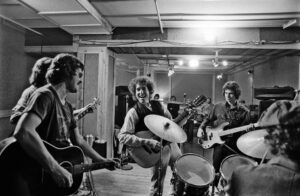
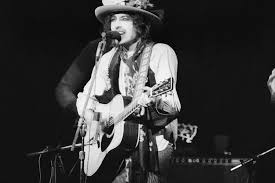
Surprisingly, neither song has featured much in Dylan’s live performances. Buckets of Rain has only been played once, opening a show at Detroit on 18th November 1990. A rather jokey take on the song, recorded as a duet with Bette Midler and re-titled Nuggets of Rain, was released in 1976. You’re Gonna Make Me Lonesome was played twelve times (often in a rather speeded up version) on the second leg of the Rolling Thunder tour in that same year. It has never been revisited live, although a slowed down rendition was attempted during the Rundown Rehearsals in early 1978.
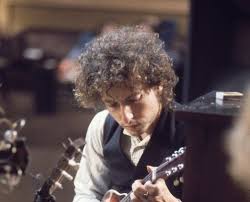
You’re Gonna Make Me Lonesome follows the dark ruminations of Idiot Wind with a tone of breezy optimism, despite the fact that it is concerned with saying goodbye to a lover. The emotional message of the song can be varied considerably depending on how it is handled. Slower versions have been recorded by a number of female vocalists, including Madeleine Peyroux, Mary Lou Lord, Miley Cyrus and Shawn Colvin, all of whom tend to emphasise the song’s melancholy qualities. Elvis Costello, on the other hand, tackles it at an even more frenetic pace than Dylan. While the slower, more languid covers place more emphasis on the song’s tone of regret, in Dylan’s hands it comes over as a joyful celebration of the impermanence of a love affair. His tone is consistently playful and uplifting.
TWO SONGS FROM ‘BLOOD ON THE TRACKS’
The song has five verses and uses a straightforward AABCCB rhyme scheme. Every verse ends in the title phrase. There are also two especially effective bridge sections. The language used is mostly conversational, in keeping with it being addressed directly to the narrator’s departing lover. The narrator begins with a little personification: …I’ve seen love go by my door/ It’s never been that close before… ‘Close’, perhaps, but the ‘door’ has not been opened… Despite his protestations of affection, there is always a sense that he is keeping the object of the song at a slight distance …Never been so easy or so slow… he sings, although this ‘slowness’ is certainly in contrast to the pace of the delivery. Then he confesses that …I’ve been shooting in the dark too long/ Something’s not right, it’s wrong… Whether what is ‘not right’ is in the relationship or in his own head is not yet clear. But these lines strongly convey a sense of regret, despite being conveyed so cheerfully.

We are then presented with the rather ambiguous image of …Dragon clouds so high above… Such mythical creatures have often been ‘seen’ in cloud formations. In the Western tradition, they tend to symbolise danger, whereas Chinese dragons are beneficial spirits. The narrator confesses that …I’ve only known careless love/ It always has hit me from below… There is a slight sexual innuendo here, suggesting that in the past he has always been motivated primarily by lust to engage in ‘careless’ (and thus temporary) love affairs. Such sentiments are often expressed by boastful blues singers. Careless Love is a well known traditional song, which has been recorded by Johnny Cash, Leadbelly and many others. Dylan then delivers one of his trademark tongue-twisting apologies: …But this time round it’s so correct, right on target, so direct… As the title phrase comes in we may, however, wonder why a love which is ‘so correct’ has to end.
The narrator then waxes lyrical about his lover: … Purple clover, Queen Anne’s lace/ Crimson hair across your face/ You could make me cry if you don’t know… Here he associates her with a range of colours. ‘Purple clover’ (more properly known as ‘purple shamrock’) is a plant that originates from the Brazilian rain forest. Queen Anne’s lace are delicate white flowers, which are contrasted with the lover’s ‘crimson’ hair. These vivid descriptions are followed by a suggestion that he is almost overwhelmed by her beauty. Then he retreats into his own thoughts, his memories perhaps clouded by his intense focus on her charms …Can’t remember what I was thinkin’ of… he confesses, rather absent mindedly. Then he becomes rather playful: …You might be spoilin’ me too much, love…. He seems to be attempting to play the part of the Byronic lover here, although one may suspect he may well have his tongue in his cheek.

The way that the song segues into the first bridge provides a moment of breathtaking evocation of the feeling of new, refreshing and intoxicating love. Dylan’s use of pastoral imagery is reminiscent of many of the songs on New Morning, as well as Van Morrison’s exquisite ballad Crazy Love …Flowers on the hillside bloomin’ crazy/ Crickets talking back and forth in rhyme… The remarkable phrase ‘bloomin’ crazy’ suggests an explosion, perhaps of purple clover and Queen Anne’s lace, across the natural vista, as if they are instantly sprouting up. The magical quality of the scene is reflected in the next line, as the crickets not only sing to each other but do so ‘in rhyme’. Nature, it seems, is in alive and sentient. We then hear of a …Blue river running slow and lazy… The narrator seems to be lost in a timeless reverie …I could stay with you forever… he tells her …And never realise the time…
We are then quickly propelled back into the narrator’s own thoughts as he recalls his past entanglements. He begins with the distinctly low key …Situations have ended sad, relationships have all been bad… but then suddenly surprises us with a rare direct reference …Mine have been like Verlaine’s and Rimbaud… The tempestuous affair between the two symbolist poets ended with Verlaine attempting to shoot his teenage lover, so perhaps he is indulging in hyperbole here. But the fact that Dylan has actually named two of his prominent influences is quite disarming. The narrator then back tracks a little, admitting that ….There’s no way I can compare/ All them scenes to this affair…
In the following bridge he continues to question his own motivations : …Yer gonna make me wonder what I’m doin’/ Stayin’ far behind without you… / Yer gonna make me wonder what I’m sayin’/ Yer gonna make me give myself a good talkin’ to… It seems that, although he is apparently willingly letting her go, he is already beginning to question this position. Here he reveals his own weakness. Although he has laid lavish praise on her, it seems that he may even be relieved that she is leaving. He prefers to idealise the relationship rather than try to make it work. We may speculate that he is letting her go for her own sake, rather than ‘destroying’ her as Verlaine tried to do to Rimbaud. But whether he is acting out of self interest or loving concern for her remains unclear. Individual singers are left to interpret this themselves.
Finally, the narrator accepts that …Yer gonna have to leave me now, I know… He adopts a light hearted, slightly self mocking tone, claiming that he will look for her in …Honalula, San Francisco, Ashtabula… outlining a string of seemingly random locations. Adapting ‘Honolulu’ to ‘Honolula’ is a blatantly comic forced rhyme, which perhaps makes us doubt his sincerity. Finally he declares that in her absence he will …see you in the sky above/ In the tall grass, in the ones I love… Perhaps he will see her in those ‘dragon clouds’. Some commentators have interpreted these lines as the narrator telling her he will see her in heaven. The reference to ‘tall grass’ echoes lines in Walt Whitman’s Song of Myself in which grass represents the vitality of life. The final statement suggests that he will somehow discern her qualities in others that are close to him. Perhaps the woman he is singing to is not an actual person but a representation of love itself – a chimerical figure like the Greek Goddess Aphrodite – who he will keep searching for, probably in vain.
The ability to express such ambiguous and possibly contradictory sentiments is a feature of many blues songs. In Buckets of Rain Dylan follows an established blues model closely, using the distinctive Piedmont style finger picking guitar technique often associated with the gentle blues of Mississippi John Hurt. As a tribute to Hurt, Tom Paxton wrote the rather silly ‘sing along’ tune Bottle of Wine, from which Dylan’s melody seems to be derived. At first listen Buckets of Rain may appear to be a trifle, but despite it consisting of only five short verses with no choruses, refrains or bridge sections, it is a fitting conclusion to Blood on the Tracks. After the emotional turmoil depicted in most of the other songs it provides a soothing resolution to the song cycle. The narrator presents a calmly philosophical meditation on the vagaries of love and life. The song is lightly humorous and, unusually for a Dylan song, eminently charming.
Dylan adopts a blues-style vernacular, delivering simple lines and images with great restraint and much irony. He presents us with a series of images which are counter posed against the narrator’s feelings. The effect is, at times, quite magical. …Buckets of rain, buckets of tears… it begins …Got all them buckets comin’ out of my ears/ Buckets of moonbeams in my hand… The ‘bucket’ metaphor is stretched to an absurd limit here, concluding with a twist on the romantic cliché of ‘moonbeams’. Polka Dots and Moonbeams, a 1940 song by Johnny Burke and Jimmy Van Heusen, provided Frank Sinatra with his first hit. It was later covered by Dylan on Fallen Angels in 2016. A better known song by the same composers, Swinging on a Star, which was recorded by Bing Crosby in 1944, begins …Would you like to swing on a star/ Carry moonbeams home in a jar… It seems at first as if the singer of Buckets of Rain may be overflowing with happiness. He reassures the girl that …I’ve got all the love, boney baby you can stand… The reference to ‘buckets of tears’, however, suggests otherwise.
The narrator then asserts his own steadfastness …I been meek/ Hard like an oak… and then tells us …I seen pretty people disappear like smoke… He reassures her that he will not be one of those ‘friends’ who will ‘disappear’. He delivers a flirtatious yet respectful tribute to her: …Like your smile and your fingertips/ I like the way that you move your hips/ I like the cool way you look at me… But then, in perhaps the most unexpected line, he declares …Everything about you is bringing me misery… This is the ‘misery’, perhaps, of the lover who is so obsessed that he cannot see beyond his own extreme emotions. Or perhaps it reveals that he has no chance of his love being reciprocated. Undaunted, he delivers an enchanting nursery rhyme …Little red wagon, little red bike/ I ain’t no monkey but I know what I like… telling her that …I like the way you love me strong and slow… echoing the sentiments of You’re Gonna Make Me Lonesome. But now he pledges not to abandon her. …I’m taking you with me… he tells her …Honey baby, when I go…

The final lines are a quiet tour de force, condensing all the emotional turmoil of Blood on the Tracks in the ultra simple …Life is sad, life is a bust/ All you can do is do what you must… The narrator advises us that …You do what you must do/ And you do it well…. and then makes the pledge …I do it for you, honey baby, can’t you tell… Dylan’s utilisation of the blues format to express such a mixture of emotions is masterful. In these simple lines he also conveys a kind of serene, zen-like detachment which ends the emotional roller coaster of the album’s songs on a note of both realism and hope. In the context of the album, these lines come over as a kind of whispered message to Dylan’s listeners, playfully communicating the idea that we are all imperfect and subject to the unpredictable vagaries of life. Although life will inevitably confront us with tragedies, ending of course in the tragedies of our own deaths, all we can do is try to carry on, despite our imperfections. This is hardly an original idea but it is communicated here with such joy and empathy that we, like the girl he is addressing, cannot fail to be charmed.
LINKS…
STILL ON THE ROAD – ALL DYLAN’S GIGS
Leave a Reply