

SHE’S YOUR LOVER NOW AND I WANNA BE YOUR LOVER: A DEAD MAN’S LAST PISTOL SHOT…
In I Wanna Be Your Lover and She’s Your Lover Now, two unreleased songs from the Blonde on Blonde sessions, Bob Dylan continues to explore ways of marrying the energy of rock and roll with symbolist poetry. Both appear to use early Beatles songs as ‘jumping off points’. The chorus of the ‘garage rock’ ditty I Wanna Be Your Lover is very close to that of I Wanna Be Your Man, a showcase for Ringo on the With the Beatles album (1963) and a breakthrough hit single for The Rolling Stones in the same year. She’s Your Lover Now turns the three way conversation of She Loves You on its head, with the narrator pouring scorn on the girl’s new lover rather than offering advice. In both songs Dylan delights in throwing in weird and possibly random references, images and assertions. It is as if he is testing just how far he can push the form.
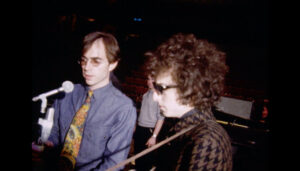
I Wanna Be Your Lover is full of raucous energy. Dylan is backed by the full complement of musicians later to be known as The Band. They attack the song with all the verve of the ‘dirty r and b’ material they had been playing for years with Ronnie Hawkins, with Robbie Robertson providing stabbing riffs and Garth Hudson pounding out swirling organ runs. The song was attempted at the first session for Blonde on Blonde in October 1965. At the beginning of the session Dylan only has one verse, which he repeats, and the chorus runs …I wanna be your partner… By the end of the day he has written the rest of the song, although he never revisits it in the 1966 Nashville sessions. The final version was released on the Biograph collection in 1985, but Dylan has never played it live.
The choruses replicate The Beatles’ simple refrain of …I wanna be your lover baby, I wanna be your man…, adding the rather cheekily insouciant …I don’t wanna be hers, I wanna be yours!… The content of the verses, however, seems to have little connection to the choruses. The four short verses use the device, which is especially prominent on the Highway 61 Revisited album, of introducing a series of characters who have very quick entrances and exits and who interact in rather bizarre ways. Firstly we are introduced to a ‘rain man’, a judge and a woman called ‘Mona’. In modern parlance a rain man is an autistic savant – a person who often has extraordinary mental abilities yet struggles to cope with the practicalities of everyday life. The term may also refer to a Native American shaman.
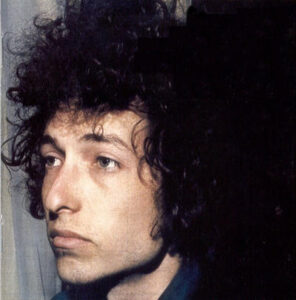
I WANNA BE YOUR LOVER
In this case the rain man has a ‘magic wand’. He arrives in a courtroom, to hear the judge pronounce that …Mona can’t have no bond… Thus she will not be released on bail, although we are never told what she was on trial for. In the original version of the song we merely hear that …Mona she starts to cry… This is rewritten, with a touch of surrealism, as …the walls collide, Mona cries… before the splendidly comic description of the fake magician’s exit, as …the rain man leaves in a wolf man’s disguise… Various elements from this verse would turn up in the released songs from the album. ‘Mona’ (also a character in a Bo Diddley song) and ‘the rain man’ both appear in Stuck Inside of Mobile. In Visions of Johanna Louise holds a …handful of rain, tempting you to defy it…

The next encounter is between an undertaker and a ‘masked man’. The undertaker, memorably described as wearing a ‘midnight suit’ seems to be in love with the masked man. …Ain’t you cute… he tells him. The masked man replies …You ain’t so bad yourself!… We move on quickly. In perhaps the song’s most visual, surreal and funny lines we hear that …Jumpin’ Judy can’t get no higher/ She got bullets in her eyes and they fire… ‘Judy’ is perhaps a prototype of the supposedly crazy woman we will meet in She’s Your Lover Now. For no apparent reason she is then confronted by the ‘mad monk’ Rasputin (a refugee, perhaps, from Desolation Row) who ...touches the back of her head and he dies…
Finally we meet the Greek demi-goddess Phaedra who ‘stretches out on the grass’, admiring herself in a mirror before she faints. The reason given is that …she’s so obvious and you ain’t… No particular explanation is given for any of this. But we may begin to suspect by now that Dylan is giving these fanciful names to various ‘underground’ characters – denizens, perhaps of Greenwich Village, who are acting in suitably eccentric ways. The song is a playfully anarchic romp which throws images at listeners, inviting them to construct their own scenarios. Dylan seems to have regarded it as a throwaway, but it does have a certain wild charm of its own.
SHE’S YOUR LOVER NOW
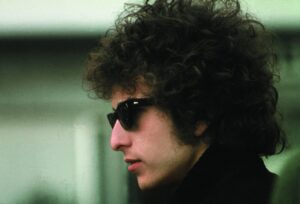
She’s Your Lover Now is one of the highly ambitious extended pieces that Dylan composed in 1966. It consists of four eighteen line verses. Like Visions of Johanna, Stuck Inside of Mobile and Sad Eyed Lady of the Lowlands it is full of distinctive imagery and devastating one liners, as Dylan takes the art of song writing itself into new realms. Whereas long ballads were common in traditional folk music, before Dylan such elongated works were virtually unknown in rock and roll. She’s Your Lover Now features several switches of narrative perspective, in a way that presages the ‘cubist songs’ of Blood on the Tracks. In order to accommodate these shifts, which occur mid-verse, the music requires some unusual chord changes, which the session musicians (mostly members of The Band, with Mike Bloomfield on additional guitar) seem to have struggled with. So after working on many takes for an entire day, the song was abandoned. The version that appeared on many early bootlegs, and which appeared on the first official Bootleg Series release in 1991, is performed with great verve and energy. But it trails off midway through the final verse. The only complete version is an equally remarkable, if more introspective, take with Dylan on solo piano, which can now be heard on the extended Cutting Edge release.
In order to accommodate the experimental structure of the song, each verse is divided into three roughly six-line segments. In some instances the narrator appears to be speaking directly to his ex-lover, while in others he addresses her new lover. One of the unusual features of the song is how its narrator is beset by apparent mood swings. He is clearly bitter, delivering a number of highly cutting put downs, but in some ways these only appear to illuminate his own insecurities. The refrains at the end of the verses alternate between …She’s your lover now… and …You’re her lover now… We begin, however, with the narrator addressing us directly: …The pawnbroker roared, also so did the landlord/ The scene was so crazy, wasn’t it?… We may speculate that, as in I Wanna Be Your Lover, these apparently random character names are ciphers for Dylan’s contemporaries. The direct address invites us into the song. The narrator seems to be referring back to these two characters when he declares rather bitterly that …Both were so glad/ To watch me destroy what I had… which is followed by the aphorism …Pain sure brings out the best in people, doesn’t it?… delivered here with measured and deliberate sarcasm.
Already Dylan has generated a sense of claustrophobic intensity, with the narrator rather desperately trying to make sense of ‘crazy scenes’ that appear to be overwhelming him. He then delivers a scathing rebuke to his ex-lover …Why didn’t you just leave me if you didn’t want to stay?/ Why’d you have to treat me so bad?/ Did it have to be that way?… from which we may infer that she has cheated on him. This is as vicious a putdown as the address to the girl in Like a Rolling Stone, but in this case the narrator seems to be far more uncertain about how he actually feels about the situation. This is emphasised by the way he stretches out …Now you stand here expectin’ me / To remember somethin’/ You forgot to say… We may speculate that in reality he is very probably smarting after she has ditched him. But as he gradually reveals himself to be increasingly self conscious, it becomes more and more difficult for us to sympathise with him.
The song slows down for a moment, with something of a musical jolt, as he addresses the new boyfriend for the first time: …Yes, and you, I see you’re still with her, well/ That’s fine ’cause she’s comin’ on so strange, can’t you tell?… The narrator is as scathing here as he is to the girl. He seems to be implying that he does not really care that she has cheated on him with this unidentified ‘villain’ because she is a crazy person. The evidence he gives for this is merely that she wears an ‘iron chain’. This is of course an arrogant and patronising attitude. He also does not endear himself to us when he claims that he would confront her himself but makes the rather unconvincing excuse that …I just can’t remember how…
In the first two sections of the second verse, the narrator delivers an increasingly desperate address to his ex, full of self pity and rather half hearted attempts at sarcasm. He begins with a confused and perhaps mock-tearful rebuke to her, firstly suggesting that she has committed a ‘crime’ against him: …I already assumed/ That we’re in the felony room/ But I ain’t a judge, you don’t have to be nice to me… He then stumbles a little, asking her to …tell that/ To your friend in the cowboy hat/ He keeps saying everything twice to me… It seems rather unlikely that the ‘cowboy’ is her new lover, but we do get the impression that all the characters in the song, despite the fanciful names they are given, are part of a rather incestuous friendship group. It may be significant that, though a number of their friends are given fanciful names, the identity of the three main protagonists is never revealed.

The narrator seems to become increasingly unconvincing as the song progresses. He continues to attempt to justify his past actions: …You know I was straight with you… he tells her …You know I never tried to change you in any way… Then he presents himself in a rather self pitying light: …You know if you didn’t want to be with me/ That you didn’t have to stay… Again Dylan draws out the shorter lines. The narrator is angling for sympathy but is presenting himself as a rather weak and pathetic figure. In reality he is pleading with her, but is doing so in such a way that will surely only increase her contempt for him. He acknowledges that she has tried to make amends with him …Now you stand here sayin’ you forgive and forget…he tells her. But he is too immature to be able to accept the relationship on that level. All he does is bleat rather pathetically …Honey, what can I say?…
The narrator then turns his venom on the interloper. In what is perhaps the most memorable section of the song, Dylan begins by delivering one of his funniest putdowns: …And you – you just sit around and ask for ashtrays – Can’t you reach?… This implies that the new lover is a rather pathetic character who has no personal initiative. But the line is even funnier because it further reveals the petulant and immature attitude of the narrator. He continues to elaborate: …I see you kiss her on the cheek every time she makes a speech… as if the object of his scorn is completely ‘under her thumb’. In his desperation the narrator again tries to present her as some kind of kooky airhead. He asks …With her picture books of the pyramids/ And her postcards of Billy the Kid/ Why must everybody bow?… This is obviously ironic, as it is the narrator himself who is really ‘bowing down’ to her. We must surely suspect by now that she is not as crazy as he seems to suggest.
We then hear that …Everybody that cares is going up the castle stairs/ But I’m not up in your castle, honey… which may be some kind of aside about fame and celebrity. Perhaps the girl in the song is a famous – or perhaps an aspiring – actress or singer. The narrator tells her that he ..can’t recall/ San Francisco at all/ I can’t even remember El Paso, honey… Perhaps the ‘castle’ in San Francisco is the ‘Hearst Castle’, a famous haunt for celebrities originally built by the newspaper magnate William Randolph Hearst, which was wickedly satirised by Orson Wells in Citizen Kane as ‘Xanadu’. The narrator’s entire project in the song is as hopeless as Kane’s bid for immortality in the classic movie. He tries again to assert his ‘innocence’ in the relationship, claiming that …You never had to be faithful/ I never wanted you to grieve/ Oh, why was it so hard for you, if you didn’t want to be with me, just to leave… Here Dylan crams in the rather jumbled words, again stressing the narrator’s apparent confusion. The suggestion here appears to be that she has been toying with him. The next, rather haunting lines …Now you stand here/ Why are your fingers goin’ at my sleeve?… may imply that she is still trying to ‘get round’ him. Or perhaps he is only imagining this. But the way Dylan phrases ‘going at my sleeve’ is, apart from being highly distinctive, almost scary. It seems that the narrator is implying that his ex lover has some kind of invisible grip on him.
Turning to the new lover, the narrator tries to pour more scorn on him. But in comparison to the pithy lines in the last verse, his attempts at sarcasm now seem rather weak. …An’ you, just what do you do anyway?… he asks him …Ain’t there nothin’ you can say?… Again he tries to categorise the girl as rather mad: …She’ll be standing on the bar soon/ With a fish head and a harpoon/ And a fake beard plastered on her brow… telling him that …You better do something quick/ She’s your lover now… As we reach the final verse he descends further and further into self pity. He asks himself …Oh, why must I fall into this sadness?… which is followed by the extremely self deprecating ….Do I look like Charles Atlas?/ Do you think I still got what you still got baby?… This is another very funny line. Charles Atlas was in those days the world’s most famous body builder, featuring in countless (and much mocked) adverts in which a rather spindly young man on a beach has ‘sand kicked in his face’ by a nasty bully who then takes his girl. This was supposed to persuade men to sign up for expensive body building courses. Charles Atlas was supposedly ‘the strongest man in the world’, which is an epithet that certainly does not fit the narrator. In many ways, he now positions himself as the one having that sand kicked in his face. The following lines epitomise the sad state that the narrator has reached …My voice is really warm/ It’s just there, it ain’t got no form… He now appears to be admitting that all his protestations will inevitably be in vain. Then he almost literally dispatches himself, describing his voice as …just like a dead man’s pistol shot, baby…
The narrator now seems absolutely resigned to his fate. All he is left with now is regret. He vainly tries to exert a ‘soft touch’, waxing poetic as he delivers the song’s most romantic lines, portraying her as an innocent who has been corrupted: …Your mouth used to be so naked/ Your eyes used to be so blue/…Your hurts used to be so nameless/ And your tears used to be so few… He extends the facial metaphors, while attempting to throw in a clever pun on ‘crying wolf’ and ‘animals’: …Now your eyes cry wolf/ While your mouth cries “I’m not scared of animals like you…” Half way through this, the ‘official’ version peters out. It is almost as if Dylan – inhabiting the persona of the narrator – cannot bear to deliver the second line, which is her biggest putdown of him.
Finally he addresses the new lover again. But now, his spirit drained out of him, there is no trace of the earlier comic sarcasm. He confesses that …there’s been nothing of you I can recall;
I just saw you that one time. You were just there, that’s all… finally admitting that in reality he knows nothing about this figure. He ends on an extremely sad note: …I’ve already been kissed/ I’m not gonna get into this/ I couldn’t make it, anyhow…. And finally, in utter resignation …You do it for me/ You’re her lover now… Dylan certainly takes us on a kind of scary fairground ride here. Although the song is especially notable for its brilliantly pithy putdowns and its bizarre and hugely diverse imagery, ultimately it takes the notion of an unreliable narrator to the extreme. The full band version of the song is a recording full of great power and verve, as Dylan leads the musicians through a great number of lyrical and musical ‘ups and downs’. But somehow its bright, tuneful and often optimistic tone disguises the fact that the song is actually one of Dylan’s most penetrating pieces of self analysis.
At the end of the session, frustrated with being unable to record a finished take with the musicians, Dylan performs a solo take on piano of the whole song. There are just a few lyrical changes but the entire tone of this performance is different. One can hear a sense of frustration in Dylan’s voice, perhaps from having spent a day failing to nail the song, but perhaps because only now does Dylan himself really seem to grasp that in fact the song is extremely melancholic. After tinkling a little on piano he delivers what stands as one of his most emotionally wrought and moving spontaneous performances. He slows down the song so that it lasts for eight minutes and delivers the ‘funny’ lines in an offhand way. The questions he asks are now full of anguish. There is no sense here that he is trying to get verbal revenge against the girl or her new lover. He merely sounds resigned. The line …Pain sure brings out the best in people, doesn’t it?… goes from being sarcastic to becoming an almost frightening description of the singer’s state of mind. He now sounds far more sympathetic to the new lover, virtually admitting defeat to him as he actually advises him directly to ‘talk to her’ and ‘explain it to her’. After the lines about the pyramids and Billy the Kid, he now sings …They’re so nice but why must everybody bow?… a line which, if delivered in ‘Dylan-cynic’ mode could have been quite viciously ironic. Now he merely sounds weary and defeated. Even the lines about Charles Atlas have lost their humorous edge.
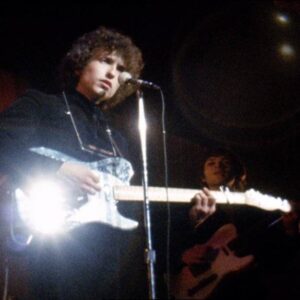
She’s Your Lover Now is thus a kind of fractured masterpiece; perhaps Dylan’s most magnificent failure. It is a prime example of how his iconoclastic art works when he is firing on all cylinders. The contrast between these two performances of the song is an evocative illustration of the way in which he has created a form of ‘song poetry’ whose meaning is determined as much by how the words are expressed and how the music is arranged as by the content of the lyrics. Ultimately, the song is transformed from another ‘freewheeling’ piece of word play into a harrowing piece of self examination. As the spellbinding piano version – with all its raw, unfiltered emotion – reveals, this is an intensely personal piece which does not really fit into the smart, sharp surfaces of the ‘wild mercury sound’. Through the composition of and the attempt to record a definitive version, the cracks and strains of the pressure that Dylan – who is in the midst of an extraordinary period of creativity unmatched by any musician in rock history – is under are revealed. Listening to the riveting piano version with hindsight, it is perhaps no surprise that he would soon have to retreat from the extraordinary aesthetic standards he had set himself and find a quieter, more reflective voice.
LINKS
STILL ON THE ROAD – ALL DYLAN’S GIGS
THE CAMBRIDGE BOB DYLAN SOCIETY
Leave a Reply