


SERIES OF DREAMS: TIME OUT OF JOINT…
An edited version of this text appears in ‘Minstrel Boy: The Metamorphoses of Bob Dylan’ (‘Picasso of Song’ Part Two)
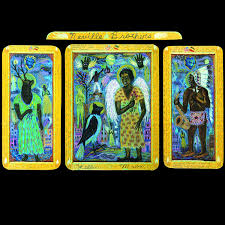
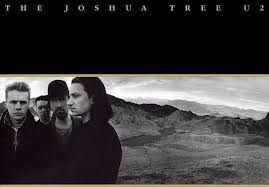
Series of Dreams is the song from the Oh Mercy sessions that can perhaps be most strongly identified with’ Daniel Lanois’ distinctive sound; the result of an ‘organic’ approach in which instruments are carefully layered over each other to build up musical tension. The technique is especially noticeable on U2’s The Joshua Tree (1987), Robbie Robertson’s first self titled solo album (1988) and on the Neville Brothers’ Yellow Moon (1989). We first hear a very deep sounding bass, accompanied by tom toms and a guitar riff that sounds slightly out of kilter, as if it the guitarist is playing a different tune.
Then the main drums kick in and the volume of the tom toms continues to rise. The percussion instruments dominate, creating a compelling soundtrack to, and a distinctive contrast to, Dylan’s rather offhand vocals. The song did not, however, appear on the album, although it was released two years later on the first Bootleg Series release. In Chronicles Dylan goes into some detail about the creative tension between artist and producer and explains why he was dissatisfied with the final product. In the past he had usually worked very quickly in the studio, often regarding his recordings as mere ‘demos’ which would only truly come alive in live performance. He was not used to producers stamping their own sound on his work.
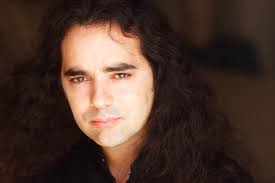
DANIEL LANOIS
Live versions of the song were attempted on a handful of occasions in 1993 and 1994 but these performances generally failed to capture the particular ambience of the original. The percussive element is so strong that it can almost be regarded as a ‘dance track’ – very rare in Dylan’s work. On the recording his unshowy, almost spoken vocals and the distinctly understated lyrics create an eerie contrast to Lanois’ soundscape, whereas in live performance he tends to emote more. Series of Dreams has often been described as a ‘visionary’ song, yet much of what makes it so distinctive is Dylan’s unblinking depiction of the contrast between dream and fantasy worlds. In his earlier years he had written many songs which focused on visionary experiences. But Series of Dreams is no Visions of Johanna or I Dreamed I Saw St. Augustine. Although it deals with some fantastical scenarios it does so in a remarkably matter of fact way and mostly avoids surreal images and juxtapositions.
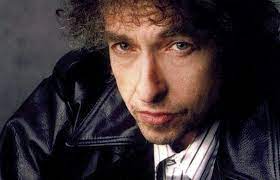
SERIES OF DREAMS
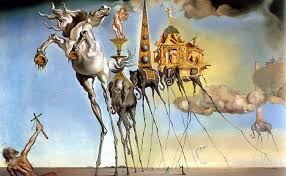
The opening lines set the tone: …I was thinking of a series of dreams/ Where nothing comes up to the top… suggests that the narrator is staring into a dark whirlpool, in which very little is revealed

This is followed by the mysterious …Everything stays down where it’s wounded/ And comes to a permanent stop… The use of ‘wounded’ is highly suggestive if unspecific, suggesting perhaps that the dreams being described in this murky brew could potentially reveal much inner pain. At this point it seems that he has no great desire to look into his own inner depths unless this will reveal his own ‘wounds’. He continues to muse on these matters in a rather detached way: …Wasn’t thinking of anything specific/ Like in a dream when, someone wakes up and screams… Now he is reassuring us – and perhaps more importantly, himself – that the dreams are not scary or horrific, although we are left wondering whether there is a link between the ‘screams’ and the ‘wounds’ mentioned earlier. But he dismisses this connection: …Nothing too very scientific… he observes casually …Just thinking of a series of dreams…
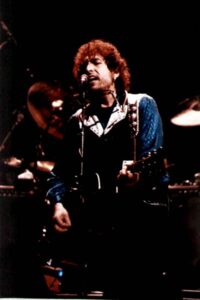
Already we may suspect that this casual attitude is covering up some real trepidation. We sense that, although he is ‘thinking’ about these inner journeys, he would much rather dismiss them from his mind. The song grows in intensity as he begins to delve deeper into the significance of visions that he does not appear too disposed to describe. He seems to be concerned about being drawn into a visionary state of consciousness, worrying that if he delves too deep he will be trapped: …Thinking of a series of dreams/ Where the time and the tempo fly/ And there’s no exit in any direction/ ‘Cept the one that you can’t see with your eyes… The remarkable phrase ‘time and tempo’ links a causal chain of events with temporal and musical references. In this fearful dreamland, both ‘time and tempo’ are out of joint. This recalls Hamlet’s reaction to being visited by his father’s ghost: …The time is out of joint/ O cursed spite/ That ever I was born to set it right… Like Hamlet, Dylan’s narrator is only a reluctant traveller into the ‘unknown country’ he is contemplating.
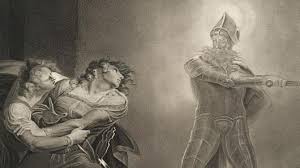
HAMLET AND HIS FATHER’S GHOST
The only escape from being dragged into this maelstrom is an invisible one, requiring considerable mental effort, which the narrator clearly does not want to make. Again he tries to play down his own involvement: …Wasn’t making any great connection/ Wasn’t falling for any intricate schemes/ Nothing that would pass inspection/ Just thinking of a series of dreams… But we are not fooled. As the furious percussion increases in volume and force, we – like the narrator – cannot resist as he invites us into his dream world. The bridge section, which follows, takes us right down into the depths. Its opening line …Dreams where the umbrella is folded/ Into the path you are hurled… recalls the surrealist paintings of Rene Magritte, which frequently feature umbrellas (the typical accoutrement of ‘respectable’ businessmen) in bizarre contexts, making everyday objects and settings appear strange and sometimes menacing. Here the umbrella appears to be blocking the narrator’s vision.

The final lines of the bridge are highly suggestive, beginning with a characteristically Dylanesque gambling metaphor : …And the cards are no good that you’re holding… We are then transported from inner to outer space: ..Unless they’re from another world… In Chronicles Dylan explains that part of the conflict with Lanois over the song originated because Lanois especially liked the bridge and wanted the whole song to be like that. How this would have worked is never outlined but it seems that Lanois, as a fan of Dylan’s 1960s work, wanted the whole song to be more ‘visionary’. Dylan’s narrator, however, remains guarded. In the final verse he finally has the courage to describe some of his dreams …In one… he begins …the surface was frozen ….suggesting he really is imagining himself on another planet, but one which is unlikely to reveal many secrets.

The descriptions of the other dreams are quick snapshots: …In another, I witnessed a crime/ In one, I was running and in another/ All I seemed to be doing was climb… There is a sense of futility here which recalls Albert Camus’ essay The Myth of Sisyphus (references to which are made in the opening dialogue of Dylan’s film Renaldo and Clara). In the essay Camus refers to the Greek myth of a character who was condemned to spend eternity pushing a large boulder up a mountain – a frustratingly meaningless task. He compares this to what he regards as the absurdity of human life. The essay concludes: …The struggle itself towards the heights is enough to fill a man’s heart. One must imagine Sisyphus happy…

SERIES OF DREAMS
Dylan, however, has no apparent desire to take us deeper into his fantasy world. Mere glimpses appear to be enough for him. He concludes with another disclaimer and a mundane boxing metaphor: …Wasn’t looking for any special assistance/ Not going to any great extremes/ I’d already gone the distance/ Just thinking of a series of dreams… After a short instrumental passage, the music then fades out. The repetitive rhythms emphasised the sense of futility that dominates the song. Although Lanois was perhaps hoping for a song like Visions of Johanna, Dylan remains reticent. He takes us to the edge of such a world, gives us a few glimpses and then departs. Yet the song is strongly suggestive of the existence of ‘another world’ of the imagination, giving us a few clues and letting us imagine the rest.

There is a sense, perhaps, that the real subject matter and scenarios of the song are only being hinted at here and that Dylan is inviting us to construct imaginary worlds of our own. The narrator constantly steps back from taking us into those worlds, a process which suggests a kind of existential terror lurking in the back of his – and perhaps our – minds.
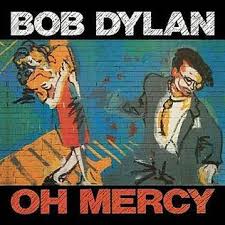
As with most of the other material on Oh Mercy, the use of understatement (not always a prominent characteristic of Dylan’s songs) is crucial to the overall effect. Series of Dreams, despite its apparent display of quiet reserve, is a song which flirts with deep seated terrors but whose narrator continually pulls away from immersing himself in the world of the imagination. This gives the song a considerable suggestive power which is in some ways reminiscent of the similarly stark All Along the Watchtower; allowing us to let our imaginations roam ‘other worlds’ and construct our own scenarios within the guidelines that Dylan has provided us with.
LINKS…
STILL ON THE ROAD – ALL DYLAN’S GIGS
THE CAMBRIDGE BOB DYLAN SOCIETY
Leave a Reply