

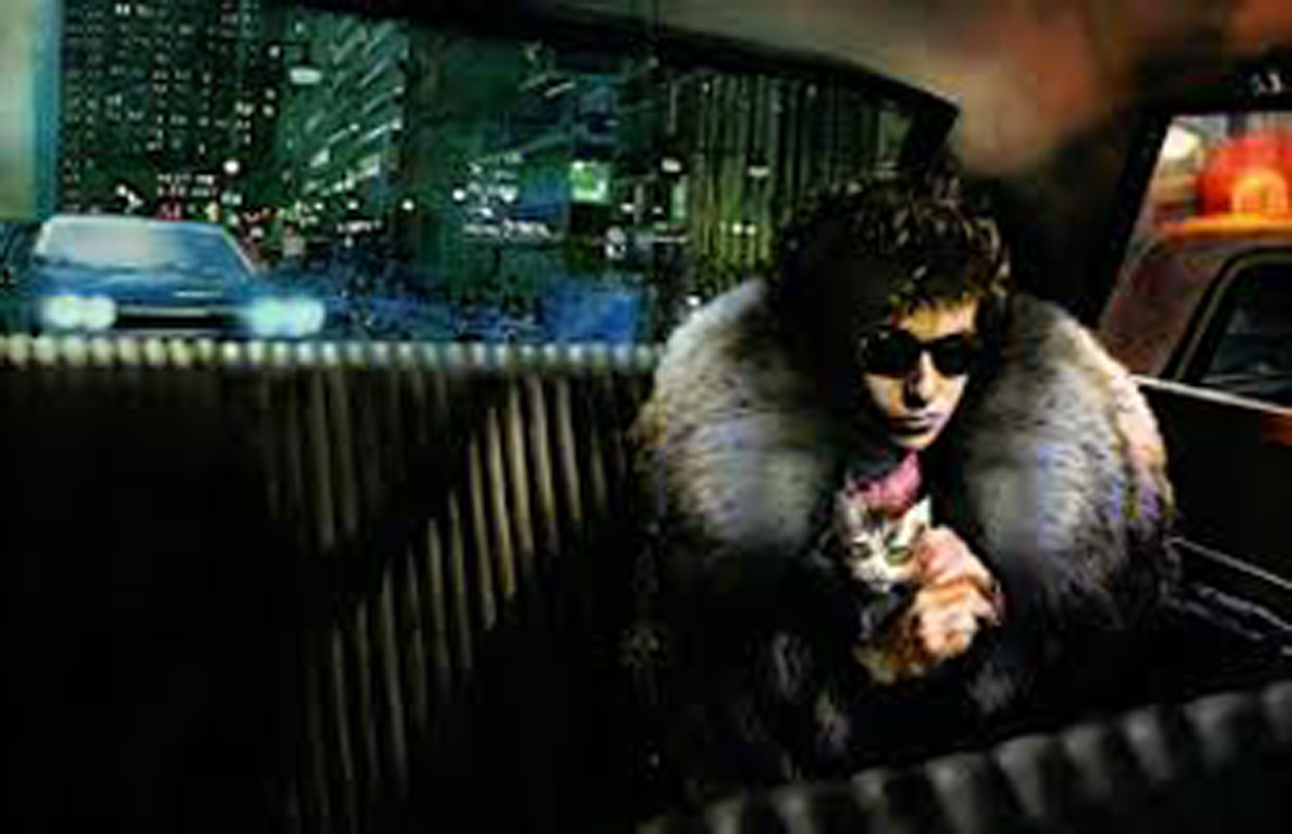
LIKE A ROLLING STONE: GO TO HIM NOW, HE CALLS YOU…
A VERSION OF THIS BLOG WILL APPEAR IN THE THIRD VOLUME OF CHRIS GREGORY’S ‘PICASSO OF SONG’ TRILOGY: DIG YOURSELF: THE RISE OF BOB DYLAN 1961-66
THE FIRST TWO VOLUMES ARE AVAILABLE HERE….
….The first time I heard Bob Dylan, I was in the car with my mother listening to WMCA, and on came that snare shot that sounded like somebody had kicked open the door to your mind … The way that Elvis freed your body, Dylan freed your mind, and showed us that because the music was physical did not mean it was anti-intellect. He had the vision and talent to make a pop song so that it contained the whole world. He invented a new way a pop singer could sound, broke through the limitations of what a recording could achieve, and he changed the face of rock and roll for ever…
Bruce Springsteen, speech at induction of Bob Dylan to the Rock and Roll Hall of Fame, 1988
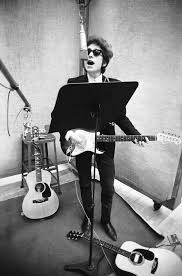
Like a Rolling Stone is an iconoclastic song which did much to change the entire evolution of rock music. It remains Bob Dylan’s most commercially successful recording (having reached No. 2 in the American charts and No. 1 in Britain and several other countries) and his most influential composition, demonstrating with great assurance that a ‘hit single’ backed by a rock beat could communicate with great poetic power. Released shortly before his iconic appearance at the 1965 Newport Folk Festival, it also demonstrated to the world that Dylan was no longer just a ‘folk singer’. To the horror of many folk purists, he was now also a ‘pop star’. For the next year or so, as he embarked on a world tour with a loud rock band, defiantly following his new musical direction despite courting increasing controversy, the song would provide a cathartic climax to his concerts.
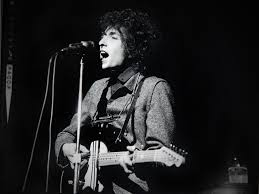
The use of language in Like a Rolling Stone was completely novel for a song that was heading towards the heights of the charts. Although it boasts a very strong and infectious chorus which is easy to sing along to, it also delivers a highly ambiguous message which mixes colloquial expressions and snatches of ‘hip jive talk’ with striking imagery and metaphors. Over its six minutes (a then unprecedented length for a single) it builds and builds musically towards a formidable climax, employing what was then a completely new combination of instruments. Dylan ‘acts out’ the drama of the song with highly distinctive vocal inflections and nuances as he radically upturns the conventions of popular music. Although it is apparently aimed at a young woman, it is neither a profession of love nor a song of rejection but a series of warnings and nuggets of advice. As with Blowin’ in the Wind it also centres on rhetorical questions which it dares its listeners to try to answer.
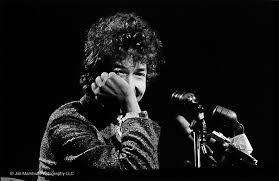
The recording conjures up a mysterious lyrical and musical alchemy, combining strong and visceral emotions with a complex musical structure. As Bruce Springsteen so eloquently described his own initial reaction, it …sounded like somebody had kicked open a door to your mind… The record demonstrated to many young listeners that rock music was a medium that could be used to express inner feelings that they might not even have known that they had, encouraging them to question many cultural assumptions. While songs like The Times They Are a-Changing had defined one of the key popular slogans of the 1960s – ‘the generation gap’ – in quite direct and explicit terms, Like a Rolling Stone did so in a far more subtle way, by constructing a narrative that young people could ‘read through’. Its lyrical suggestiveness, its dynamic musical build up and its sheer ‘attitude’ set a template for the ‘revolution in the head’ that was to define the youth movement that was to emerge as the decade progressed.
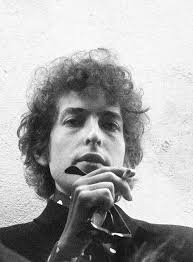
Over the years, many commentators have attempted to ‘fix’ the meaning of the song in autobiographical terms. It seems to be directed at a ‘spoiled young rich girl’ who is dabbling in hard drugs and who is brought down by the experience and has her illusions shattered. Thus it has been posited that the subject of the song could be a figure like Warhol acolyte Edie Sedgwick or singer Marianne Faithfull; both of whom Dylan had mixed with and both of whom were on a tragic path to addiction. Although such women might have provided some initial inspiration for the song, such a narrow interpretation fails to explain its universal appeal.

EDIE SEDGWICK
Like a Rolling Stone contains a number of mysterious characters. As well as the ubiquitous ‘Miss Lonely’, we meet the ‘mystery tramp’, the ‘diplomat’ and ‘Napoleon in Rags’; all of whom could be taken as ciphers for contemporary figures in the milieu of what would soon come to be known as the ‘alternative society’. The song, which begins with the traditional opening of a fairy tale …Once upon a time… is couched in almost dream like, mythical terms, so that we are encouraged to view these characters as symbolic rather than real figures. As the story unfolds, however, the main character is increasingly revealed to be a ‘Cinderella in reverse’. But it is not a tragedy. Although it depicts a character who has fallen on hard times, it communicates a message of hope, turning bitter experience into the promise of possible liberation from what William Blake once described as the ‘mind forged manacles’ of conventional society.
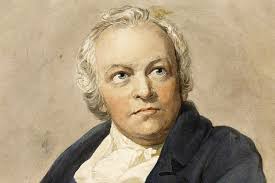
WILLIAM BLAKE
The multi-faceted title of the song has great resonance. The expression ‘a rolling stone gathers no moss’ has often been used as a metaphorical way of describing free spirited individuals. Rolling Stone Blues is a song by Muddy Waters from 1950 – itself a variant of an older song Catfish Blues. In its key verse Waters recalls how his mother had predicted, even before he was born, that he would have an imaginative and explorative nature: …”I got a boy child’s comin’, he’s gonna be/ He’s gonna be a rollin’ stone”… Although it has little lyrical or musical connection to Dylan’s song, its essence is still present in the notion that ‘a rolling stone’ indicates someone who has chosen personal freedom and joyous rebellion and has rejected cultural norms. Waters’ song was later adopted as the moniker for The Rolling Stones, who by 1965 had already established themselves as second only to The Beatles in the pantheon of ‘British invasion’ rock performers. It is thus hardly surprising that Dylan’s song was seen as being connected to the group in some way. In the 1990s, the Stones even began performing their own version.
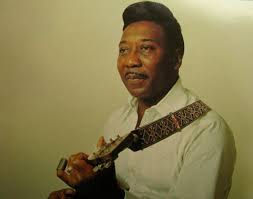
MUDDY WATERS
The stories behind the composition and recording of the song have been told so many times that they have taken on mythical status. Dylan told an interviewer that he had become so disillusioned with the trappings of fame that he was considering quitting the music business, perhaps to become a writer of novels, poems or plays. But then he splurged out …a long piece of vomit… which consisted of a twenty page prose poem. Out of this, he stated, Like a Rolling Stone emerged. As a result, he then gave up such literary ambitions and decided that song writing was indeed his forté. This statement has been taken literally by many commentators. However, no one has ever actually seen this ‘piece of vomit’ and it may well be that – as Dylan often does in interviews – he is using considerable ‘poetic licence’ here. Perhaps what he really meant was that, having written the song, he then realised that his role as a song writer was now actually satisfying his literary aspirations. It might well be that the twenty page prose poem existed only ‘in his head’.
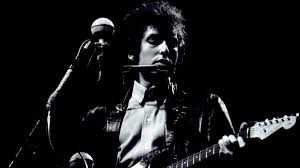
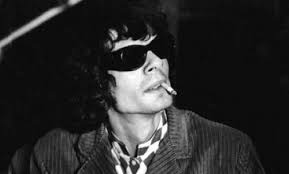
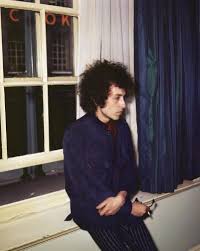
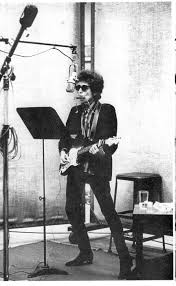
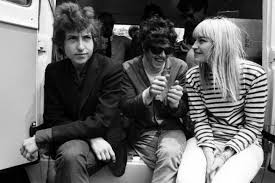
It is also well attested that it took Dylan and his musicians some time to get Rolling Stone to its final form. As demonstrated in the Bootleg Series’ The Cutting Edge, a number of different approaches were taken to the song in the studio. It began as a piano-based tune in waltz time and only gradually evolved into a full-on rock number. The key addition to the song was undoubtedly Al Kooper, who at the time was a young guitarist and session musician. When producer Tom Wilson swapped keyboard player Paul Griffin from organ to piano, the audacious Kooper positioned himself behind the organ and insisted he had a riff that could work in the song. Knowing that Kooper was not a keyboard player, Wilson was dubious. But when Dylan heard the results he demanded that the organ be turned up, making it a key element in the recording. The story illustrates well the way that Dylan worked in the studio – often relying on improvisation and sheer chance to create ‘moments of magic’ that could never be pre-planned in a conventional way. The organ then became a key part of the song. It was later used prominently in Positively Fourth Street and One of Us Must Know. Dylan sensed that there was something about the smooth sound of Kooper’s playing that created an intriguing contrast with his own abrasive lyrics and vocals. This helped to give the song the ultimately ‘positive vibe’ that he was trying to create.
AL KOOPER
The recording kicks off with the now-iconic single snare drum beat, which segues immediately into a distinctive and appealing melodic line, dominated by Paul Griffin’s piano and Kooper’s organ. Then Dylan comes in, with ‘catchy’ lyrics full of internal rhyme that could be is seen as derisive or sarcastic: …Once upon a time you dressed so fine/ Threw the bums a dime in your prime… But, despite his typically uncompromising tone, they are delivered not with venom but in a tone of sympathy …People call, say “Beware doll, you’re bound to fall”/ You thought they were all… Another slight pause follows, as if the singer is gathering a little courage, before he sings …kidding you… The hesitation stresses his empathy for the target of the criticism.
The word ‘doll’ was a commonly used (if perhaps somewhat pejorative by today’s standards) term for a pretty young girl at that time, as in Cliff Richard’s hit Living Doll (1959), but here, in connection with the ‘once upon a time’ theme, it is used ironically, suggesting that she is somehow ‘breakable’. The term ‘hanging out’, which is now a fairly mainstream term for spending time with friends, was then a ‘hip speak’ term for the social activities of ‘Beatniks’ or other social rebels who rejected a materialistic lifestyle would spent time together. It had a distinctly ‘low life’ connotation, here suggesting that the presumably privileged and certainly snobbish girl used to look down on such less fortunate people.
The first four lines are arranged in a straightforward ABAB rhyme scheme, and are delivered in a relatively relaxed way. The second section of the verse then begins to build up intensity, now in a CDCD pattern. Dylan still sounds compassionate as he tells her …You used to laugh about/ Everybody that was hanging out/ Now you don’t talk so loud/ Now you don’t seem so proud… while the organ rises in volume, emphasising a growing sense of pathos. A ninth line is then added to the verse, a pattern which will be repeated throughout the song. In a technique that many blues singers used, this line … About having to be scrounging around for your next meal… does not rhyme with the preceding lines or follow their rhythmic patterns. Dylan takes the unusual step of making it rhyme with the first line of the chorus. Mike Bloomfield’s guitar becomes rather more prominent in the mix as we build up to the rousing chorus, which begins with the repeated question …How does it feel?… At this moment Kooper plays a simple counter melody on the organ which substitutes for a reply to the question. This is followed by three rhyming lines: …To be without a home/ Like a complete unknown/ Like a rolling stone… with the organ’s ‘response’ constantly being interjected.
We thus learn that the girl’s days of being a privileged socialite are over and that she is now ‘homeless’. We can take this to mean that she is actually now living on the street like a hobo or a vagabond, presumably because she has descended into penury or some kind of addiction. But the decidedly celebratory tone of the way Dylan delivers these lines suggests something different. She has lost her old ‘home’ but has perhaps found a new one in the liberty she has gained. Her future, rather than being mapped out for her by social conventions, is now ‘a complete unknown’. Like the ‘freewheelin’ Muddy Waters, she is now a free agent, who will ‘gather no moss’ in her new life.
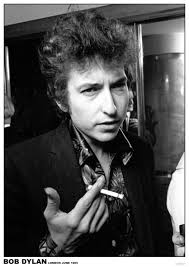
ROLLING STONE….
The song continues in a similar musical pattern for the remaining three verses, with the organ, piano and guitar supporting the portrayal of a colourful gallery of briefly mentioned ‘dubious characters’. The second verse begins with one of Dylan’s great vocal moments, as he lets out a sudden …Aaah!… indicating a certain degree of compassion mixed with a tinge of regretful sadness: ..You’ve gone to the finest schools, alright Miss Lonely/ But you know you only get juiced in it… The use of another example of ‘hip speak’, ‘juiced’ is quite ambiguous here. The term can mean drunk or over-excited, although in this case it seems to suggest that the education system has ‘drained the juice’ out of her. The narrator then informs her, quite dispassionately, that …Nobody’s ever taught you how to live out on the street/ And now you‘re gonna have to get… He pauses again, as if about to deliver an unpleasant diagnosis …used to it… This time the slight hesitation appears to indicate that some unpleasant details are about to follow, as she begins to learn some hard lessons.
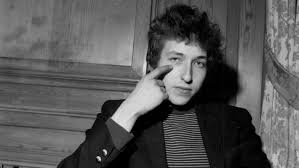
Now that ‘Miss Lonely is on the (real or metaphorical) ‘street’ she will meet some figures who will tempt her to sink lower into the abyss. As if to indicate this danger, the tension builds in four rhyming lines: …You say you’ll never compromise/ With the mystery tramp, but now you realize/ He’s not selling any alibis/ As you stare into the vacuum of his eyes… The remarkable phrase ‘mystery tramp’ (with its distinct echo of the very dark rhythm and blues number Mystery Train, as immortalised by the young Elvis Presley) suggests a rather menacing figure, especially as the verse ends with …and say “Do you want to make a deal?”… We are not told what kind of ‘deal’ this will be, although in hip speak the word ‘deal’ generally indicates a drug transaction. So is the ‘Mystery Tramp’ a drug dealer who is trying to lure her into hard core addiction? Is he a ‘down and out’ – a ‘tramp’, as his name suggests, who is making unwanted sexual advances to her? Or is she, as blues singers like Robert Johnson were fabled to do, engaging in a Faustian pact with the Devil? This question is deliberately left hanging in the air and will remain, as the name of the character suggests, a ‘mystery’. The remarkable phrase ‘vacuum of his eyes’ may suggest that this character is a ‘soulless’ manipulator. Or, given that she is staring ‘into his eyes’, perhaps she is just becoming aware of her own ‘hollowness’.
The third verse begins more playfully, after another sigh of …Aaah… with three internal rhymes: …You never turned around to see the frowns/ On the jugglers and the clowns when they all did tricks for you… Dylan is famously fond of circus metaphors, as demonstrated in Ballad of a Thin Man and Desolation Row. Here we go back again into the girl’s old life, showing how in the past she used to ignore the relatively harmless people who tried to get her attention. Yet it may be that it was these ‘jesters’ or ‘wise fools’ that she should have been paying attention to. Then the narrator delivers a cutting homily, again employing ‘hip speak’, which has become one of Dylan’s most well known aphorisms: …You never understood that it ain’t no good/ You shouldn’t let other people get your kicks for you… Here Dylan builds up a picture of this self-absorbed character who seeks to manipulate others for her own enjoyment, living life in a purely vicarious way.
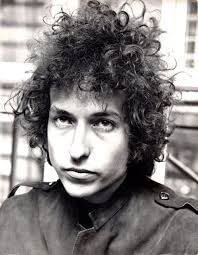
ROLLING STONE….
She then meets another ‘soul stealer’, who will turn out to be her nemesis: …You used to ride on the chrome horse with your diplomat/ Who carried on his shoulder a Siamese cat… Two animals are mentioned here – the ‘chrome horse’, which is presumably some kind of vintage automobile and the soft, furry ‘Siamese cat’ – an apparently innocent creature but one who is actually a predator with sharp nails. This suggests that the smooth talking ‘diplomat’ is actually, like the mystery tramp, someone who will exploit her, which is confirmed by the acidic final lines …Ain’t it hard when you discover that/ He really wasn’t where it’s at/ After he took from you everything he could steal… The girl has thus been taken advantage of and has been left bereft, of both her fortune and her integrity. The following chorus thus suggests that she is doomed to end up alone or forgotten, or perhaps as just another ‘dead junkie’.
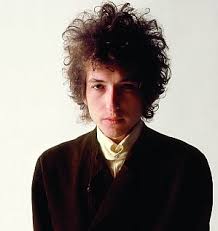
The final verse, however, offers hope. It begins with another reflection on her previous life, with the internal rhyme suggesting what a frivolous, spiritually empty existence it was: …Aah, princess on a steeple and all the pretty people/ They’re all drinking, thinking they’ve got it made… followed by a warning that she is now ‘broke’ and must therefore take appropriate action: …You better take your diamond ring …you better pawn it babe… But then another figure appears, described as ‘Napoleon in rags’, perhaps another ‘down and out’ but one who – judging by his name – has a certain grandiose character. He may be someone who could ‘conquer’ her or he may be her saviour – an embodiment of a non-materialistic and therefore more spiritually fulfilling life: …You used to be so amused… the narrator tells us drily … At Napoleon in rags and the language that he used… She does not yet know whether this character will save her or ruin her. But now the narrator implores her to take a chance on him: …Go to him now, he calls you, you can’t refuse… which is followed by another famous ‘Dylanesque’ ambiguous double narrative: …When you ain’t got nothin’, you got nothing to lose….
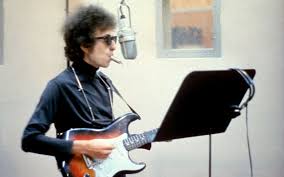
Then, in the final line, as we close in on the last chorus, it is strongly suggested that ‘Napoleon’ will in fact be the key to her liberating herself from the preconceptions and materialistic obsessions of her old life …You’re invisible now!…Dylan cries …you’ve got no secrets to conceal… After this, the final chorus sounds jubilant and celebratory. If she ‘embraces Napoleon in rags’ (representing this new life) there is a good chance that she will be freed. But we are not told whether she will take the plunge. Her fate, like the questions the song asks, is left hanging in the air. By now, given the whole way that this bizarre ‘fairy story’ has been presented to us, we must surely know that it is more than a tale of ‘riches to rags’. Perhaps any of us, including the singer himself, could be ‘Miss Lonely’, burdened by our mistaken preconceptions and. The song is a journey through lived experience, extolling the virtues of casting off a superficial view of life and embracing true spiritual, artistic or creative freedom.
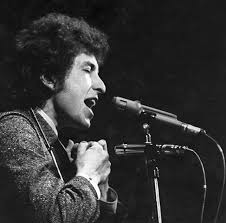
Like a Rolling Stone is one of the few songs which Dylan allows his audience to join in with the chorus. The way in which fans react suggests strongly that, in creating this extended parable, Dylan has summed up the experience of his generation in a way that goes beyond the more straightforward messages of his political ‘protest songs’. In joining in with the refrain, each member of the audience is celebrating their own efforts, no matter how small, to cast off conventional attitudes and embrace a new way of thinking based on deeper, more humanitarian, more vital and ultimately far more satisfying values. It is thus hardly surprising that this song, perhaps more than any other, became an anthem of the counterculture. In a world living under the ‘sword of Damocles’ of nuclear extinction and struggling with outdated social conventions and attitudes, many of those who heard this song rally thought that they had ‘nothing to lose’ by embracing a wholly new lifestyle.
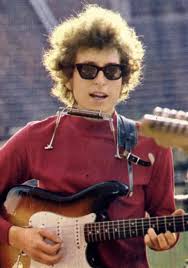
Like a Rolling Stone has naturally attracted many covers over the years, although most of these tend to follow the musical pattern set by the original. If played like this, the song is likely to be a stage favourite. Among the more notable versions, Bruce Springsteen presents it as a thoroughly celebratory ‘crowd sing-along’. David Bowie (in a temporary live reunion with his old guitarist Mick Ronson, who had also backed Dylan on the Rolling Thunder Tour) knocks out a fast paced and highly energetic live rendition. The British jazz singer Barb Jungr reinvents the song as a reflective piano-based ballad. Perhaps the most distinctive and original version is in the explosion of electric sound produced by Jimi Hendrix in his extraordinarily visceral performance of the song at the Monterey Festival in 1967.
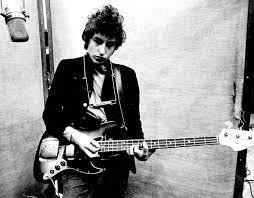
It is not surprising that this monumental piece of work has had a long life, being played by Dylan several thousand times. In 1966, in what are generally acknowledged to be his greatest ever performances of the song, he spits out the lyrics, almost as if he is delivering them in one long angry breath. In contrast, in 1969, at the Isle of Wight Festival (in a version that appeared on 1970’s Self Portrait) he presents what could almost be called a satirical version of the song, using a laid back ‘crooning’ style. Whereas previously it had been delivered as a revengeful diatribe against fans who booed him for ‘going electric’, it now becomes an expression of his retreat from stardom.
Although he still seems to be encouraging the huge crowd of fans to join ‘Napoleon in rags,’ he appears to be dispensing this advice as a rather amused, detached observer. Later iterations return the song to something closer to its original form. Very often it is saved for a crowd pleasing encore. Perhaps more than any other of his compositions, it has become recognised as Dylan’s ‘signature song’ – as indicated by its key phrases being used in the titles of Martin Scorsese’s 2005 documentary No Direction Home and the 2024 ‘Hollywood biopic’ A Complete Unknown. These phrases, perhaps more than any others in Dylan’s career, are taken to stand for the character of Dylan himself as a figure who rose above his own background and reinvented himself in public as an ever-changing, ever-evolving artist – a ‘mystery tramp’ incarnate – who was determined to ‘never compromise’ his art.
Leave a Reply