


BOB DYLAN’S GOSPEL YEARS PART TWO
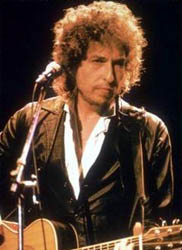
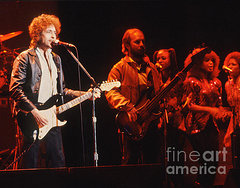
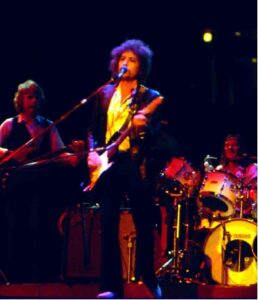
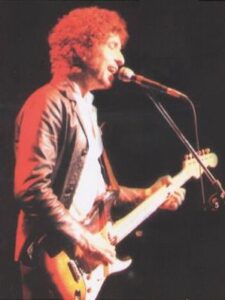
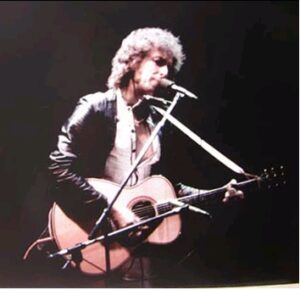
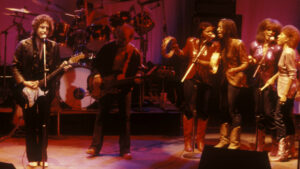
In November and December 1980 Dylan returned for another residency at the Warfield for what was billed as a ‘Musical Retrospective’ tour. The Christian songs were now interspersed with Dylan classics such as Like a Rolling Stone and Blowin’ in the Wind (which was given an effective gospel arrangement). This pattern was replicated in 1981, with Dylan playing the US and Europe in the summer and in the US again in November, still with the same band. By the end of those tours the songs from Slow Train Coming and Saved accounted for only a small proportion of the sets. The European tour was the last one to feature the opening set by the gospel singers and Dylan began to introduce live covers of secular songs such as the standards Fever and It’s All in the Game and Dave Mason’s We Just Disagree. It was clear by now that the ferocity of his devotion to religion was dimming.

Some of the songs which Dylan composed in 1980 and 1981 were performed in the live shows, while others never made it past rehearsals and studio outtakes. A few of these, following the pattern established by Saved, were relatively simple statements of faith, written mainly as performance pieces and prominently featuring exchanges with the backing singers. Stand By Faith is an extremely minimal call and response number with very minimal lyrics. I Will Love Him, which was performed live only once, features the singers on the simple chorus of …I will love him/ I will serve him/ I will glorify his name… with some half-realised verses referring to Jesus coming from …East out of Galilee… and, in a rather mysterious third verse, claiming that ‘He’ was …talking about the state of Israel in 1948… Jesus is the One, a fairly high energy rocker which was featured in later 1981 shows, is another straightforward declaration of belief, featuring the backing singers crying Hallelujah! and (in true gospel style) much repetition of the title phrase. Dylan also includes a slightly tongue in cheek list of a number of famous earthly figures including ‘Mr. Rockefeller’, ‘Mr. Lee’ and ‘Mr. Nixon’ who are said to be not capable of ‘raising the dead’ and ‘healing your broken heart’.

City of Gold is a more straightforward and at times quite moving gospel number which boasts a stately and attractive melody and which was performed several times in 1980 and ‘81. It expresses faith metaphorically, referring to a ‘city of gold’, a ‘city of love’, ‘a city of grace’, ‘a city of peace’, ‘a city of hope’ and ‘a country of light’; all of which represent heaven. The use of such symbolism is reminiscent of John Bunyan’s religious classic Pilgrim’s Progress. Dylan describes ‘the city’ in glowing terms, as being …far from the rat race that eats at your soul… and …far from this world and the stuff dreams are made of… He declares that he is heading for the city before …I’m too tired, before I’m too old… The song has a suitably dreamy feel, portraying its narrator as a humble supplicant, and appears to be influenced by established celebrations of divine love such as Amazing Grace.
GOSPEL YEARS
In some of his new songs, Dylan now seems to be turning inwards, exploring his own conscience and his status as a ‘sinner’. This is especially noticeable in the lively ‘gospel shouter’ Ain’t Gonna Go to Hell for Anybody, which featured regularly on the 1980 tours and in which Dylan makes some surprising confessions, such as …I can manipulate people as well as anybody…. ,….I can make believe I’m in love with anybody… and …I can twist the truth as well as anybody…
Later, despite the denials in the chorus, he appears to suggest that he is in danger of actually going to hell: …Got a one way ticket to burn/ A place reserved for the devil/ And for all those that done evil… Although his faith in Jesus appears undiminished, he seems to be losing belief in his own abilities to maintain an appropriate lifestyle. In Cover Down, Pray Through, he insists that the subject of the song should ….cover down, pray through… because of ‘demands’ being …laid upon you and burdens you can’t bear/ Sins you can’t remember… When he sings …You’ve got an image of yourself that you’ve built all alone/ But it will all come tumbling down just like the walls of stone… there is an echo of the traditional Joshua Fought the Battle of Jericho… but this song does not strike such a triumphant tone. The rather lugubrious pace adds to the impression that the song is conveying rather laboured moral lessons and that the narrator is struggling with his faith.
You Changed My Life, which was rehearsed several times but never performed live, displays similar concerns. It begins with the startling line …I was listening to the voices of death on parade… The narrator then complains about how he has suffered ridicule for his beliefs and how people are ‘tired’ of him telling them about salvation. He lambasts himself for …eating with the pigs off a fancy tray… and claims that …There was someone in my body that I could hardly see… before he was saved. At times the song veers towards a degree of lyrical complexity but the chorus …You changed my life/ You came along at a time of strife/ From silver and gold to what man cannot hold/ You changed my life… is somewhat sluggish and contrived.
The enigmatic but much livelier Thief on the Cross is centered around the chorus line …There’s a thief on the cross/ His chances are slim… I wanna talk to him… The song refers not to Jesus but to one of those who were crucified with him. Dylan expresses the desire to …ask him about his mother… and …’bout his ways… He concludes that …Everybody goes sinning by the rules… In one of his last gospel style songs, it seems that Dylan now identifies with the anonymous thief, perhaps declaring himself to be a sinner who cannot change his ways.

Yonder Comes Sin, which was played during a number of rehearsals but never tried in concert, is built around a distinctive riff which bears a strong resemblance to the Rolling Stones’ Jumpin’ Jack Flash, ironically one of their ‘demonic’ pieces. Here Dylan wrestles with the problem of self doubt, as well as the challenges of trying to live a more ‘righteous’ life. He adopts an especially self critical tone. The language of the song veers wildly between the sacred and the profane. …You want the spirit to be breaking through/ But your lust for comfort gets in the way… is followed by …that old evil burden been dragging you down/ ‘Bound to grind you ‘neath the wheel… Even more vehemently, he declares …But your fifty dollar smile confirms/ You’re still trying to buy your way into the dreams of them/ Whose bodies will be food for worms… The chorus is equally accusatory: …Yonder comes sin/ Walkin’ like a man, talkin’ like an angel… Look at your feet, see where they’ve been to/ Look at your hands, see what they’ve been into… Can’t you take it on the chin?…

GOSPEL YEARS
The final verse stretches the cynicism even further, with the lines …Jeremiah preached repentance/ To those who would turn from hell/ But the critics all gave him such bad reviews/ Put him down at the bottom of a well… The sarcastic reference to ‘bad reviews’ marks the adoption of a new tone. We hear that …He kept on talking anyway/ As the people were put into chains/ Weren’t nobody there to say bon voyage/ Or shatter any bottles of champagne… The deliberately placed archaisms suggest that Dylan is half jokingly personifying himself as a prophet who has been suffering ‘bad reviews’ (which he certainly had recently) but who has kept on trying to spread his message anyway.
Making a Liar out of Me, which Dylan tried out in a few sound checks in 1980 but never played live is musically similar to other compositions of the time, with Spooner Oldham’s ‘churchy’ organ dominating the sound. However, although it makes a few obscure Biblical references, it is not a ‘gospel’ number but is addressed to an evil manipulator who …can’t be trusted with the power you been given…. We are told that he is controlling …young men… who …die for nothin’, not even fame… It is as if Dylan is now addressing one of the ‘Masters of War’. …That ain’t flesh and blood you’re drinkin’… he tells him ..in the wounded empire of your fool’s paradise… He reminds him that he will …remember the cries of orphans and their mothers… and expresses the hope that one day … you’ll begin to trust us/ And that your conscience won’t be stained by conformity… He then questions his own perceptions: …Now that you’re gone I got to wonder/ If you were ever here at all… suggesting that the figure being addressed is actually a product of his own imagination. The song ends with a rather bizarre Biblical reference: …I say you never sacrificed my children/ To some false god of infidelity/ And it’s not the Tower of Babel that you’re building/ You’re makin’ a liar out of me… In the Bible the destruction of Babel leads to the fragmentation of the original human culture. The narrator appears to be a soul in confusion who is no longer sure of his faith.
In The Groom’s Still Waiting at the Altar, Dylan constructs an even more fractured narrative, set against a powerful blues groove with a highly distinctive chorus and an extraordinary number of variable lines. It is as if Dylan is having an uncertain conversation with himself, during which he changes tack several times, veering between apocalyptic imagery and snatches of sarcastic humour. The chorus: …West of the Jordan, East of the rock of Gibraltar/I see the turning of the page/ Curtain rising on a new age/ See the groom still waiting at the altar… is particular ominous.. It has been suggested that the song refers to the traditional notion of Jesus as the ‘groom’ and the church as his ‘bride’. But here ‘bride’ and ‘groom’ are not destined to be reunited. The song is full of resonant if often obscure imagery, beginning with the highly evocative …Prayed in the ghetto with my face in the cement/ Heard the last moan of a boxer, seen the massacre of the innocent… From the outset, it depicts internal struggle and is expressed through the voice of a narrator who is in turmoil with regard to both his own life and the world around him.
In what appears to be a reference to the ‘bride’, Dylan throws out some outrageous rhymes with some surreal connotations: …Felt around for the light switch, became nauseated/ She was walking down the hallway while the walls deteriorated… Then he confides in us about his spiritual struggle: …Try to be pure at heart/ They arrest you for robbery/ Mistake your shyness for aloofness, your silence for snobbery… In two rather convoluted lines he manages to convey the tongue twisting …Don’t know what to say about Claudette that wouldn’t come back to haunt me/ Finally had to give her up ‘bout the time she began to want me… It is as if he is allowing his inner thoughts to emerge unfiltered. He then addresses Claudette directly with the rather disarming. …Put your hand on my head, baby, do I have a temperature? … which is followed by a humorous comparison …I see people who are supposed to know better standin’ round like furniture…. The song depicts a world in turmoil: …Cities on fire, phones out of order/ They’re killing nuns and soldiers, there’s fighting on the border… and concludes with the breathlessly po-faced …What can I say about Claudette? Ain’t seen her since January/ She could be respectably married or running a whorehouse in Buenos Aires… This city is, of course, a very long way from ‘the Rock of Gibraltar’.
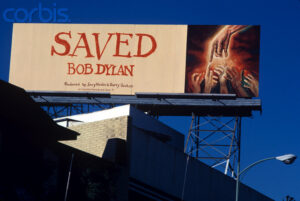
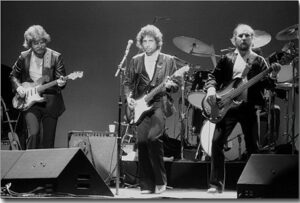
In these songs, and in other contemporary compositions like Caribbean Wind and Angelina, Dylan is clearly moving away from the moral simplicity and judgementalism of his earlier ‘gospel’ material. These restless and exploratory works are full of hints and allusions, mixing wildly imaginative poetic imagery with clear indications of discontent and some characteristically sardonic humour. Yet all were left off 1981’s Shot of Love (although Groom, originally released as a ‘B’ side, was eventually added). Dylan appears to be using the album to make a personal statement of having moved on somewhat from his pure ‘gospel’ phase. Despite this, many of the songs maintain a ‘religious’ feel. Most of the current touring band, along with the three backing singers Clydie King, Madeleine Quebec and Monalisa Young, are still in place. Yet the songs are riddled with discontent and are highly self-questioning. The title track’s minimalistic chorus which merely repeats …I need a shot of love… with great emphasis on the word ‘need’. seems to imply that Dylan is moving away from the kind of religiosity he had displayed on the previous two albums towards a more humanistic perspective. In an interview with the New Musical Express in 1983, he stated that:
… the purpose of music is to elevate and inspire the spirit. To those who care where Bob Dylan is at, they should listen to Shot of Love. It’s my most perfect song. It defines where I am spiritually, musically, romantically and whatever else. It shows where my sympathies lie. It’s all there in that one song…

GOSPEL YEARS
Despite its apparent positivity, Shot of Love introduces us to a soul in torment. The song begins with a series of denials, with Dylan asserting that he …Don’t need a shot of… heroin, codeine or whisky, along with (rather strangely) turpentine. Then he appeals for a ‘doctor’ to administer his ‘medicine’, declaring, that …I seen the kingdoms of the world and it’s making me feel afraid… In the only overtly ‘religious’ reference, he declares …What I got ain’t painful, it’s just bound to kill me dead/ Like the men that followed Jesus when they put a price upon his head… He seems to be suggesting here that he has become, like Judas or Peter, a betrayer. He becomes increasingly paranoid, mentioning …a man that hates me and he’s swift, smooth and near… He asks the rhetorical question …Am I supposed to sit back and wait until he’s here?… This threatening figure has apparently …murdered my father, raped his wife/Tattooed my babies with a poison pen/ Mocked my God, humiliated my friends… What begins as a defiant cry of freedom from dependence on earthly matters develops into a desperate plea for help.
The song ends on a bleak note, with the narrator railing helplessly against the elements, asking: …What makes the wind want to blow tonight?… and confessing that he …don’t even feel like crossing the street… He makes a phone call but nobody answers. All he can tell us is that …Everybody seems to have moved away… Finally he states that …My conscience is beginning to bother me today… It is not that Dylan is rejecting his faith but that he seems to have extreme doubts as to whether he can sustain his allegiance to it, given his own failings. Perhaps the man who he describes as threatening him is the devil, or perhaps it is indeed his own conscience.
In the extremely bitter Property of Jesus, Dylan also acknowledges that he is struggling with the personal rejection of his conversion. The song unfolds at a rather ponderous pace, with Dylan taking care that every word comes over clearly. He never lets up in his withering dismissals of those who had berated him. The lyrics are phrased as a direct set of ‘instructions’ to the doubter. This is anchored by the chorus: …He’s the property of Jesus/ Resent him to the bone/ You got something better?/ You got a heart of stone… Dylan instructs the subject of the song to ‘laugh about him’ behind his back, to …talk about him because he makes you doubt… to …stop your conversation when he passes on the street… …say he’s a loser because he got no common sense and to …laugh about salvation…. But in his attempt to portray the mental suffering and social isolation that the supposed victim of the song endures, he comes over as merely petulant. The inclusion of some distinctly awkward rhymes, combined with some very negative assertions about the subject of the song, in lines such as …When the whip that’s keeping you in line doesn’t make him jump/ Say he’s hard of hearing, say that he’s a chump… only make the song even less appealing.
Several of the tracks follow a pop-rock template and are built around ‘catchy’ choruses or constant repetition of title lines. Heart of Mine is presented as a ‘conversation’ between the narrator and his ‘heart’; a conceit which would be explored with much greater power and force on 2009’s Forgetful Heart. The song has an appealing tune and some striking chord changes and musical ‘hooks’. The original recording, which features Ronnie Wood on guitar and Ringo Starr on percussion, sounds breezy and positive as the narrator muses on the machinations of his wandering emotions, which he is striving to keep under control. The concluding four lines of each verse, which are in effect choruses, begin with …. Don’t let her know/ Don’t let her know that you love her/ Don’t be a fool, don’t be blind/ Heart of mine… The other verses follow a similar pattern, with Dylan again relying on rather commonplace aphorisms such as …Don’t put yourself over the line…, …Don’t untie the ties that bind… and finally …If you can’t do the time, don’t do the crime…
The main variations are presented in this first two lines of each verse, in which the narrator relays various warnings to his ‘heart’, beginning with the rather awkward metaphorical construction …Heart of mine be still/ You can play with fire but you’ll get the bill… Later the ‘heart’ is told …go back home/ You got no reason to wander, no reason to roam… and …Go back where you been/ It’ll only be trouble for you if you let her in… These unremarkable pronouncements are followed by the rather more cutting …so malicious and so full of guile… although this is brought down to earth by yet another cliché: …Give you an inch and you’ll take a mile… In concert the song is often truncated to three verses, separated by an extended instrumental break, and Dylan frequently rearranges the words at will. The overall effect is pleasant but inconsequential. He seems to be taking a wry look at himself here, realising that even while supposedly being devoted to religious observances, he has struggled to keep his more basic instincts under control.
Like Heart of Mine, Watered Down Love contains a chorus which appears to be directed by the narrator at himself: …You don’t want a love that’s pure/ You want a drowned love/ You want a watered-down love… This is then followed by a catchy if rather contrived musical hook. The four short verses use personification to explore ‘earthly temptations’. Firstly the figure of ‘Pure Love’ is defined as what it is not – a seducer, perhaps of the faithful. We hear that it …won’t sneak up into your room, all dark and handsome/ Capture your heart and hold it to ransom… Then we hear that it will not …deceive you or lead you into transgression/ Won’t write it up or make you sign a false confession… We are also told that it …won’t pervert you, corrupt you with stupid wishes… In many ways, Dylan still appears to be attempting to preach to his audience, but without the gospel fervour and righteous protestations of songs like Pressing On and Are You Ready on Saved. When we are finally given some of Pure Love’s positive characteristics he resorts to the tired cliché of describing it as an ‘eternal flame’.
In the Summertime features Dylan grappling a little more explicitly with the after effects of his ‘religious period’. There is another very basic chorus: …In the summertime, ah, in the summertime/ When you were with me… It seems fairly clear that he is referring to the ‘Jesus experience’ that had inspired his conversion: …I was in your presence for an hour or two/ Or was it a day? I truly don’t know… lines which give the impression that the ‘meeting’ occurred in some liminal time or space. The self-examination in the song is rather more nuanced than in Heart of Mine or Watered Down Love. The narrator seems asks a number of rhetorical questions: …Did you respect me for what I did…he asks …Or for what I didn’t do, or for keeping it hid?/ Did I lose my mind when I tried to get rid/ Of everything you see?… He also plays around with some decidedly self-referential symbolism: …I got the heart and you got the blood/ We cut through iron and we cut through mud… which suggests that the conversion experience was a kind of desperate struggle in which metaphorical ‘blood’ was drawn in his attempt to make sense of what had happened.
With the more direct Biblical reference: …Then came the warnin’ that was before the flood/ That set everybody free… the narrator seems to be implying that the conversion experience had ‘cleansed his sins’. Then he begins to rail rather impotently as his unnamed detractors: …Fools they made a mock of sin/ Our loyalty they tried to win/ But you were closer to me than my next of kin… He now seems to be clinging rather desperately to his saviour, who he apparently sees as shielding him from the attacks of these ‘fools’: …Strangers, they meddled in our affairs/ Poverty and shame was theirs… The concluding lines …But all that sufferin’ was not to be compared/ With the glory that is to be… suggest that he will achieve ‘glory’ (the gift of eternal life) as a reward for his suffering. But he displays no obvious concern for the salvation of his ‘enemies’. Finally he bathes in a kind of self-congratulation: …I’m still carrying the gift you gave… he boasts …It’s a part of me now, it’s been cherished and saved… and then, in a final burst of what is surely ‘sinful’ pride he proclaims …It’ll be with me unto the grave/ And then unto eternity….
Trouble, the album’s penultimate track, features ultra simplistic lyrics, with a chorus merely consisting of …Trouble, trouble, nothing but trouble… Over a standard blues riff, Dylan delivers a catechism of woes. ‘Trouble’ is apparently to be found ‘in the city’, ‘in the farm’, ‘in the air’ and ‘in the water’. There is some generic listing: …Drought and salvation/ Packaging of the soul/ Persecution, execution/ Governments out of control… There are a couple of distinctive lines as he decries the …Nightclubs of the broken hearted… and the …Stadiums of the damned… We are told that …Since the beginning of the universe man’s been cursed by trouble… There is no sign of redemption or salvation here. Perhaps the gloomiest lines of all are expressed in the rhetorical question …Ever feel like you’re never alone/ Even when there’s nobody else around… which appears to suggest a haunted figure who can no longer experience individual autonomy as his Lord is always watching him. One might ask whether Dylan is finding the idea of an all-seeing deity who …knows your needs even before you ask… (as he sang in When He Returns) quite oppressive.
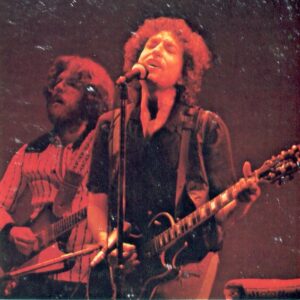
In Dead Man, Dead Man Dylan sounds even more desperate. Although the beginning of the chorus …Dead man, dead man/ When will you arise… approximates the kind of longing often found in gospel songs, whereby Jesus is naturally the ‘dead man’ who will return as prophesised, the following …Cobwebs on your mind/ Dust upon your eyes… tends to suggest that the potential saviour’s spiritual body is actually about to disintegrate. The song is another internal monologue in which the singer is engaged in a desperate internal struggle. The opening lines …Uttering idle words from a reprobate mind/ Clinging to strange promises, dying on the vine… immediately present a picture of a ‘lost soul’ who is sinking into depression. The narrator then admits that he has …Never been able to separate the good from the bad… It seems that his moral compass has been considerably screwed and that he is desperate for his saviour to return. At the end of each verse he wails …Ooh, I can’t stand it! I can’t stand it!…
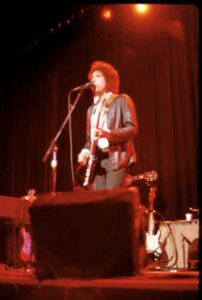
Only a year ago Dylan had declared vehemently that he wasn’t …going to go to hell for anybody… But now he seems to be engaged in a futile losing battle with the devil’s temptations. We hear that …Satan’s got you by the heel, there’s a bird’s nest in your hair… This refers not to the Bible but to a famous quote from Martin Luther:
…Temptations, of course, cannot be avoided, but because we cannot prevent the birds from flying over our heads, there is no need that we should let them nest in our hair…
Explanation of the Lord’s Prayer, Sixth Petition. paragraph 161.
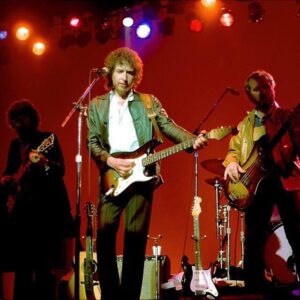
The ‘bird’s nest’ symbolises the devil’s temptations. The next lines are perhaps the most searching of all: …Do you have any faith at all?/ Do you have any love to share?… The subject of the song is said to be …cursin’ God with every move… In what might superficially appear to be the album’s most ‘religious’ song, it now seems that in fact Dylan is again questioning whether he can be a proper Christian or whether he is and always will be too much of a sinner. The histrionic language appears to condemn its subject, who is overwhelmed by …the glamor and the bright lights and the politics of sin… ‘Politics’ has always been a concept Dylan has referred to scathingly. Now he appears to be caught up in the ‘politics of sin’ – a tangle of lies and half truths in which the moral high ground has now been obscured. In the final verse he appears to be addressing Satan directly: …What are you trying to overpower me with, the doctrine or the gun?/ My back is already to the wall, where can I run?… He characterises the devil as wearing a ‘tuxedo’ with a ‘flower in his lapel’. A charming fellow indeed…
Leave a Reply