

SONGS OF SOCIAL PROTEST PART FOUR
EXTRACTS FULL TEXT HERE
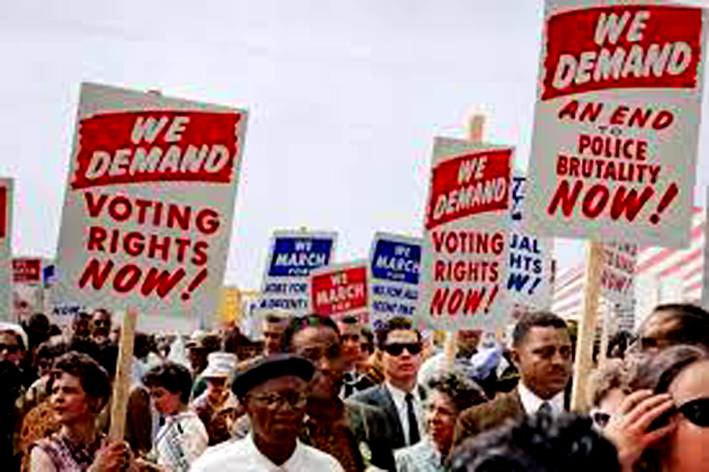
A number of songs on Dylan’s early albums engage with Civil Rights issues. Oxford Town is a short, slightly offhand piece written in a colloquial style. Its five short verses are performed over a sprightly accompaniment which Dylan himself described as a banjo tune played on the guitar. There is no chorus but the title phrase is used repeatedly. The last line of each verse provides a sardonic comment on the situation being described. It was originally written for Broadside in response to calls for songs about the controversy over the admission of James Meredith, a Black student, to the University of Mississippi. Meredith’s eventual Admission to the University broke down the colour bar at the University, despite the opposition of the State Governor. President Kennedy intervened in the case to ensure Meredith’s admission but riots orchestrated by white supremacists followed, in which two bystanders were killed. But unlike Phil Ochs’ Ballad of Oxford Mississippi, which relates a very literal account of the events, the song does not mention Meredith, the University or the Governor.
HATTIE CARROLL
As the story unfolds, the intensity of the narrative voice increases. The first two verses give fairly straightforward accounts, whereas in verses three and four the song becomes more passionate and poetic. Verses one and two have seven lines, while verses three and four have eleven. It is as if the storyteller has begun by trying to remain calm and detached. But because of the horror of the events, he becomes progressively angrier. The chorus is repeated identically three times before the final devastatingly ironic twist after verse four. The song also juxtaposes poetic techniques with colloquial language in a highly effective way, moving seamlessly from some quite beautiful poetic expressions to forceful, if ungrammatical, declarations.
WILLIAM ZANTZINGER
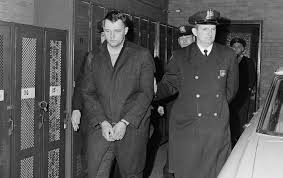
The song begins abruptly without a musical intro, as voice and guitar start up in unison:…William Zanzinger killed poor Hattie Carroll/ With a cane that he twirled around his diamond-ring finger… The first line is a simple statement, but the second has the distinct sense of poetic movement that characterises much of the song. We now see the murder implement in motion, as if Zanzinger is some kind of evil magician. The description of Zanzinger as having a ‘diamond ring finger’ (as opposed to him ‘wearing a diamond ring’ or ‘having a diamond ring on his finger’) is a brilliantly compressed way of showing him to be a person whose wealth and privilege is literally part of his identity. The phrase seems to suggest that the ring is actually part of his finger, a ‘natural’ addition to his physiognomy. The lines are so resonant that we can almost see the flashing of the ring (representing the flaunting of his ‘superior’ status) as he ‘twirls’ that cane. The rest of the verse is, in deliberate contrast, flatly prosaic. We hear that this incident happened at a ‘society gathering’ in Baltimore, and that after the murder Zanzinger is arrested and taken to the police station, where he is charged with ‘first degree murder’.
SONGS OF SOCIAL PROTEST PART FOUR
Such an abrupt account is unusual for murder ballads, which usually build up to the revelation of the crime. But the song will not be a mere account of the murder. The chorus runs …But you who philosophize disgrace and criticize all fears/ Take the rag away from your face, now ain’t the time for your tears… These lines epitomize the way the song constantly shifts between ‘intellectual’ and ‘everyday’ language, which itself reflects the social gulf between the protagonists. The identity of people who ‘philosophize disgrace’ is rather ambiguous. If the word ‘philosophize’ is used in a pejorative way, this may refer to Zanzinger’s family or his supporters, who merely sweep away the moral implications of his crime. Or it may refer to liberal intellectuals who, despite their public protestations of anti-racism, do not understand the real physical and moral implications of the effects of racism itself. The use of ‘rag’, rather than ‘handkerchief’ scathingly suggests that the implement they will use to wipe away their tears is merely a cheap piece of ‘throwaway’ material.
The second verse, which is concerned entirely with Zanzinger, begins with a short summary of his status: …William Zanzinger, who at twenty four years/ Owns a tobacco farm of six hundred acres/ With rich wealthy parents who provide and protect him… We now know, if we had not already guessed, that he is from a highly privileged background. With the ‘double positive’ of ‘rich wealthy’ Dylan again slips into colloquial English. It is as if we are hearing a relatively uneducated person outlining the fact that Zanzinger is actually very wealthy. This is the kind of intimate linguistic trick that would become commonplace in Dylan’s songs of 1965-66 and beyond. Then the lines begin to take on a strange, if ungrammatical, motion of their own, just like that ‘cane twirling round a finger’. We hear that …High office relations in the politics of Maryland/ Reacted to his deed with a shrug of their shoulders/ And swear words and sneering and his tongue it was a-snarling/ And in a matter of minutes on bail was out walking… The first two lines refer to Zanzinger’s relations and the last two are about Zanzinger himself. But it is not immediately obvious who is doing the ‘swear words and sneering’. At first it seems as if this refers to the rich relatives. The implication seems to be that Zanzinger is merely mouthing the words that his relatives would say. This further shows us that he is the product of his privileged background. The use of alliteration here, contrasting the ‘s’ sounds of ‘shrug of his shoulders’ and ‘swear words and sneering’ with the ‘m’ sounds of a ‘matter of minutes’, is especially effective.
In the third verse, the song reaches even greater poetic heights and does so by taking great liberties with the ballad form itself. Dylan delivers an entire eleven line verse without any actual rhymes at the end of the lines. We are given a potted biography of the victim, beginning with the simple statement that …Hattie Carroll was a maid of the kitchen/ She was fifty one years old and gave birth to ten children… This immediately gives us a clear picture of the difference between Hattie and Zanzinger. One of the brilliant coups of the song is that it never actually states that Hattie is black (or that Zanzinger is white) as the context Dylan provides makes this obvious. But this lack of racial identification (in a song about a racist murder) avoids the trap of constantly describing Black people’s victimhood. In the song, both main characters are merely human.
Another grammatical shift follows, again moving the song from mere description into motion. Hattie is the one …Who carried the dishes and put out the garbage… While the identical number of syllables in the words at the end of the first two lines, ‘kitchen’ and ‘children’, are suggestive of rhyme, the word ‘garbage’ stands out a mile; the hidden suggestion being that she is treated like ‘garbage’. Dylan then follows this with …And never sat once at the head of the table/ Who just cleaned up all the food from the table/ And who didn’t even talk to the people at the table… The repetition of ‘table’ has the effect of giving us a vivid impression of the sheer drudgery of her life. The table becomes a symbol of the social distance between her and her social ‘superiors’. This is followed by the clever punning of …And emptied the ashtrays on a whole other level… The demeaning act of ‘emptying the ashtrays’ is carried out on a different physical ‘level’ to that table. Obviously Hattie will empty them into a bin on a ‘lower level’. At the same time her entire life is being lived on a ‘different level’ to her employers and those she serves.
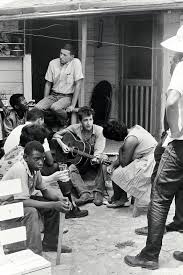
Dylan then gives us two of the most memorable and resonant lines in his entire oeuvre. Having established the momentum of describing Hattie’s actions, using the active construction of …Who…who…, we now begin with the active verb ‘got’. We hear that Hattie …Got killed by a blow, lay slain by a cane/ That sailed through the air and came down through the room… The internal rhyme of ‘slain/cane’ stands out here because it is the only rhyme in the entire verse. The phrase ‘slain by a cane’, if seen as a pun, evokes the Biblical murder of Abel by his brother Cain which, according to the Bible, was the first murder of all. This suggests that the murder of Hattie represents all the cruel and unnecessary violence that humans have imposed on each other throughout time. The second line takes us back to the action of the first verse but now presents it from her point of view, as if she is now watching the horrific moment of her death unfold in agonising slow motion. Then we get the pronounced alliteration of …doomed and determined to destroy all the gentle… wherein the three ‘d’ words, all signifying destruction and cruelty, are juxtaposed against the single word ‘gentle’, which summarises Hattie’s character. This is followed by a quintessentially Dylanesque double negative, which again sets the poetic language of the rest of the verse against a very clear and angry statement, delivered in the kind of words Hattie herself might have used: …And she never done nothing… Dylan tells us …to William Zanzinger…
SONGS OF SOCIAL PROTEST PART FOUR
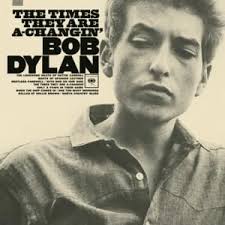
The final verse takes us into the courtroom, beginning with an extended ironic description of the corrupt legal system. Dylan uses ‘and’ repetitively here in a way that enhances the irony, as if the descriptions are matter of fact statements. We are told that …In the courtroom of honor, the judge pounded his gavel / To show that all’s equal and that the courts are on the level … But of course there is no real ‘honour’ here. We are told that …And that the strings in the books ain’t pulled and persuaded/ And that even the nobles get properly handled/ Once that the cops have chased after and caught ‘em/ And that the ladder of law has no top and no bottom… There is an odd mixed metaphor here of ‘strings’ and ‘books’, as well as the rather archaic (in the American context) reference to ‘nobles’. The language seems to mimic the reactions of Hattie’s family or supporters. Then we get another grammatical shift: …Stared at the person who killed for no reason/ Who just happened to be feeling that way without warning… It is obvious that it is the judge who is doing the ‘staring’. We hear that he …spoke through his cloak, most deep and distinguished… The metaphorical ‘cloak’ represents not only the judge’s status and position but the way he will soon place a ‘cloak’ over the principles of justice. The alliteration of ‘deep and distinguished’ parallels the earlier use of ‘doomed and determined’.
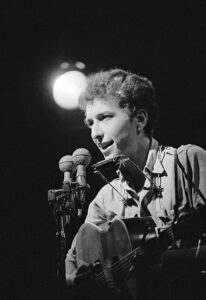
Dylan then delivers the denouement, finally using a conventional rhyme: …And handed out strongly for penalty and repentance/ William Zanzinger, with a six month sentence… Given the build up, it cannot really be said that this is a surprise. The relatively trivial punishment handed to Zanzinger is clearly a product of the corrupt and racist judicial system. The ironic presentation of this and the changed lines in the final chorus …Bury the rag deep in your face/ Now’s the time for your tears… makes the intended meaningyy absolutely clear. The song is, like Only a Pawn or Emmett Till, a castigation of the American social system. But its sustained rhetorical structure, its mixing of colloquial and poetic discourses and the perfectly paced delivery of its ironic conclusion convey a similar message in a far more powerful way.
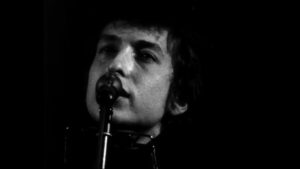
Hattie Carroll can be seen as a culmination of Dylan’s ‘protest phase’. While it still contains the Guthriesque concern with relative social justice, its use of language predicts the move into symbolist poetry that will dominate the next phase of Dylan’s career. Its portrayal of character is clear and delineated, with the characters themselves being emblematic of a highly unequal social system in which racism is institutionised. If there is one overarching target of Dylan’s protest songs, however, it is not war or social injustice but the hypocrisy of those who control others in society for their own ends but pretend to be fair and just. Here he nails that hypocrisy with a precise and unerring aim. In little more than two years he had established himself, at the age of only twenty three, as (in a commonly used phrase that he himself despised but was in fact very accurate) the ‘voice of his generation’. No other song writer, poet or prose writer gave voice to the concerns of people of his age about a society still trapped in the racist assumptions of the past or a world which was apparently teetering unsteadily on the edge of destruction. Although he would soon move on to pastures now, he left behind him a considerable legacy of protest songs, the best of which spoke in a language which belied their origins in the era of the early 1960s and spoke universal truths in a way that is still relevant today and will, perhaps sadly, continue to be so for the foreseeable future.
Leave a Reply