


STUCK INSIDE OF MOBILE: …GOING THROUGH ALL THESE THINGS TWICE…
…I wish I was a mole in the ground
Yes, I wish I was a mole in the ground
If I was s a mole in the ground, I’d root that mountain down…
I Wish I Was a Mole in the Ground, Bascar Lamar Lumsford (1928)
…”The more pity that fools may not speak wisely what wise men do foolishly”
Touchstone in As You Like It, William Shakespeare
Stuck Inside of Mobile (With the Memphis Blues Again) is an extended comic fantasia in which Dylan adapts a faux naive persona who repeatedly reminds us that, although he is ‘stuck’ in Mobile Alabama, he really wishes to be in Memphis Tennessee. Like many other Dylan songs of this period, such references are drenched in an awareness of the history of American music. The Memphis Blues, attributed to blues pioneer W.C. Handy, was the first blues song to be published as sheet music and one of the first to be recorded. The city of Memphis is one of the main centres of the blues in the USA.

W. C. HANDY
In the 1920s and 30s its famous Beale Street was the home of key performers like Sleepy John Estes, Memphis Minnie and Furry Lewis. In the 1950s pioneering producer Sam Phillips recorded blues artists like B.B. King, Ike Turner and Howlin’ Wolf in his Memphis based Sun Records studio. Elvis Presley made his first recordings there. Thus the city could thus be called the birth place of rock and roll. This is the ‘blues mother lode’ – a place of security to which the narrator wishes to return.
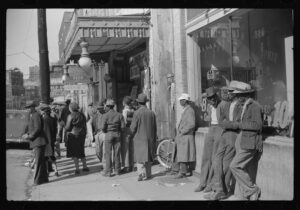
BEALE STREET
Dylan famously referred to the music on Blonde on Blonde as ‘that wild mercury sound’. Having tried to record several tracks with members of his touring group, later known as The Band, he was dissatisfied with the results. Following the suggestion of his producer Bob Johnston, a ‘good ol’ Southern boy’ himself, he took the surprising step of decamping to Nashville Tennessee, the ‘home’ of country music, accompanied by organist Al Kooper and guitarist Robbie Robertson. The Nashville players, though they were mostly around Dylan’s age, were already highly professional veterans of countless sessions, in which they had to adapt their styles to whatever was required. Yet they had never encountered a musician like Dylan, with his extremely spontaneous approach to recording and his apparently ‘endless’ songs.

Stuck Inside….
On the album each musician is given great freedom to play but their professionalism always prevents them from over-indulging themselves. Their work on Stuck Inside of Mobile epitomises the unique amalgam that was created in the studio. The relaxed ambience of this sound provides the ideal backdrop for a poetic extravaganza which went on to become a mainstay of Dylan’s set lists for many years. Dylan’s drawling, relaxed vocal style and the magical chemistry created by the musicians are the ideal setting for this epic deconstruction of his own psyche.
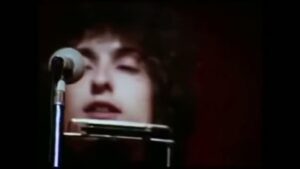
Rather than providing a linear narrative, Dylan freewheels through the nine verses in an apparently random order. Like Desolation Row and Just Like Tom Thumb’s Blues the song creates a world with its own internal rationale, peopled by symbolic ‘cartoon characters’ who make brief entrances and exits. As in It’s Alright Ma (I’m Only Bleeding) (also addressed to an invisible ‘mother figure’) it presents a picture of modern life as stifling, oppressive and highly illogical. But the desperate tension of that song is now replaced by a gleeful comic detachment. Dream, fantasy and hallucination appear to dictate the picture Dylan builds up of a world in which conventional reason is upended or reversed.
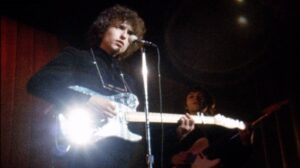
The logic of the song recalls that of Luis Bunuel’s surreal satire The Exterminating Angel (1962) in which a group of respectable middle class worthies are inexplicably prevented from leaving an up market dinner party by some invisible force. Similarly, the song’s narrator cannot get away from the ironically named ‘Mobile’ for reasons he never outlines. But the narrator is far from being respectable or middle class. His use of language and attitude clearly establishes him as an anti-establishment figure; a drifter who continually wishes to keep moving on from one experience to another.
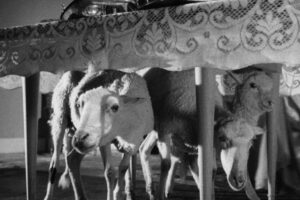
THE EXTERMINATING ANGEL (LUIS BUNUEL)
It may be that he is stuck in the city because he is penniless and living on the street. Yet he never sounds depressed or even particularly disappointed about this. He appears, in fact, to revel in the tall tales he happily relates. It soon becomes clear that ‘Mobile’ and ‘Memphis’ represent alternate states of mind to him. But despite his fervently expressed longing to escape – made clear in the repeated chorus of …Oh mama, can this really be the end/ To be stuck in Mobile with the Memphis Blues Again… – his overall demeanour suggests that he actually enjoys being ‘stuck’ in this reality. Whereas in It’s Alright Ma he copes with his alienation with a philosophical resignation, here he positively revels in being an outsider looking in on the vagaries of a mad world.

Stuck Inside…
The opening lines of the verses describe the narrator’s encounters with various different characters, each of whom contributes to his inability to escape. He then delivers a series of knowing asides, commenting on those characters’ actions. First we meet the ‘ragman’, who may actually be a street artist, as he is engaged in the apparently pointless pursuit of drawing …circles up and down the block… The narrator confides in us that …I’d ask him what the matter was, but I know that he don’t talk…

Perhaps the ‘ragman’ is a mime artist and street performer who is entertaining the crowds with his apparently random behaviour. The fact that he is ‘drawing circles’, however, immediately presents an arresting image of the narrator being enclosed within those shapes. The narrator then comments on his own situation. Dylan draws out the line …And the ladies treat me kindly…. with great relish, so that we can easily imagine what type of ‘kindness’ they are dispensing. His polite discourse is extended as he tells us, sounding surprisingly contented, that …they furnish me with tape… The use of the word ‘furnish’ stands out here – an early indication of Dylan’s fascination with archaic language that would become very prominent on John Wesley Harding. Although he may be a ‘street bum’ he assumes the persona of a ‘kindly’ Southern gentleman, using the term ‘ladies’ rather than ‘girls’ or ‘women’. We can almost imagine him bowing in their presence, opening doors for them while he twirls his Clark Gable moustache. We are not told what the ‘tape’ is for, although perhaps it is sticky tape with which they bind him. In either case, he sounds perfectly happy to announce that …I know I can’t escape….

Our next character is a real historical figure. We are now introduced to none other than William Shakespeare, described here as being... in the alley, with his pointed shoes and his bells… The great writer is depicted as wearing the apparel of a jester or a fool. Such characters appear in a number of his plays, including As You Like It, Twelfth Night and King Lear – usually, but not always, as comic relief. But this ‘fool’ appears to be preoccupied with distinctly earthly matters.

We hear that he has met with ‘some French girl’ (presumably one of the ‘kind ladies’ referred to earlier) in the alley. As in Bob Dylan’s 115th Dream, the presence of a ‘French girl’ is shorthand for a licentious woman. The narrator asserts with a wink that the girl ‘knows me well’. He seems to be a little worried that she may be passing some secrets about him to the ragged bard. But he protests, absurdly, that …I would send a message/ To find out if she’s talked/ But the post office has been stolen/ And the mail box is locked… This is the first of the song’s comic reversals of logic which the narrator uses to justify his inaction.
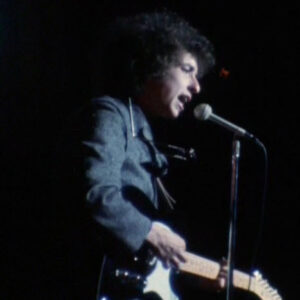
A woman called ‘Mona’ (the name of an idealised love interest in a Bo Diddley song) then appears, with some dire warnings about how to survive on the streets of this town. She warns him to …stay away from the train line… because …all the railroad men/ Just drink up your blood like wine… These lines allude to one of Dylan’s favourite mysterious old-time folk songs, I Wish I Was a Mole in the Ground.
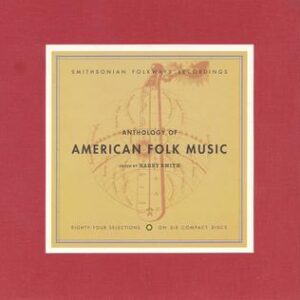
A version of this highly ‘spooky’ ditty was recorded by in 1928 and later appeared on Harry Smith’s highly influential Anthology of American Folk Music. Lumsford sings ... I don’t like a railroad man /A railroad man, he’ll kill you when he can/ And he’ll drink up your blood like wine… Dylan counters this ominous warning with another hilariously paradoxical aside …Oh, I didn’t know that/ But then again, there’s only one I’ve met/ An’ he just smoked my eyelids/ An’ punched my cigarette…
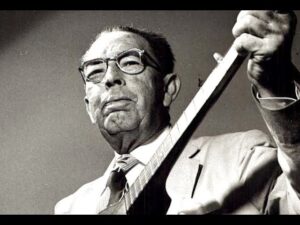
BASCAR LAMAR LUMSFORD
The narrative then takes several more outrageous turns. There is a tribute to ‘Grandpa’, whose recent demise has apparently shocked ’everybody’. The narrator explains, however, told that …I expected it to happen/ I knew he’d lost control/ When he built a fire on Main Street and shot it full of holes… A figure from ‘the establishment’ then appears. – a senator, who (rather strangely) …is handing out free tickets for the wedding of his son… The narrator reveals that, despite the senator’s apparent largesse, he ‘nearly gets busted’ for gate crashing the wedding without a ticket.
We then meet a ‘preacher’ who …looked so baffled/ When I asked him why he dressed/ With twenty pounds of headlines stapled to his chest… The narrator whispers to him …Not even you can hide. You see, you’re just like me/ I hope you’re satisfied… In alI of these encounters, normal logic is reversed. But it is possible that none of these characters are really who they seem to be. The ‘old timer’ who has gone mad, the glad handing ‘senator’ and the publicity-obsessed ‘preacher’ would normally represent the wisdom of age and political and religious respectability. But here their actions are perverse, illogical and contradictory. Perhaps they are really other street dwellers and all their strange antics are fantasies in the mind of the narrator.

Dylan then brings us tantalisingly close to the ‘reality’ of the song, while maintaining the previously established levels of comic ambiguity. The next character we meet is a ‘Rain Man’, which is a label normally associated with an autistic or mentally impaired person. He offers the narrator two possible ‘cures’ for what is now revealed to be a ‘sickness’. We are told that …The one was Texas Medicine/ The other was just railroad gin… ‘Railroad gin’ is a combination of cider and tomato juice which can often be especially potent.

‘Texas medicine’ is a name often used for the hallucinogenic substance peyote. The narrator confesses that …Like a fool I mixed them/ And it strangled up my mind/ Now people just get uglier/ And I have no sense of time… This may provide some kind of explanation for the peculiar events that have been described. Perhaps the narrator has been ‘under the influence’ of such substances for some time. But despite the obvious disassociation of his sensibilities that this implies, he still sounds like he is enjoying himself.
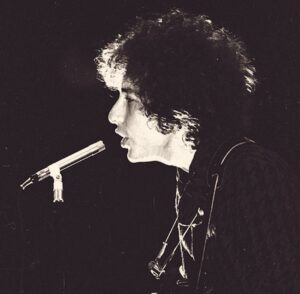
In one of the song’s most effective comic excursions we then meet a woman called ‘Ruthie’ – possibly another ‘down and dirty’ street dweller. In a particularly colourful and delightful invocation of a hallucinatory state she invites him to her ‘honky tonk lagoon’ where he can …watch her waltz for free ‘neath the Panamanian moon… This highly visual and surreal snapshot is also a brilliant visual parody of sentimental romantic songs. It is clear that ‘Ruthie’ is trying to seduce him, although their chances of them actually reaching Panama seem rather slight. The narrator, stepping back into his ‘polite gentleman’ character, attempts to resist her by pretending he is ‘otherwise engaged’. …Ah, come on now… he protests …You know about my debutante…

A debutante is a rich young lady who is ‘presented to society’ at exclusive charity balls, with the intention of ‘hooking’ a well-heeled husband. This is a joke, of course, as penniless hobos like the narrator are hardly likely to mix in such company. But the wily Ruthie retorts …Your debutante just knows what you need/ But I know what you want…. The sly and knowing response may be sexual in nature, or perhaps ‘Ruthie’ is really offering him the kind of ‘medicine’ that he ‘really wants’.
The final verse begins with another surreal image of a mad world: …Now the bricks lie on Grand Street where the neon madmen climb/ They all fall there so perfectly/ They all seem so well timed… The ‘neon madmen’ sound rather like the deranged poets depicted in Ginsberg’s Howl. Their appearance is contrasted against the ‘perfect’ arrangement of crumbling buildings in what, incidentally, is a real street in Mobile Alabama. The narrator will clearly never get on that ‘train to Memphis’. As he continues to stare passively at the scene, he tells us that …Me, I sit so patiently/ Waiting to find out what price/ You have to pay to get out of/ Going through all these things twice… Although he remains trapped he actually sounds perfectly content staying where he is – a detached observer, perhaps hiding behind his dark shades – highly entertained by the bizarre manifestations of this topsy turvy world. The ‘perfect’ arrangement of the fallen masonry appears to symbolise his own enlightenment, or acceptance of the way this world operates. Although he has made a few mistakes, he will continue to ‘mix up the medicine’, hoping it will give him greater insight into the mysteries he is still hoping to solve.
Stuck Inside…
Despite the apparently light hearted sentiments of the song, the continual repetition of the chorus – which is delivered with varying inflexions of uncertainty on each occasion – still indicates that the narrator is ‘stuck inside’ this world. He may be happy for now, but the ‘Memphis Blues’ are not going to go away. Like the ‘rag man’ he continues to inhabit those pointless circles which he does not seem to want to escape from, especially when ‘Ruthie’ or the ‘Rain Man’ are whispering in his ear. For now, he can ignore Mona’s warnings about the evil ‘railroad men’. But they may still be lurking around the corner. And until he can find a way out of his current state of mind, people may well just continue to get ‘uglier and uglier’.
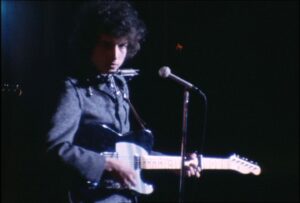
Thus, in a song which is full of comic paradoxes, Dylan presents a warning – maybe to himself or perhaps to those who might follow him on such a path. Like a Shakespearean fool, he makes us laugh by presenting us with a gallery of absurdities. But, as with such fools, there is a hidden wisdom behind his pronouncements that implies that perhaps he is not really joking at all. At the same time, although the narrator may be hiding behind the persona of a rootless drifter, his warped picture of all these incompetent and deranged symbolic authority figures presents a hallucinatory critique of the ‘straight world’ which many listeners can identify with.

Dylan delivers these lines without the cynical edge that he can so often deploy. He thus invites his listeners to share the hallucinogenic visions that the ‘Texas Medicine’ has induced. The tantalising implication of this is that, despite the dangers involved in ‘blowing one’s mind’, taking such a path may be the price that needs to be paid in order understand how the twisted world of conventional society really works. Even if that means you will have to ‘go through all of these things twice’…
LINKS
STILL ON THE ROAD – ALL DYLAN’S GIGS
THE CAMBRIDGE BOB DYLAN SOCIETY

Leave a Reply